
Research Institutions
The why behind sex
Research details answer to a question that’s more complex than it seems
📅
2026-08-19 20:47:46
•
Harvard Gazette
Read Original Article →
Stay informed about scientific discoveries, research developments and new findings from around the world.
Research details answer to a question that’s more complex than it seems

NOAA to rebuild historic science lab in Beaufort, North Carolina New North Carolina facility will continue to provide world-class NOAA science nationwide August 27, 2026 NOAA's Beaufort Laboratory moved to its current location on Pivers Island, North Carolina, in 1902. This aerial image of the laboratory complex was taken in 2014. (Image credit: NOAA's Beaufort Lab in 2014) Download Image Today, NOAA announced plans to fund the reconstruction of a new laboratory in Beaufort, North Carolina. This new lab will replace the former building that was permanently closed in 2024 due to significant hurricane-related structural damage. The project will be funded using $64 million from the 2025 Disaster Relief Supplemental Appropriations Act. Design and preconstruction work is expected to begin in early 2027. Established in 1899, the NOAA Beaufort Laboratory is the nation’s second-oldest federal marine science laboratory, predating NOAA by more than 70 years. Following a routine inspection, NOAA determined the laboratory sustained foundational damage that made building occupancy unsafe. The new facility will be built above the floodplain and designed to withstand storm and flooding events. “For more than a century, the dedicated experts at NOAA’s Beaufort Laboratory have produced world-class science that supports our economy, advances national priorities, and enhances coastal resilience,” said Neil Jacobs, Ph.D, NOAA administrator. “This state-of-the-art facility, located within the country’s second-largest estuary and adjacent to the Gulf Stream, will enable NOAA to continue its groundbreaking research while strengthening collaboration with industry and academic partners.”The new laboratory space will broaden NOAA’s research and services, both in coastal North Carolina and across the U.S, by:Researching, monitoring and forecasting harmful algal blooms;Deploying uncrewed systems for underwater habitat mapping and coral restoration;Serving as a research hub to support South Atlantic fisheries management and stewardship of marine resources;Evaluating the performance of natural infrastructure for coastal protection; andManaging the Rachel Carson National Estuarine Research Reserve and providing opportunities for education, research and compatible traditional uses.About the Beaufort Lab campusThe Beaufort laboratory houses staff from NOAA’s National Ocean Service and National Marine Fisheries Service, as well as the North Carolina Coastal Reserve and National Estuarine Research Reserve (NERR). The NERR is managed through a federal-state partnership between NOAA’s Office for Coastal Management and the NC Division of Coastal Management. Media contactNOAA National Ocean Service Public Affairs, oceanservicepress@noaa.gov Ocean & Coasts Research research ocean 0

NOAA boosts weather data collection capabilities with new Mesonet contract August 27, 2026 An array of observational equipment used by NOAA. The National Mesonet Program includes devices such as radars, weather balloons, ground-based temperature sensors, and ocean buoys. (Image credit: NOAA) Download Image NOAA’s National Weather Service will expand the National Mesonet Program offsite link — an observational weather “network of networks” that delivers critical information required for improved weather prediction and warnings across the United States — through a new contract that begins on September 1.“NOAA gathers environmental information from a wide variety of sources, and a growing list of private industry partners have joined our agency to collect this vital data,” said Ken Graham, director, NOAA’s National Weather Service. “This agreement streamlines the process that turns raw data into the gold-standard forecasts that Americans depend on.” This new contract extends an existing partnership with KBR Wyle Services, LLC, while greatly increasing its scope. As the primary contractor, KBR will work with other private industry partners, about 70 in total, to provide services such as data recording, collection, aggregation, ingesting and processing into a format for use by NWS weather models and forecasters. “With this contract, NWS will gain access to a wide variety of cutting edge commercial observations to greatly expand the reach of our observing systems in support of NWS’s forecast and warning mission,” said Curtis Marshall, Ph.D, director of National Weather Service’s Commercial Observations Program. “The new contract will clear a path for future innovations in weather observation and forecasting by gathering weather observation data collected from sources outside of NOAA — on land, in the air and in the water — and placing it all under one roof.” Better forecasts through better observationsThe partnership between KBR and NOAA is central to modernizing NWS’s weather data systems, largely reducing NOAA’s dependence on equipment owned and operated by the agency. It also allows NOAA to gain access to cutting edge and emerging technologies as they arrive on the market. A dense, reliable network of weather observations is key to improving NOAA’s weather forecast models. Using KBR as a centralized prime contractor streamlines NOAA’s data procurement, removes redundancy, and aggregates data in one place. It’s a more efficient process yielding several benefits:Data sources from new vendors are easier to incorporate as they become available;Modern cloud-based architecture is more easily implemented;A more robust observational network is created capable of capturing changes in weather conditions over geography and as they evolve over time;A strong Mesonet supports NOAA’s goal to be the world leader in numerical weather prediction.Modernizing and reimagining NWS observational systems Beginning as a program to provide surface observations from networks operated by states, the NMP now includes a wide array of weather and other environmental data such as upper atmospheric conditions, soil moisture and temperature, wave heights, and ocean currents.As the Mesonet program grew, NWS sought streamlined, efficient access to data sources from dozens of different companies capable of delivering high-quality data for mission-critical functions like maintaining situational awareness, predicting short-term weather features and running weather forecast models. This new contract creates easier access and consolidates these datasets derived from ground-based stations, commercial balloons, detailed atmospheric information from drones, ocean-based buoys, commercial aircraft, ground-based radars, and others.Resources:NOAA strengthens commitment to world-class tsunami monitoring and detection in PacificNOAA to hold ribbon-cutting for new mobile radars to track tornadoes, advance severe weather forecastingAbout NOAA Observation Systems Media Contact:Erica Grow Cei, erica.grow.cei@noaa.govNWS Public Affairs, nws.pa@noaa.gov Weather partnerships data 0

American tuna gets a boost: Increased bluefin tuna quotas mean more opportunities for U.S. fishermen Bluefin tuna. (Image credit: NOAA) Download Image August 19, 2026 Fisheries 0 Off

This article is part of our exclusive career advice series in partnership with the IEEE Technology and Engineering Management Society.Imagine this: You have a strong idea for a new product for your company. Your coworkers encourage you to move forward because they believe it could be the organization’s next big success. The idea clearly falls outside your department’s responsibilities, however, and you have no role in the product line.What should you do? Sit and wait for “the right group” to pick it up, or push the idea forward without knowing how or what it might mean for your current positio...
Martha Ackmann tells Radcliffe audience the origin story of a songwriting legend

NOAA Fisheries Tech Week: Launching into the future with advanced technologies NOAA Fisheries Technology Week splash page. (Image credit: NOAA Fisheries) Download Image August 19, 2026 Fisheries Information Technology 0 Off

A new, scalable technique could enable powerful radars and sensors based on quantum technology that works at room temperature.

UK politicians think public opposition to climate policy is far greater than it is, study finds Fred Lewsey Wed, 08/19/2026 - 09:50 Members of Parliament from the UK’s three biggest political parties in the House of Commons significantly overestimate levels of public resistance to major policy proposals for tackling climate change, a University of Cambridge study suggests. Researchers say it may be the first data-led evidence for a ‘spiral of silence’ in Westminster, where skewed perceptions of public sentiment among politicians can reduce political support for a policy.The study’s authors, from the University’s El-Erian Institute of Behavioural Economics and Policy and the Cambridge Political Psychology Lab, surveyed one hundred sitting MPs in early 2025 on how they think voters and other parliamentarians feel about carbon reduction policies, and compared their estimates with public polling from earlier that year.*On making grants or loans for improved insulation available to all households with an energy efficiency rating of C or below, MPs collectively estimated public opposition to the policy at around 18%, more than three times the actual level of just 6%.When asked about rejigging tax on products so that it varies according to environmental damage, MPs believed public opposition to be around 38%, almost double the 20% shown by polling the British people.“MPs across parties who both support and oppose climate policies consistently overestimate public opposition,” said study lead author Dr Lisa-Maria Tanase, who conducted the work for her PhD at Cambridge. “This is likely to limit the range of what they consider to be politically feasible options for taking action on climate change.”“Our findings cannot be explained away by wishful thinking of politicians or the projecting of their own worldview. On average, even MPs who support a climate policy think the public is more opposed to it than it really is,” said Tanase.“Politicians, like all of us, are often exposed to information environments that distort perceptions of public opinion. Social and traditional media can disproportionately reflect particularly vocal segments of society rather than the full distribution of opinion.”“We find a ‘funhouse mirror’ effect through which politicians see a distorted version of the public position on carbon reduction policies, associated with a lower willingness to promote these ideas,” said Tanase, now a Postdoctoral Research Associate at Cambridge’s El-Erian Institute of Behavioural Economics and Policy.False polarisationMPs also believed the UK electorate to be far more politically polarised over carbon reduction – or ‘net zero’ – policies than it is, according to the study published in the journal Communications Sustainability. Polling showed a 12-percentage point difference in support for the insulation and product tax policies between Labour and Conservative voters, but MPs estimated it at more than double that, at around 25 percentage points.MPs predicted the difference between Lib Dem and Conservative voters on climate policies at 30 percentage points, when polling put it at just 14 points. Even the small two-point difference between Labour and Lib Dem voters was estimated at nearly five points by politicians. “A number of previous studies show that exaggerated perceptions of polarisation can reduce the willingness of politicians to engage in cross-party dialogue,” said Tanase.This ‘false polarisation’ was most evident for Conservative voters, who MPs considered to be far more sceptical of these climate policies than polling suggested.MPs overestimated the divide by about fivefold, believing Conservatives were on average 12.6 percentage points less supportive than the general public, when polling showed it to be just 2.5 percentage points.“Environmentally supportive Conservative voters may end up feeling misrepresented if politicians consistently exaggerate how different their attitudes are from those of other voters,” Tanase said.Spiral of silenceIn fact, how MPs perceived public support for a green product tax predicted their willingness to advocate for it, even after accounting for each MP’s personal belief in the policy, the study found. Parliamentarians who thought support among the electorate was lower were, on average, less willing to speak up for the tax in public.Researchers also asked MPs to estimate how many other parliamentarians would back a green product tax. Again, believing it to have less support among colleagues across parties correlated, on average, with MPs saying they would be less willing to champion it in Westminster, regardless of whether they personally support the policy.Tanase says the study provides some evidence of a “spiral of silence” among MPs, as perceptions of low support among the electorate or Parliament reduces their willingness to speak up for a policy – even if it’s one they support. This suppressive effect is policy-dependent, as it wasn’t detected for insulation subsidies.** Researchers found that parliamentarians not only overestimated opposition, but also markedly underestimated public support for the climate policies.MPs underestimated public backing for an environmental product tax by 14.9 percentage points and underestimated support for the energy efficiency policy by 7.1 percentage points. Overall, MPs underestimated public support for these climate policies by about 11 percentage points on average.However, the study suggests MPs’ beliefs about public opposition to climate policies are more influential. “Overestimating opposition is likely to generate greater political risk aversion than assuming the public is merely ambivalent,” Tanase said.The researchers found all these misperceptions to be so potent that when they randomly assigned half the MPs to receive public polling results, then asked them to estimate support for another set of climate policies, it barely moved the dial in reducing inaccurate estimations.“Our study found a systematic pessimism about the public appetite for climate action among the UK’s most influential decision-makers, and evidence that it affects their intended behaviour on climate action,” added Tanase.“This may be contributing to a silencing effect in Parliament around one of the defining policy challenges of the 21st century.” * The surveying of sitting MPs took place during December 2024 and January 2025. The public polling benchmark was a nationally representative survey of 4,201 UK adults conducted by Ipsos UK between 18 and 24 April 2024. The polling asked people about the specific policies outlined in the study, such as the home insulation policy and green product tax.** The study’s authors write that: "No significant silencing effect was found for the energy efficiency subsidy policy, likely due to the broader expected popularity and relative lack of controversy of subsidy policies compared to tax-based measures."The sample of MPs in the study consisted of sitting Labour (80), Conservative (16) and Liberal Democrat (4) parliamentarians. While it approaches representing the current composition of the Commons, there is an overrepresentation of Labour MPs and an underrepresentation of Liberal Democrat MPs. Our study found a systematic pessimism about the public appetite for climate action among the UK’s most influential decision-makers Lisa-Maria Tanase Getty images Houses of Parliament, Victoria Tower gardens in London, UK Yes

Dmat is commercializing findings from the lab of Associate Professor Admir Masic to make concrete longer-lasting and more sustainable.

MIT researchers’ approach, which uses naturally occurring sugars as antifreeze, could make it easier for hospitals to deploy this type of cancer treatment.
Chan School expert links soaring costs to broader policy shifts in ‘America’s Wrong Turn’
How former Harvard classmates binge-watched and buzzed their way to victory
Blood samples routinely collected at birth could be used for genetic testing, potentially helping 1,000 children a year, study suggests

Operation Blue Skies takes off: landmark trial to test AI-driven contrail avoidance Sarah Collins Tue, 08/18/2026 - 15:29 Backed by the UK Government, 'Operation Blue Skies' brings together partners, including the University of Cambridge, to evaluate AI-driven flight path adjustments across North Atlantic airspace.Operation Blue Skies is a £5 million, 30-month programme, partly funded by £2.65 million from the Department for Transport. It includes two operational trials to be conducted during the winter months across NATS-controlled Shanwick oceanic airspace, the eastern half of the North Atlantic corridor. The programme will evaluate the operational feasibility and environmental benefits of adjusting commercial flights’ altitude to avoid the atmospheric conditions that contribute to the formation of persistent, warming contrails.Contrails form when water vapour in jet-engine exhaust condenses and freezes around soot particles and other aerosols in the cold, humid air of the upper atmosphere. Persistent warming contrails trap outgoing heat, accounting for roughly one-third of aviation's total climate impact.Atmospheric modelling shows that the Shanwick airspace accounts for approximately 5% of global contrail warming. A significant part of this warming is concentrated in the winter season between November and February. Operation Blue Skies will target this specific high-impact window by using AI models to identify where and when interventions have the greatest potential to reduce contrail-related climate impact.The trials will focus on minor altitude adjustments within standard flight operations, coordinated through established and standard Air Traffic Control (ATC) communication channels. Trial manoeuvres will take place primarily during winter testing windows in 2026-2027 and 2027-2028, with approximately 20 to 40 test days per winter. Testing will be conducted during periods of lower air traffic.In addition to the University of Cambridge, the Operation Blue Skies consortium includes Google, the Department for Transport, the Met Office, NATS, Contrails.org, and Imperial College London.The Cambridge and Imperial researchers will be evaluating trial outcomes and providing independent verification of climate impact.“Contrail avoidance could drastically reduce the global climate impact of aviation, at minimal cost to passengers and companies,” said Professor Steven Barrett, Regius Professor of Engineering at the University of Cambridge. “Operation Blue Skies is a big step forward in this process, as it will test the ability of the UK to reduce contrail coverage at an airspace-wide scale and in a real-world setting. It’s an exciting step in building a more sustainable aviation industry.”The trial sits alongside major UK Government investments in aviation decarbonisation projects, including £219 million to boost homegrown green fuel production to cut emissions from flying while boosting growth and creating green jobs.“This is a world-first, and it's British ingenuity leading the way,” said Keir Mather, Minister for Aviation, Maritime and Freight. “By testing small tweaks to flight paths over the Atlantic, we can cut the vapour trails left behind by planes. From £219 million for home-grown sustainable fuel to zero-emission aircraft, we're backing innovation to make UK aviation cleaner, support thousands of skilled jobs, and drive growth in the sector.”The Operation Blue Skies programme is co-funded by its industry partners and the Department for Transport (DfT) through the ATI Programme, a partnership between the Aerospace Technology Institute (ATI), the Department for Business, Innovation, Science and Trade (BIST) and Innovate UK. To ensure public funding directly advances sovereign scientific capabilities, 100% of the government grant funding is allocated directly to academic, non-profit, and aviation partners.Google UK is contributing £1.4 million in-kind through AI research expertise, engineering time, and high-performance computing infrastructure to advance open climate science. Contrails.org is working alongside the consortium partners to connect the scientific and operational pieces of the trial — assessing and integrating forecasts, shaping trial parameters and supporting data analysis so Operation Blue Skies can test whether contrail avoidance is safe, measurable and practical across oceanic airspace.“Contrail avoidance has reached a pivotal moment,” said Kemal Armada, Product Manager at Google. “The question is no longer whether we can mitigate contrails, but whether we can make that mitigation work at the scale of the global aviation system. This trial is an important step toward making that a reality, while demonstrating the strength of British research and innovation in developing practical solutions to one of aviation’s most important climate challenges.”Steven Barrett is a Fellow of Gonville & Caius College, Cambridge. oversnap via Getty Images Jet passing in front of the moon Yes
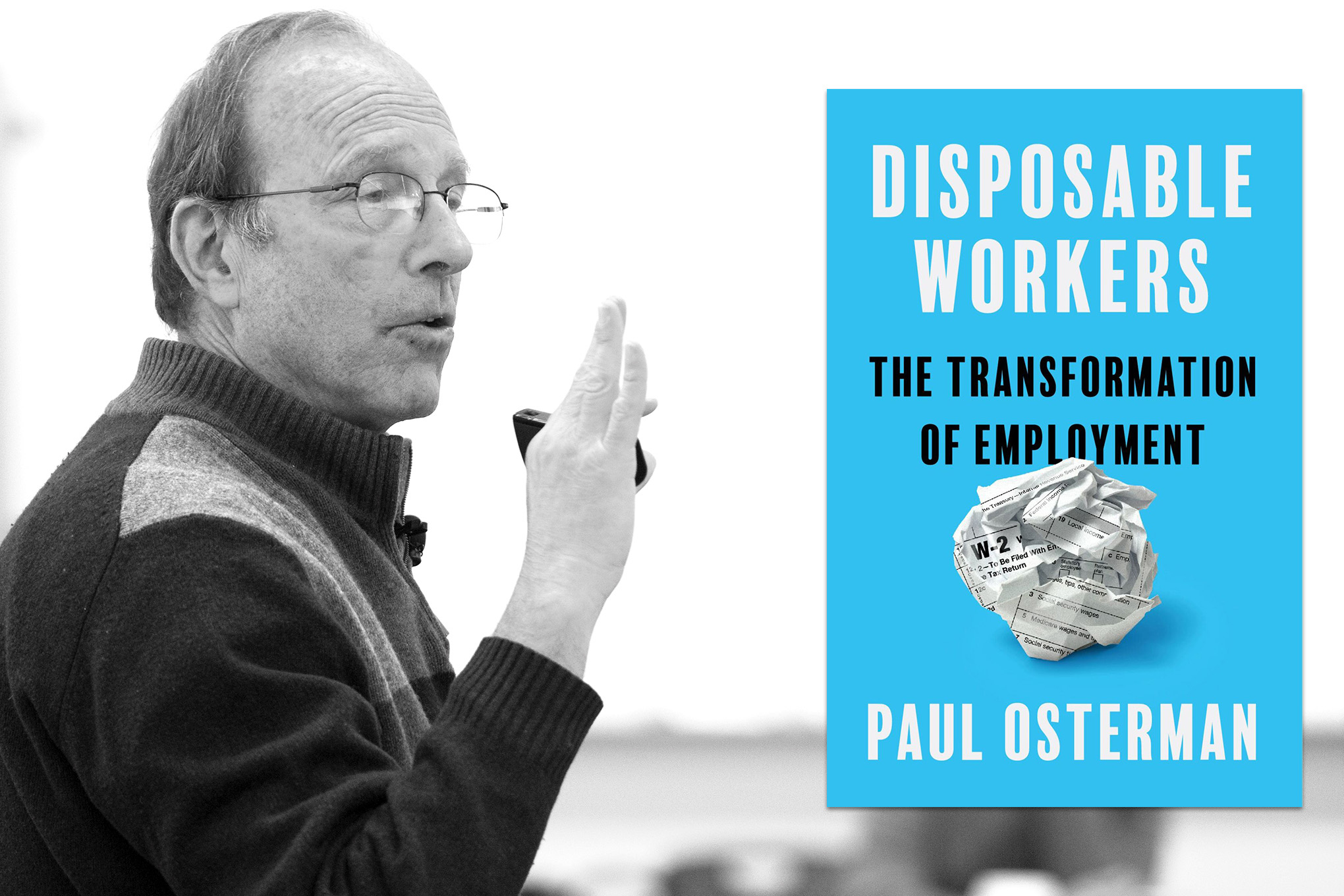
In a new book, Paul Osterman details his research finding more than one-third of the country’s workers are “disposable,” with little security or chance of job advancement.
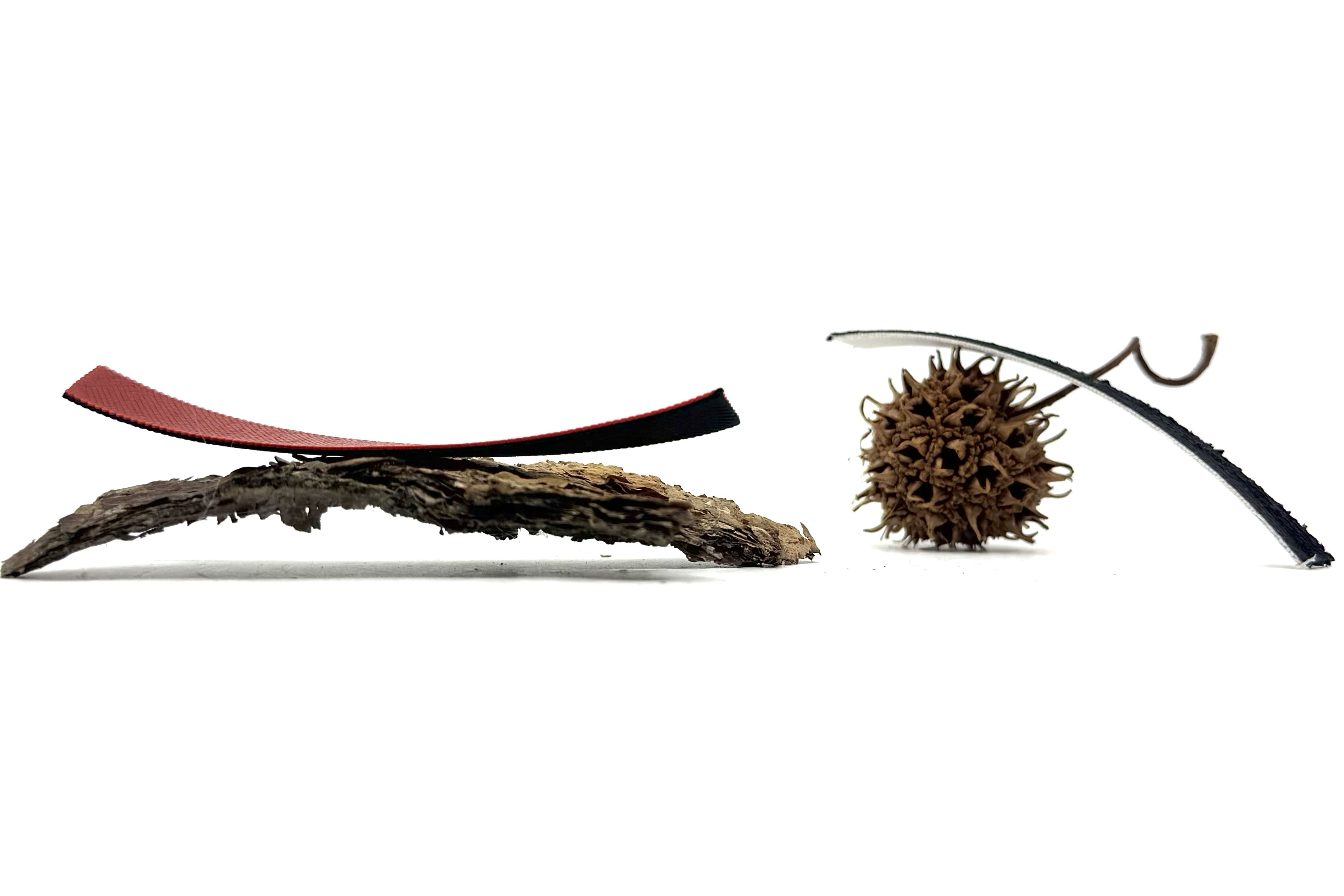
The new framework could streamline the design process of robotic grippers or aerospace components that exhibit complex behaviors found in nature.

About 16 percent of the global population—more than 1 billion people—live with some form of disability, according to the World Health Organization. Many of the disabilities affect independence and mobility.Three high school students working on inventions to help people with disabilities restore movement, translate thoughts, and navigate rough terrain had their work showcased at Regeneron’s International Science and Engineering Fair (ISEF), held in May in Phoenix. Their projects earned them this year’s IEEE Presidents’ Scholarship awards.IEEE President Mary Ellen Randall presented the awards at...

By wiring together colonies of these bacteria, the researchers built circuits that can perform complicated calculations.
A.R.T. kicks off season with ‘Rhinoceros,’ starring Paul Giamatti, Tatiana Maslany, and John Turturro
Jon Star, professor of teaching and learning, finds flexibility is key to helping students master math

The impact of AI on software development has been both profound and ever-evolving. Last year, I wrote about AMD’s plans to use AI not just for generating new lines of code, but also for other steps in the software development lifecycle (SDLC), such as triaging problems, debugging code, and testing the software. At the time, we were hoping for a 25 percent productivity boost from AI use over the course of two or three years.But with each new release, the capabilities of large language models (LLMs) improve dramatically—accelerating software development, increasing the quality of AI-generated co...

Neuroscientists have discovered circuits in the prefrontal cortex that can be repurposed to store different types of information.

Bede Liu, a digital signal processing pioneer, died on 7 May. He was 91.Liu was widely regarded as one of the founders of modern digital signal processing, a field that applies mathematical algorithms to analyze, modify, and transmit signals including sound, images, and video.The IEEE Life Fellow taught electrical engineering at Princeton for more than 50 years. From 1994 to 1997, he chaired the university’s electrical and computer engineering department.Liu’s research aided the transition from analog to digital processing of sound, images, and video. His work helped establish many of the math...