Latest Research

All News →
NA64, a decade of hunting dark matter
Research Institutions

NA64, a decade of hunting dark matter

In particle physics, energy is never lost. When particles collide or decay, all the initial energy they carry must be conserved in the resulting products, and a shortfall signals that something has escaped unseen. It was the energy missing from radioactive decays that led Wolfgang Pauli to propose the neutrino in 1930, a particle so elusive that it evaded detection for […]

📅 2026-09-04 14:57:00    •    CERN
University of Cambridge launches independent review following the death of Professor Jason Arday
Research Institutions

University of Cambridge launches independent review following the death of Professor Jason Arday

University of Cambridge launches independent review following the death of Professor Jason Arday Anonymous (not verified) Fri, 09/04/2026 - 13:45 The review will comprise two parts: Part One, to be led by Nazir Afzal OBE, will examine the University’s support of Professor Arday; Part Two will comprise a broader review of institutional processes and practice related to his appointment and time at Cambridge. The reviews will not seek to investigate areas which are the subject of the inquest process.The findings of the review will inform actions to strengthen wellbeing and support across the University and, where necessary, lead to changes in policies, procedures and practice.Announcing the review, Vice-Chancellor Professor Deborah Prentice said: “The time since the tragic death of Professor Jason Arday has been a period of profound sadness and reflection for the University.“We worked very hard to support Professor Arday during an appalling period of external criticism and focus, but given the devastating outcome, we are all asking ourselves whether we could have and should have done more. This review will answer that question.“We are committed to ensuring that any recommendations arising from the review are addressed and adopted with clear accountability for delivering necessary changes.”Subject to legal and privacy considerations, a summary of the review's findings, recommendations and resulting actions will be shared with the University community and the wider public.Further details about the reviewPart OnePart One will examine the support, interventions and protections available to Professor Arday during the period prior to his death. This work will proceed on an expedited basis and will report within three months, enabling recommendations for urgent action to be considered and implemented without delay.Nazir Afzal OBE, former Chief Crown Prosecutor for North West England, has agreed to lead Part One. He brings extensive experience leading complex independent reviews, as well as a deep understanding of the higher education sector through his role as Chancellor of The University of Manchester.Mr Afzal said: “I am honoured to have been asked to lead Part One of this important independent review. At its heart is a person, a family and a community who have been profoundly affected by Professor Arday's death. It is important that we approach this work with both rigour and humanity.“My responsibility will be to listen carefully, examine the evidence thoroughly and understand what support, interventions and protections were available to Professor Arday in the period before his death. We must be willing to ask difficult questions, including whether more could and should have been done.“This work will be conducted independently and with urgency.” Professor Prentice added: “I am very grateful to Nazir for agreeing to lead this part of the review. He is a highly respected legal professional who will ask challenging questions about the support that was offered to Professor Arday during his time at Cambridge.”Part TwoPart Two will comprise a broader review of institutional processes and practice. The University is currently appointing an independent external chair to lead this work and will establish an expert panel, including individuals with lived experience, to advise the review.This part will consider the wider context of Professor Arday's time at the University, including the recruitment of senior academic staff, mentoring and support arrangements, the University's response to allegations of research misconduct, and the support available to academics who are subject to extraordinary public and media scrutiny.It is anticipated that it will conclude within six months of the establishment of the panel. University of Cambridge launches independent review following the death of Professor Jason Arday Senate House, University of Cambridge Yes

📅 2026-09-04 12:45:16    •    Cambridge News
Media Advisory: Governor Healey, MIT President Kornbluth to Kick Off Festivities at MIT Future Fest
Research Institutions

Media Advisory: Governor Healey, MIT President Kornbluth to Kick Off Festivities at MIT Future Fest

Massachusetts Governor Maura Healey and MIT President Sally Kornbluth will kick off MIT Future Fest, a new annual festival exploring the future of science, technology, art, and design, with “The Future Begins Here” panel, a celebration of Massachusetts innovation, talent and the bold questions shaping what comes next. The event will take place on Wednesday, September 30 at 3:30 PM at MIT’s Kresge Auditorium.Curated and produced by the MIT Museum, the inaugural MIT Future Fest will take place across MIT’s campus from September 30–October 4, 2026. Governor Healy and President Kornbluth will be joined on the opening panel by Moderna co-founder and Flagship Pioneering founder and CEO Noubar Afey...

📅 2026-09-04 04:00:00    •    MIT News
Cancer cells release antioxidants to prevent immune cells from destroying them
Research Institutions

Cancer cells release antioxidants to prevent immune cells from destroying them

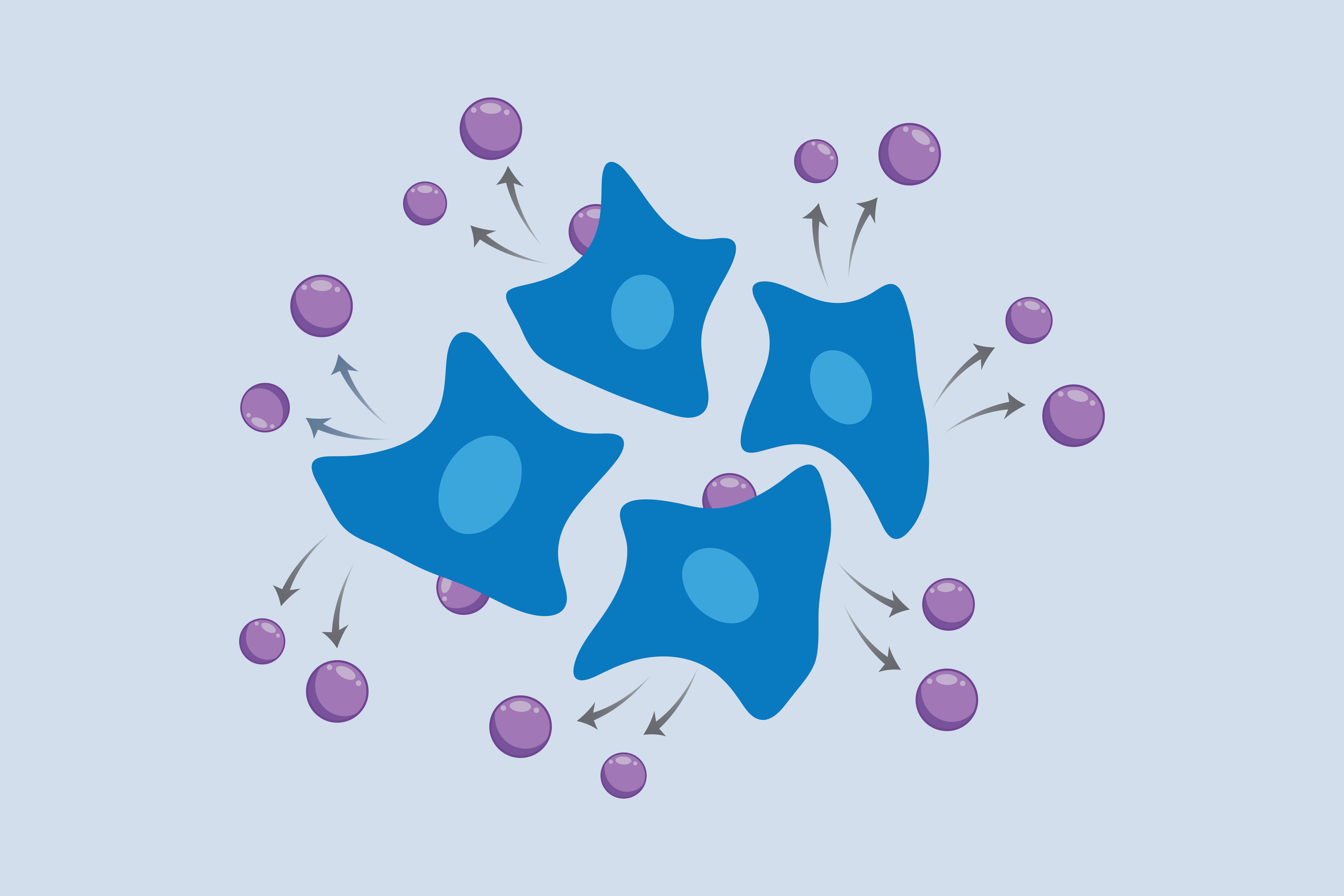
Cancer cells release antioxidants to prevent immune cells from destroying them Craig Brierley Thu, 09/03/2026 - 19:00 Now, scientists have discovered that certain immune cells depend on these very molecules to activate and destroy cancer cells, and that tumours exploit this dependency by releasing natural antioxidants to shut down the immune attack.The findings, published today in Science, could help improve the effectiveness of cancer immunotherapies. Our immune system keeps us healthy by hunting down and destroying harmful material, including invading bacteria and viruses, but also cancer cells. It does so by deploying a number of different types of immune cells, including specialised cells known as T cells. These T cells hunt down and destroy tumour cells, but T cells need small amounts of reactive oxygen species to activate and switch on their killing ability.A team at the University of Cambridge, UK, and Oregon Health & Science University, USA, analysed the fluid surrounding cells within tumours grown in mice and found that cancers chemically ‘smother’ T cells, stopping their activation and preventing them from destroying cancer cells. Tumours do this by releasing large amounts of a protein that is a natural antioxidant, Peroxiredoxin 1 (PRDX1), which mops up reactive oxygen species and deprives T cells of the activating signals they need to perform cancer killing. Next, the team used CRISPR gene-editing technology to create mouse cancer cells that could no longer make the antioxidant protein. They found that removing the capacity for the cancer cells to produce the antioxidant promoted immune-cell activity and limited tumour growth.Finally, the team looked for the same mechanism in people. They analysed published data on the proteins released by human cancer cell lines, examined gene activity across thousands of human tumours, and isolated the fluid surrounding tumours removed from patients. All three approaches pointed the same way: human cancers also release PRDX1 into their surroundings, where it can strip away the reactive oxygen species that T cells depend on.Dr Xan Wesolowski from the Department of Pathology at the University of Cambridge, one of the lead authors, said: “We tend to think of reactive oxygen species purely as damaging byproducts of metabolism. But we are increasingly understanding they have important functions within cells, and T cells need them to activate. Our study develops this picture, revealing that tumours can exploit this very dependency to evade elimination.”The treatment of cancer is increasingly moving towards leveraging the immune system to eradicate the disease. However, while immunotherapies can be incredibly effective, they are only effective in some patients. Removing the ability of cancer cells to produce PRDX1 enhanced the cancer’s response to immunotherapy.Professor Rahul Roychoudhuri, also from Cambridge’s Department of Pathology, said: “We’ve found a new way by which cancers shut down the immune system. When we block this process, tumours that don’t respond to some immunotherapies start responding to treatment. That tells us this is a pathway worth targeting therapeutically, and there are several ways we might be able to achieve this.”Dr Robert Eil from the School of Medicine at Oregon Health & Science University said: “Our study suggests a possible way to boost T cell immunotherapies. Rather than using antioxidants, it could be that prooxidants can kickstart the T cells into action against tumour cells.”The findings also carry broader implications. Several large randomised clinical trials have found that antioxidant supplements fail to reduce cancer risk, and in some cases worsen outcomes. The discovery that T cells depend on reactive oxygen species to fight tumours may help to explain why: antioxidants could inadvertently blunt the immune system's ability to attack cancer. However, the team stresses that as its findings are in preclinical laboratory models, and people living with cancer should not change their treatment or diet without medical advice.The research was largely funded by the Medical Research Council, European Research Council, Wellcome and the National Institutes of Health/National Cancer Institute.ReferenceWesolowski, AJ, et al. Tumor-derived antioxidants suppress immunity by depriving T cells of reactive oxygen species. Science; 3 Sept 2026; DOI: 10.1126/science.adz8203 We’ve found a new way by which cancers shut down the immune system. When we block this process, tumours that don’t respond to some immunotherapies start responding to treatment Rahul Roychoudhuri National Institutes of Health Killer T cells surrounding a cancer cell Yes Licence type Public Domain

📅 2026-09-03 18:00:00    •    Cambridge News