Latest Research

All News →
MIT spinout turns plastic waste into resilient building materials
Research Institutions

MIT spinout turns plastic waste into resilient building materials

The world needs more homes. The world also has too much plastic. Perhaps the only thing those two problems have in common is that they’re hard to solve.Atlas Building Composites, a spinout of MIT, is on a mission to address both problems with a single solution. The company has developed an AI-powered robotic manufacturing platform capable of turning single-use plastics into durable building materials.The company emerged from MIT HAUS, a research effort in the MIT Department of Mechanical Engineering that’s short for “Home Architecture for Universal Sustainability.” Atlas uses waterless plastic recycling and large-scale composite additive manufacturing technology to make parts like home found...

📅 2026-09-14 04:00:00    •    MIT News

New method enables AI for safety-critical situations
Research Institutions

New method enables AI for safety-critical situations

MIT researchers have developed a new technique that helps generative artificial intelligence models find solutions to high-stakes problems.In these settings, a plausible answer is not enough: The output often must also satisfy nonnegotiable safety, physical, or task-specific requirements, known as hard constraints.The researchers developed a method that helps generative models meet these strict requirements without sacrificing the quality of their outputs. The key to their technique is to give the model more freedom during the generation process and enforce hard constraints on the final output, rather than at every intermediate step. In experiments spanning robotics, control of physical proc...

📅 2026-09-14 04:00:00    •    MIT News

Lifesaving Lincoln Laboratory device wins 2026 Excellence in Technology Transfer Award
Research Institutions

Lifesaving Lincoln Laboratory device wins 2026 Excellence in Technology Transfer Award

The Federal Laboratory Consortium (FLC) selected AI-GUIDE, a medical device developed by MIT Lincoln Laboratory and Massachusetts General Hospital (MGH), for its 2026 Excellence in Technology Transfer Award. This award recognizes federal laboratories and collaborators who have accomplished outstanding work in the process of transferring technology. With funding from the U.S. Army's Combat Casualty Care Research Program (CCC), Lincoln Laboratory and MGH developed AI-GUIDE and are in the process of transferring the prototype to the startup company AutonomUS Medical Technologies, Inc."This recognition reflects what effective technology transfer looks like — aligning the Army's operational need ...

📅 2026-09-11 13:45:00    •    MIT News
Where U.S. has lost ground since 9/11
Research Institutions

Where U.S. has lost ground since 9/11

Nation & World Where U.S. has lost ground since 9/11 Moderator Meghan O’Sullivan (from left), Joseph Pfeifer, Nancy Gibbs, and Michael Mullen. Niles Singer/Harvard Staff Photographer Clea Simon Harvard Correspondent September 10, 2026 5 min read FDNY chief, admiral who survived Pentagon attack, Time journalist say decline in national unity since then is perhaps most damaging problem After the terrorist attacks on Sept. 11, 2001, the nation rallied under the cry “Never forget.” But 25 years later, several lessons that emerged from that day of death and destruction have been forgotten, according to a panel of experts at a John F. Kennedy Jr. Forum at the Institute of Politics on Tuesday night....

📅 2026-09-10 19:26:37    •    Harvard Gazette
Who needs opioids?
Research Institutions

Who needs opioids?

Health Who needs opioids? Kathleen Refior HSDM Communications September 10, 2026 5 min read As concerns about misuse persist, paper suggests role for AI in making pain treatment more precise For a patient having their wisdom teeth removed, the days after surgery can bring an important question: How much pain medication will I actually need? Over-the-counter medications such as acetaminophen and ibuprofen provide adequate pain relief for most, but some patients experience breakthrough pain that does not respond to these medications and may benefit from an opioid. For clinicians, the challenge is knowing before surgery which patients will need additional pain relief. Harvard School of Dental M...

📅 2026-09-10 19:19:25    •    Harvard Gazette
Does having a bad dream make you a bad person?
Research Institutions

Does having a bad dream make you a bad person?

Illustration by Liz Zonarich/Harvard Staff Health Does having a bad dream make you a bad person? Psychologist breaks down what those negative night narratives might be trying to tell you Samantha Laine Perfas Harvard Staff Writer September 10, 2026 4 min read Part of the Wondering series A series of random questions answered by Harvard experts. Deirdre Leigh Barrett is a dream researcher and a Harvard Medical School lecturer on psychology in the department of psychiatry at Cambridge Health Alliance. She is also the author of “The Committee of Sleep: How Artists, Scientists, and Athletes Use Their Dreams for Creative Problem Solving — And How You Can Too.” Dream interpretation is tricky. Let’...

📅 2026-09-10 16:57:09    •    Harvard Gazette
MIT Schwarzman College of Computing launches pilot to help educators teach AI across disciplines
Research Institutions

MIT Schwarzman College of Computing launches pilot to help educators teach AI across disciplines

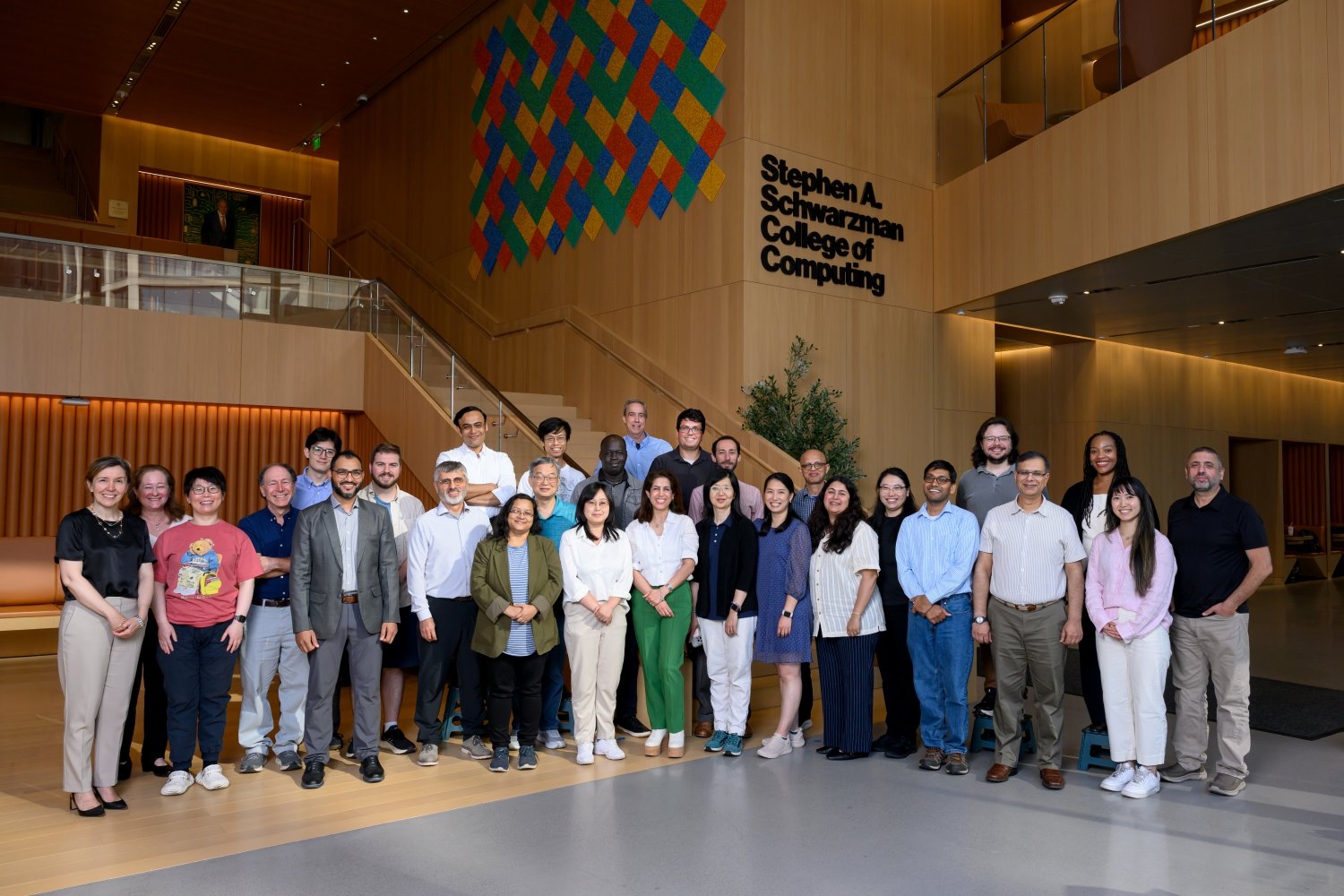
This summer, the MIT Schwarzman College of Computing welcomed faculty from colleges and universities across Greater Boston, South Carolina, West Virginia, and Texas to campus for the inaugural AI Educators Pilot, a weeklong workshop aimed at expanding how artificial intelligence is taught across disciplines and learning environments. Inspired by MIT class C01/C51 (Modeling with Machine Learning), a course developed through the Common Ground for computing and AI education that focuses on helping students understand and apply foundational AI and machine learning concepts to problem-solving in their own disciplines, the workshop gave educators an opportunity to explore how its materials and tea...

📅 2026-09-09 20:40:00    •    MIT News
Has pancreatic cancer met its match?
Research Institutions

Has pancreatic cancer met its match?

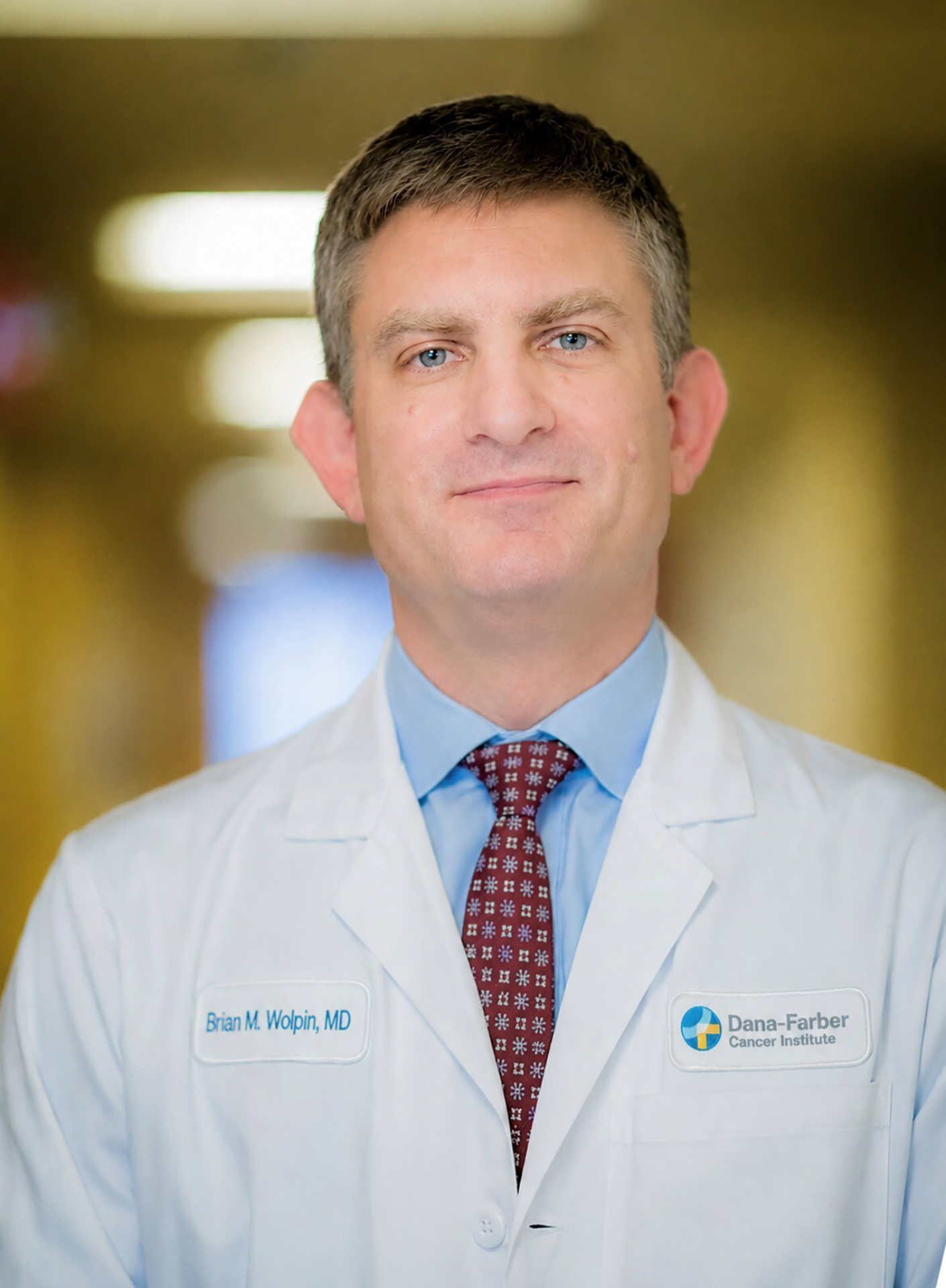
Health Has pancreatic cancer met its match? Frontline researcher sees newly approved medication as ‘critical first step’ toward transformation of care Alvin Powell Harvard Staff Writer September 9, 2026 7 min read Brian Wolpin. Last month, the Food and Drug Administration approved a new drug for one of the deadliest cancers, lending new hope to patients whose treatment options had been severely limited. The drug, daraxonrasib, doubled survival time for patients with previously treated metastatic pancreatic cancer to a median of 13.2 months from 6.7 months for those who received the chemotherapy standard of care. According to the National Cancer Institute, more than 67,000 people will be diag...

📅 2026-09-09 19:42:52    •    Harvard Gazette
A burst of “pink noise” may lead to more restorative sleep
Research Institutions

A burst of “pink noise” may lead to more restorative sleep

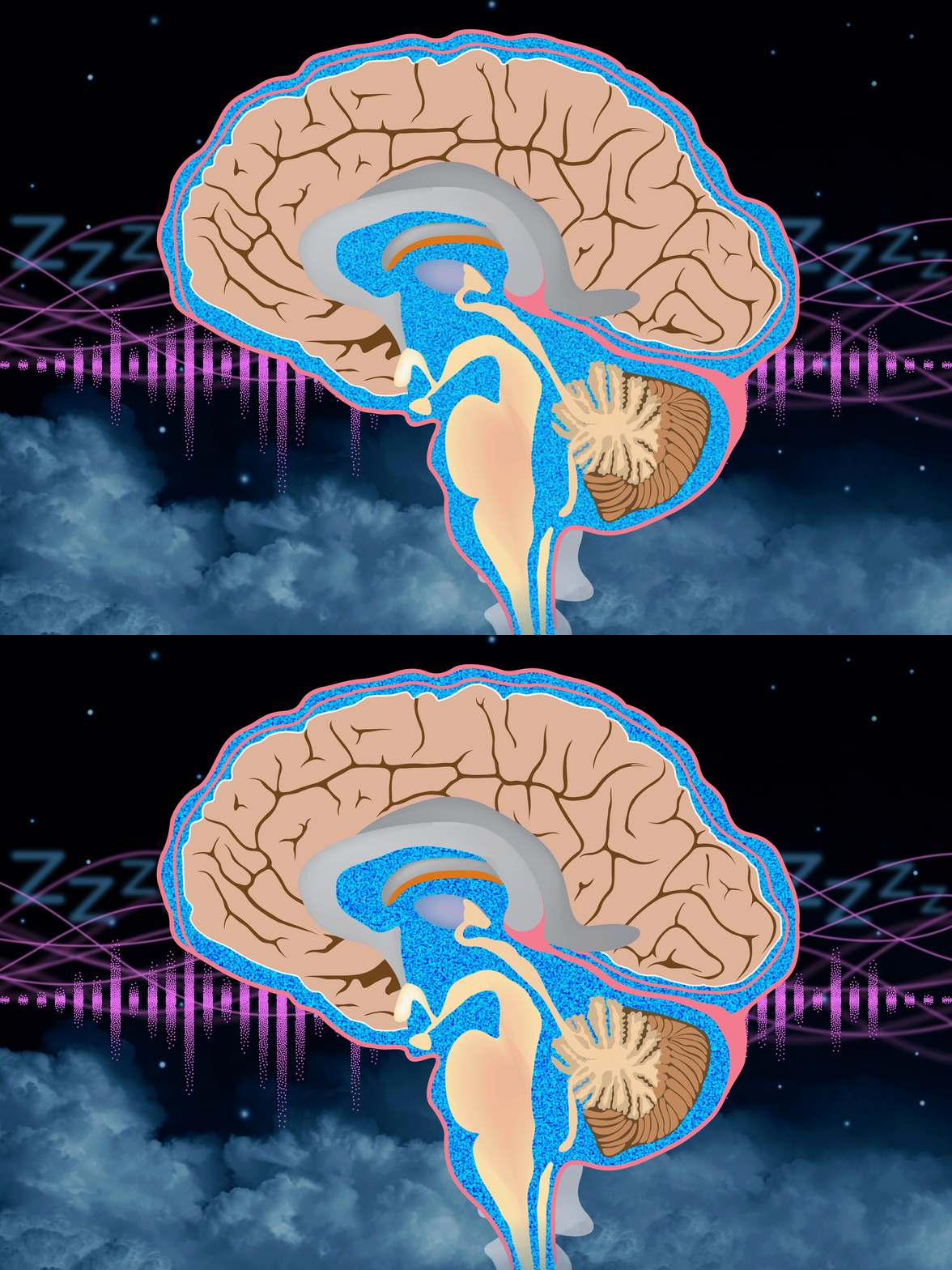
During the day, waste products such as lactic acid and worn-out proteins build up in the brain. When we sleep at night, waves of cerebrospinal fluid (CSF) help to wash away this waste, keeping the brain healthy.In a new study, MIT researchers have shown that they can strengthen these CSF waves through exposure to short bursts of a gentle, staticky sound known as “pink noise” during sleep. These bursts increase the amplitude of slow electrical waves in the brain, which then enlarges the CSF waves.The researchers now hope to explore whether this enhanced CSF flow could help to boost cognitive function, improve memory, or even slow the progression of neurodegenerative diseases caused by the bui...

📅 2026-09-09 18:00:00    •    MIT News
What it takes to solve math’s toughest problems
Research Institutions

What it takes to solve math’s toughest problems

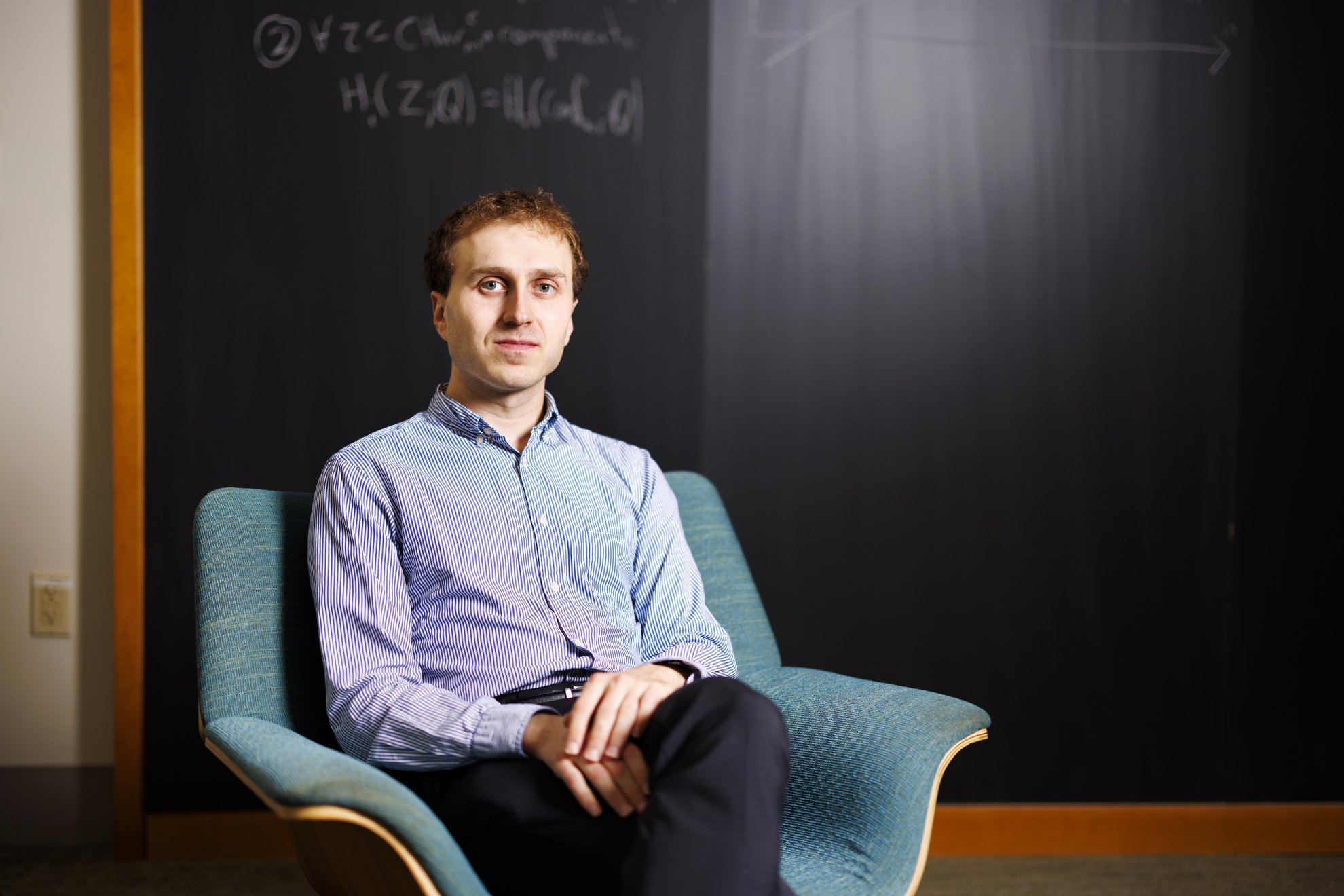
Aaron Landesman. Veasey Conway/Harvard Staff Photographer Science & Tech What it takes to solve math’s toughest problems Sy Boles Harvard Staff Writer September 9, 2026 6 min read Logic skills, yes, but also two seemingly incompatible traits: Confidence and humility This is a story about keeping the faith in a discipline not exactly known for its religiosity: mathematics. The field of arithmetic statistics — the study of statistical patterns in arithmetic objects such as number fields, class groups, and elliptic curves — rests on sets of conjectures whose predictions have been only partially proven. In 2001, mathematician Jordan Ellenberg ’93, Ph.D. ’98, and some colleagues set out on a humb...

📅 2026-09-09 16:20:52    •    Harvard Gazette
Has Homeland Security kept up with its mission?
Research Institutions

Has Homeland Security kept up with its mission?

Nation & World Has Homeland Security kept up with its mission? Former DHS secretary says U.S. safer now than before 9/11, agency has largely successfully evolved with emerging threats Christina Pazzanese Harvard Staff Writer September 9, 2026 7 min read AP Photo/Alex Brandon The attacks against the U.S. on Sept. 11, 2001, exposed critical gaps in information-sharing among key security agencies. In response, the government brought together 22 federal entities to form the Department of Homeland Security (DHS) to better anticipate and address the threat of terrorism from overseas and to strengthen coordination among various emergency-response agencies. Now the third-largest Cabinet-level depart...

📅 2026-09-09 15:26:52    •    Harvard Gazette