Latest Science & Research News

Stay informed about scientific discoveries, research developments and new findings from around the world.

Latest News

View All →
AI turns scrap impurities into useful ingredients for stronger recycled iron
Science News

AI turns scrap impurities into useful ingredients for stronger recycled iron

About 2 billion metric tons of metal are produced worldwide every year to meet the demands of industry, infrastructure and the energy sector. Much of this production still relies on primary raw materials, contributing to an estimated 40% of industrial greenhouse gas emissions and 10% of global energy consumption. Increasing the use of recycled metals could significantly reduce the environmental impact of metal production while also lowering dependence on imports of scarce and strategically critical raw materials.

📅 2026-10-15 20:20:18    •    Phys.org
Read Original Article →
2 giant Ramesses II statues, one wearing a double crown, discovered by man in Egypt
Science News

2 giant Ramesses II statues, one wearing a double crown, discovered by man in Egypt

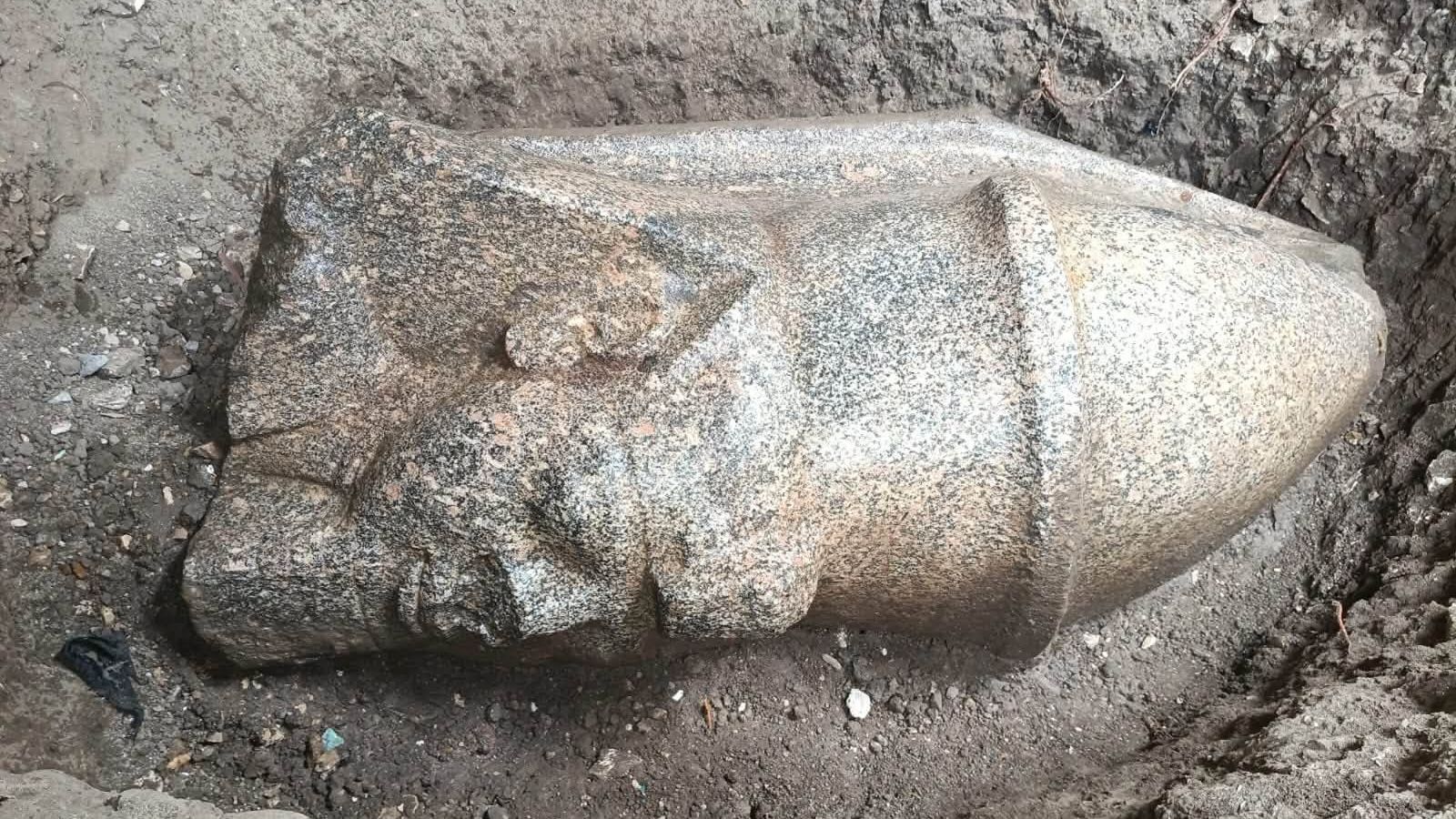
While working on his land in a village in northern Egypt, a man made an astonishing discovery: the remains of two massive statues of Ramesses II.The man, Khaled el-Shahat, immediately notified the Egyptian Ministry of Tourism and Antiquities, which sent a team to the village of Behbeit El Hagar to excavate and study the statues, the ministry said in a translated statement.Ramesses II had one of the longest reigns in Egypt's history, ruling from around 1279 to 1213 B.C. During his 66 years in power, Egypt controlled an empire that stretched as far northeast as modern-day Syria. He initiated many building projects throughout the empire, and numerous Ramesses II statues have been found througho...

📅 2026-10-15 20:01:18    •    Live Science
Read Original Article →
North Sea heat wave fueled underwater plankton bloom largely missed by satellites
Science News

North Sea heat wave fueled underwater plankton bloom largely missed by satellites

When a marine heat wave strikes, scientists often turn to satellites to see how the ocean is responding. From space, changes in ocean color can reveal shifts in phytoplankton, microscopic organisms that form the foundation of marine food webs and play a crucial role in the global carbon cycle. But satellites have a fundamental limitation: they can only see the ocean's surface.

📅 2026-10-15 20:00:07    •    Phys.org
Read Original Article →
Two brain circuits coordinate fruit flies' wing and leg movements to threaten rivals
Science News

Two brain circuits coordinate fruit flies' wing and leg movements to threaten rivals

Limbs evolved as a means of locomotion. From the primitive rotating flagella of bacteria to the wings of flies and even our own legs, animals use these appendages to travel to find food or mates or escape predators. But in countless species across the animal kingdom, limbs are repurposed to create elaborate social displays: Birds of paradise fan out their wings and hop around in courtship dances, while crabs wave their claws to communicate to potential mating partners. As humans, we use our limbs to dance, gesture while talking, wield tools and conduct a remarkable diversity of behaviors. How does the brain control and coordinate its body parts for such distinct purposes?

📅 2026-10-15 19:40:18    •    Phys.org
Read Original Article →
Researchers find that some weeds get supercharged by an indirect hit of herbicide
Science News

Researchers find that some weeds get supercharged by an indirect hit of herbicide

A brush with low doses of the herbicide dicamba spurs oxalis, a weed commonly known as wood sorrel, to produce more flowers, University of Michigan researchers have discovered. The finding suggests that farmers and homeowners are inadvertently making weeds growing around the perimeter of their fields or lawns stronger, the researchers say. The study results are published in the journal New Phytologist.

📅 2026-10-15 19:20:11    •    Phys.org
Read Original Article →
Better together? Coral fusion could throw bleached reefs a lifeline
Science News

Better together? Coral fusion could throw bleached reefs a lifeline

When corals are stressed by pollution, high water temperatures or other environmental changes, they can lose the microscopic algae living inside them and on which they depend for food. As a result, they turn white, a phenomenon known as coral bleaching. They will not die straight away, but it will be game over if the stress continues long enough for them to starve.

📅 2026-10-15 19:20:02    •    Phys.org
Read Original Article →
Lion tracks from the ice age: How two ways of seeing brought ancient animals to life
Science News

Lion tracks from the ice age: How two ways of seeing brought ancient animals to life

The coastline near the southern tip of Africa looked vastly different between about 400,000 years ago and 70,000 years ago, compared with today. At times it lay as much as 100km (62 miles) south of its present location, exposing the vast Palaeo-Agulhas Plain, which contained an extensive habitat for large mammals. At other times the sea level was briefly as much as 13 meters (43 feet) higher than today's mean level.

📅 2026-10-15 19:00:33    •    Phys.org
Read Original Article →
Towering glacial ice cliffs may collapse in fits and starts
Science News

Towering glacial ice cliffs may collapse in fits and starts

The cliff face of Thrym glacier in Skjoldungen fjord, Greenland, in August 2025Caroline Needell The world’s thickest glaciers may “calve” icebergs up to three times faster than previously predicted. However, such rapid retreat may not be sustained over long periods. Instead, the large bodies of ice – which include Antarctica’s Thwaites glacier – may collapse in bursts, with intervening periods of stability. The behaviour of tall ice cliffs is one of the biggest sources of uncertainty in predicting future sea level rise. Several of the world’s largest glaciers in Greenland and Antarctica extend out to sea, with their bases resting on the sea floor. Their coastal edges can form ice cliffs loom...

📅 2026-10-15 18:00:00    •    New Scientist
Read Original Article →
Google showcases way to fix quantum computer errors more efficiently
Science News

Google showcases way to fix quantum computer errors more efficiently

The Willow quantum computerGoogle Quantum AI Making quantum computers error-proof is one of the biggest challenges currently facing the technology. Researchers at Google Quantum AI have now demonstrated one way to do so more efficiently. Their work suggests the smaller quantum computers that will be available in the next few years could be more impactful than expected. Quantum computers can run mathematical operations, analogous to addition or multiplication, that conventional computers cannot. This makes them suitable for solving some problems that had previously been considered unsolvable, such as those that underpin cryptography. Most important among the quantum operations the computers r...

📅 2026-10-15 18:00:00    •    New Scientist
Read Original Article →
AI helps detect media bias, informing voters and news consumers
Science News

AI helps detect media bias, informing voters and news consumers

In 2024, a collaborative Penn venture introduced a more objective way for people to examine how different outlets cover the same events and ultimately decide how they perceive and use information shared in the media. The Media Bias Detector, conceived in Penn's Computational Social Science (CSS) Lab, a joint venture of Penn Engineering, the Annenberg School for Communication and the Wharton School, uses artificial intelligence to analyze news articles for characteristics including topic, tone, political lean, and the facts and people included in coverage.

📅 2026-10-15 16:00:12    •    Phys.org
Read Original Article →
'We're not a competitor to fusion. We are fusion': Inside the race to harness unlimited solar power in space
Science News

'We're not a competitor to fusion. We are fusion': Inside the race to harness unlimited solar power in space

The year is 2050, and as the sun sets, the night's first constellations emerge in perfect rows. But these amber-glowing arrays aren't stars at all; they're satellite clusters, harvesting the day's last rays before beaming their power back to Earth.If it reads like science fiction, that's because it started that way. Called space-based solar power (SBSP), the concept featured prominently in the techno-utopian imaginations of 20th-century visionaries and writers. But for decades, it was dismissed — a pie in the sky proposal.Now, as a new space race heats up, governments and private companies in China, the U.S., the U.K. and Japan are developing several projects to reassess the idea's feasibili...

📅 2026-10-15 16:00:00    •    Live Science
Read Original Article →
Quantum calculations reveal how spin defects lose energy
Science News

Quantum calculations reveal how spin defects lose energy

When light hits a tiny defect embedded in a solid material like diamond or silicon carbide, it can kick the defect's electrons into an excited state. These spin defects have the potential to be used as stable, readable qubits for quantum technologies, for example, quantum sensing. But modeling the full physics of their energetics over time—a key step in developing spin defects into new technologies—is a challenging task.

📅 2026-10-15 15:40:09    •    Phys.org
Read Original Article →
Solving the mystery behind a flightless beetle's transatlantic journey
Science News

Solving the mystery behind a flightless beetle's transatlantic journey

They can't fly or swim, so why do their closest relatives appear on different continents? Grey Gustafson, an associate professor in the Department of Biological Sciences, discovered through DNA sequencing that the ancestors of some of today's tiger beetles existed in South America and Africa before the two continents separated. What's more, North America's largest tiger beetles are related to these ancestral South American giant tiger beetles.

📅 2026-10-15 15:20:11    •    Phys.org
Read Original Article →
Page 9of 148   •   3,547articles