Latest Science & Research News

Stay informed about scientific discoveries, research developments and new findings from around the world.

Latest News

View All →
New nanoparticle drug-delivery method may improve treatment for endometriosis
Science News

New nanoparticle drug-delivery method may improve treatment for endometriosis

Researchers have engineered a drug treatment that shows rapid effectiveness against endometriosis in early testing, laying the foundation for a potential therapy for an incurable, chronic disease that affects 1 in 10 women. The targeted nanotherapy, developed by a team of scientists at Washington State University, reduced endometriosis symptoms and disease progression after a single dose in a mouse model.

📅 2026-09-21 19:40:02    •    Phys.org
Read Original Article →
Truckee River microplastics rise nearly tenfold during high spring flows
Science News

Truckee River microplastics rise nearly tenfold during high spring flows

The ubiquitous plastics of modern life are degrading into tiny fragments and littering Earth's landscapes and waterways. Scientists are starting to examine and measure this phenomenon to better understand how microplastics move through the environment and ultimately affect human and environmental health. A new study focuses on the Truckee River, which stems from the clear blue waters of Lake Tahoe and traverses Reno and Sparks, Nevada, before reaching Pyramid Lake. The research sought to illuminate the concentrations and types of plastics accumulating throughout the river—which supplies drinking water to nearly half a million people.

📅 2026-09-21 19:30:02    •    Phys.org
Read Original Article →
How migrating cells build their leading edge: Master regulator may resolve long-standing debate
Science News

How migrating cells build their leading edge: Master regulator may resolve long-standing debate

The ability of cells to move and change position is essential for various processes in our bodies. Immune cells move to sites of action, epithelial cells migrate during wound closure, and neurons extend their axons for signal transmission over long distances. In metastasis, cancer cells employ their motile machinery to spread throughout the body.

📅 2026-09-21 19:20:08    •    Phys.org
Read Original Article →
Developing lower-performing employees may annoy the go-getters
Science News

Developing lower-performing employees may annoy the go-getters

When Martin Wiernsperger was a graduate student, he and fellow student Mackenzie Feinberg realized they both had family members in the health care field—and both had heard relatives complain about lower-performing employees getting more opportunities for training and professional development than their higher-performing peers.

📅 2026-09-21 19:20:04    •    Phys.org
Read Original Article →
Solar Orbiter catches the sun's missing high-speed vibrations
Science News

Solar Orbiter catches the sun's missing high-speed vibrations

The sun's magnetic fields are a twisty, curvy, ever-changing mess. In particular, our star's polar regions host areas called polar coronal holes, which contain invisible magnetic highways that stretch into interplanetary space. But there's a lot we don't know about how those highways actually work, particularly how they give the particles that form the fast solar wind an extra "kick" that sends them zooming at hundreds of kilometers per second.

📅 2026-09-21 19:00:04    •    Phys.org
Read Original Article →
Scientists made a paper battery you can swallow to power internal medical devices
Science News

Scientists made a paper battery you can swallow to power internal medical devices

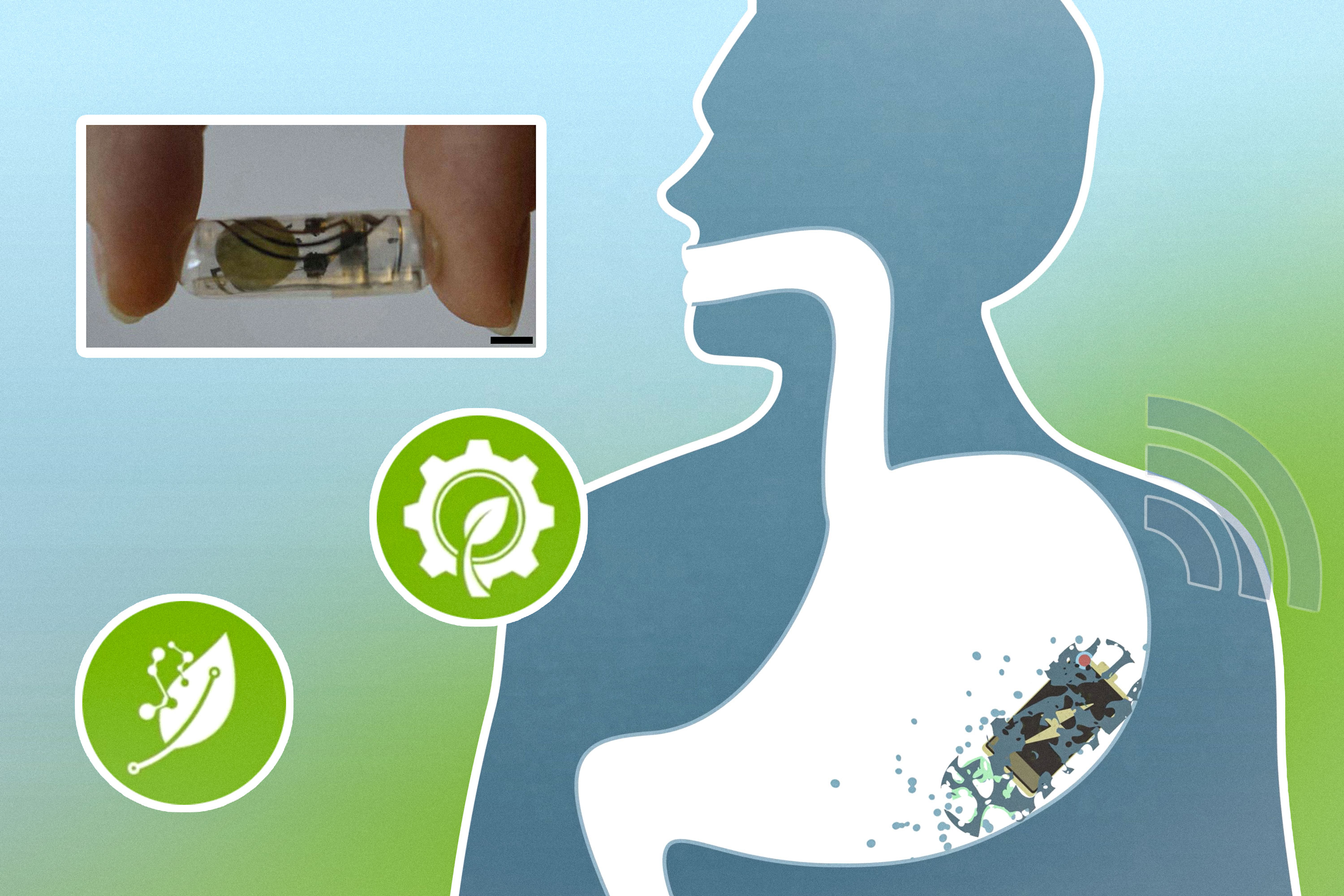
Scientists built a swallowable paper battery that can power medical devices inside the body and then gradually break down after its job is done.So far, the battery has been tested only in pigs, in which it powered devices for up to three days. If proven safe and effective in people, the battery could someday power temporary devices inside the gut while avoiding surgery to retrieve a conventional battery from the body when the device is no longer needed."I'm very excited about this work," said Reza Ghodssi, a professor of electrical and computer engineering at the University of Maryland who was not involved in the study. "The battery is one component that takes up most of the space in an inge...

📅 2026-09-21 18:30:00    •    Live Science
Read Original Article →
Dumbest question is the one you never ask, says Amazon CEO
Research Institutions

Dumbest question is the one you never ask, says Amazon CEO

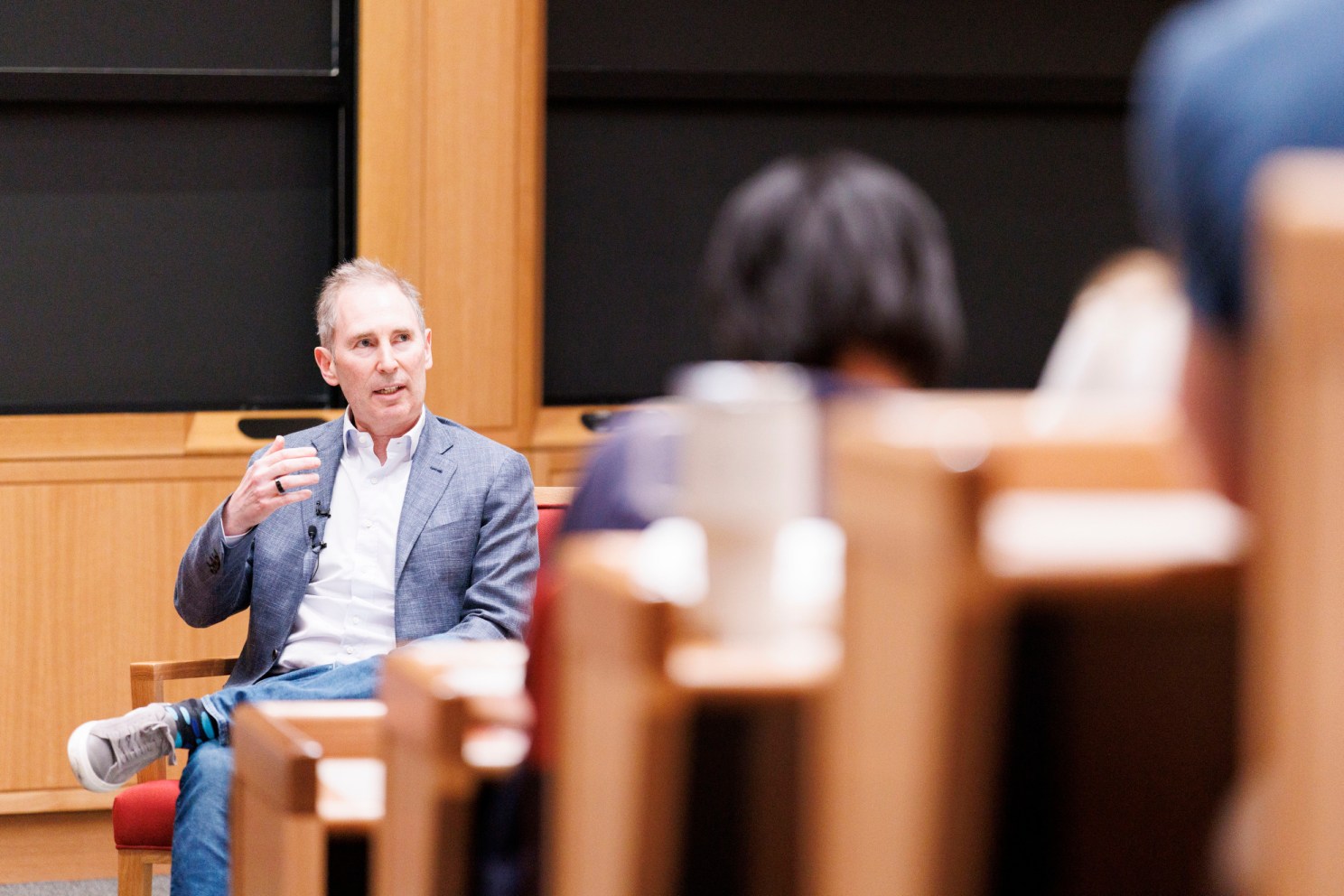
Andy Jassy. Veasey Conway/Harvard Staff Photographer Work & Economy Dumbest question is the one you never ask, says Amazon CEO AI competition – among companies and in the labor market – also on Jassy’s mind in HBS talk Christina Pazzanese Harvard Staff Writer September 21, 2026 4 min read Though it’s best known as an online retail and streaming giant, Amazon has also played a central role in the AI revolution. In August, the company’s valuation hit $3 trillion. Much of that was driven by Amazon Web Services (AWS), the cloud computing operation that serves as a primary platform for both large-scale frontier model AI builders like Anthropic and OpenAI and for smaller firms developing simpler, ...

📅 2026-09-21 18:23:56    •    Harvard Gazette
Read Original Article →
Democracy? Some founders were skeptical.
Research Institutions

Democracy? Some founders were skeptical.

Illustration by Liz Zonarich/Harvard Staff Nation & World Democracy? Some founders were skeptical. Historians detail how, why Constitution became (and remains) work in progress Liz Mineo Harvard Staff Writer September 21, 2026 5 min read Part of a series of occasional features marking the nation’s semiquincentennial. Creating a democracy was not really at the forefront of the founders’ minds when the American colonies first declared independence from Britain in 1776. The independence movement began as a struggle between the colonies and the crown to gain more rights within the empire, not to break away from it, said Alex Keyssar, Matthew W. Stirling Jr. Professor of History and Social Policy...

📅 2026-09-21 18:23:05    •    Harvard Gazette
Read Original Article →
A newly discovered mechanism helps cells prevent errors during DNA replication
Science News

A newly discovered mechanism helps cells prevent errors during DNA replication

At the scale of individual cells, the human body is constantly in motion. Every second, millions of cells divide, particularly in tissues such as the bone marrow, intestine and skin; neurons and heart muscle cells divide far less frequently. All of this depends on the molecular machinery responsible for copying the billions of chemical units that make up DNA inside the nucleus.

📅 2026-09-21 18:20:05    •    Phys.org
Read Original Article →
STEM activities with family and educators expose students to diverse career paths
Science News

STEM activities with family and educators expose students to diverse career paths

Activities children take part in with family and friends can help shape the fields of study and careers they pursue as adults. A new study published in the International Journal of STEM Education by FIU education researchers Chris Irwin and Zahra Hazari found that STEM activities and conversations with family, friends and teachers are among the strongest factors influencing students' motivations for pursuing STEM (science, technology, engineering and math) careers.

📅 2026-09-21 18:20:01    •    Phys.org
Read Original Article →
Antarctica's lost mountains may have helped early life flourish
Science News

Antarctica's lost mountains may have helped early life flourish

Beneath the vast frozen wastes of Antarctica lie the remains of ancient mountains that have long since eroded. Even though they're no longer standing, they can still reveal a few lost secrets. New research published in Earth and Planetary Science Letters suggests that these vanished peaks may have played a fundamental role in the evolution of complex life on this planet.

📅 2026-09-21 18:10:01    •    Phys.org
Read Original Article →

Carter Stubbs named Institute auditor
Research Institutions

Carter Stubbs named Institute auditor

Carter Stubbs has been appointed MIT’s Institute auditor, effective Nov. 2. Stubbs, who currently serves as audit assistant director for IT Audit and Advisory Services, has been a member of the MIT community for more than 11 years and brings deep institutional knowledge, highly salient management experience, and a forward-looking vision to the role. Stubbs will succeed Michael Moody, who has served as Institute auditor for 12 years and will retire from MIT in October. Executive Vice President and Treasurer Glen Shor announced the news today in a letter to MIT’s Academic Council.“Carter stood out in a competitive field of candidates thanks to his impressive audit and IT expertise, collaborati...

📅 2026-09-21 17:00:00    •    MIT News
Read Original Article →
Southern Taurid meteor shower begins ‪—‬ how to spot blazing 'fireballs' from now till November
Science News

Southern Taurid meteor shower begins ‪—‬ how to spot blazing 'fireballs' from now till November

One of the longest-running meteor showers of the year began on Sunday (Sept. 20), as the Southern Taurids start sending occasional "shooting stars" — and, potentially, spectacular fireballs — across the night sky.The Southern Taurid meteor shower runs from Sept. 20 through Nov. 20, peaking overnight on both Oct. 13-14 and Nov. 4-5, according to the American Meteor Society. Although only about five to 10 meteors per hour can be expected during the shower's peak, the Taurids have a reputation for producing fireballs — very bright meteors that appear as flashes while falling through the atmosphere.Patience is often rewarded with some of the most impressive meteors of the year, partly because th...

📅 2026-09-21 16:06:06    •    Live Science
Read Original Article →

Batteries that safely break down in the GI tract could improve ingestible devices
Research Institutions

Batteries that safely break down in the GI tract could improve ingestible devices

Using materials safe for human consumption, MIT researchers have created tiny batteries that could be used to power ingestible electronic devices. Such batteries could make the devices safer for patients and minimize the environmental impact of the batteries after they are excreted.In a new study, the researchers showed that the batteries, which generate 1.84 volts, could power two different types of devices: an RFID tag that can transmit from the stomach, and a capsule that produces a small electrical current that stimulates production of ghrelin, the hunger hormone.This type of battery, which contains electrodes made from magnesium and molybdenum trioxide, could also be deployed in other i...

📅 2026-09-21 15:00:00    •    MIT News
Read Original Article →
Page 89of 160   •   3,820articles