Latest Science & Research News

Stay informed about scientific discoveries, research developments and new findings from around the world.

Latest News

View All β†’
Women astronauts use social media to reframe science and femininity together
Science News

Women astronauts use social media to reframe science and femininity together

Why can't a flight jacket be pink or purple? That was the question a 6-year-old girl asked her mother, Kellie Gerardi, an astronaut, researcher and science communicator. When Gerardi later appeared in a TV interview wearing a bright pink flight jacket, her daughter pointed to her mom on the TV screen, smiling with delight. This exchangeβ€”which appeared in a post on Gerardi's Instagram accountβ€”was a personal moment, skillfully presented through the language and visuals of social media. But it also conveys a clear message: Femininity and scientific credibility are not mutually exclusive.

πŸ“… 2026-10-01 04:00:02    β€’    Phys.org
Read Original Article β†’
Caltech physicists finally measure a quantum energy ladder predicted 40 years ago
Science News

Caltech physicists finally measure a quantum energy ladder predicted 40 years ago

Researchers have experimentally observed energy patterns that physicists have predicted for about 40 years. By arranging laser-trapped atoms into a quantum simulator, they recreated two different quantum tipping points and watched the atoms fall into the exact energy ratios predicted by theory. The technique could now be used to explore mysterious quantum systems where scientists do not already know the answer.

πŸ“… 2026-10-01 03:06:56    β€’    ScienceDaily
Read Original Article β†’
Devastating year for Switzerland's glaciers after extreme heat and low snow
Science News

Devastating year for Switzerland's glaciers after extreme heat and low snow

Switzerland's glaciers lost more than 5% of their ice volume in 2026. Although melt rates did not quite reach the record levels of 2022, glacier thickness decreased by an average of 2.5 to 4 meters (8 to 13 feet) this year, and some glacier tongues lost up to 10 meters (33 feet) of ice. The research is published in the journal GLAMOSβ€”Glacier Monitoring Switzerland.

πŸ“… 2026-09-30 23:00:01    β€’    Phys.org
Read Original Article β†’
Peruvian mummies raise questions about Wari conquest of Nasca civilization
Science News

Peruvian mummies raise questions about Wari conquest of Nasca civilization

For centuries, historians have drawn the boundaries of where ancient people lived based on the evidence they left behind. By studying their remains, burial practices and other archaeological clues, they can determine the types of relationships they had with other people in the area. However, this can all change when new archaeological evidence is found.

πŸ“… 2026-09-30 22:20:16    β€’    Phys.org
Read Original Article β†’
Fluorescent sensors could help researchers see diabetes in action
Science News

Fluorescent sensors could help researchers see diabetes in action

Researchers from the University of Bath have developed fluorescent molecular probes that can detect changes in glucose levels inside living animals, giving scientists new ways of visualizing sugar uptake and studying diabetes, cancer and other metabolic diseases in whole organisms in real time. The findings are published in the journal Advanced Science.

πŸ“… 2026-09-30 22:00:01    β€’    Phys.org
Read Original Article β†’
Short on time? It could be good for you
Science News

Short on time? It could be good for you

When it comes to mental health, it may not be how much time you have that matters, but rather how you feel about the time you have. That's one key takeaway of a new University of Colorado Boulder study examining the relationship between time and mental health.

πŸ“… 2026-09-30 21:30:01    β€’    Phys.org
Read Original Article β†’
CHIME telescope unlocks new way to study the universe's baffling expansion
Science News

CHIME telescope unlocks new way to study the universe's baffling expansion

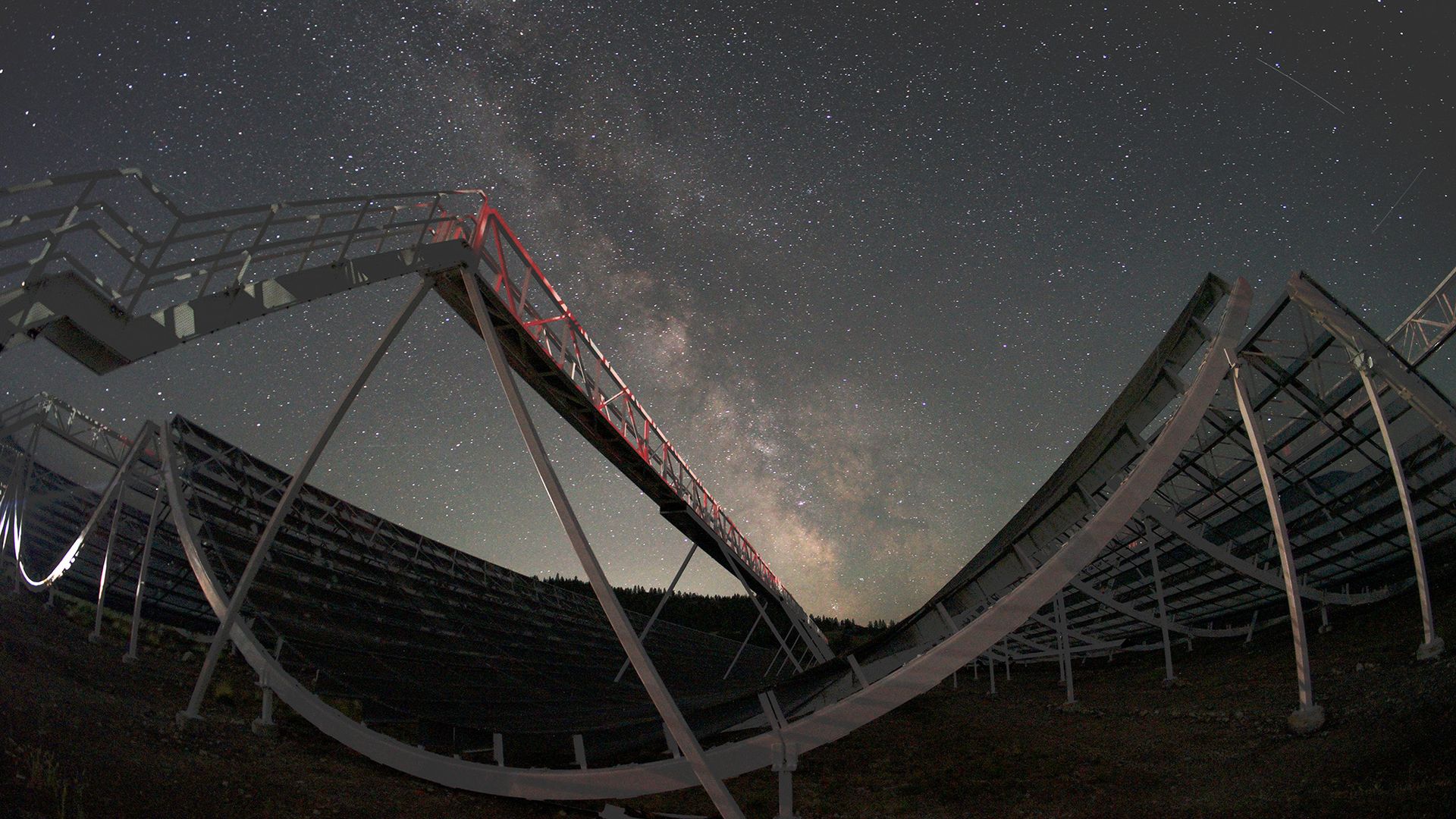
Scientists have a new tool for mapping the universe's perplexing acceleration.A Canadian telescope designed to chart the distribution of hydrogen gas across the ancient universe has proved it can do so using only its own data for the first time, without the help of other telescopes. The results took seven years to prove, but the payoff could be huge. According to the authors of a new study published Monday (Sept. 28) in The Astrophysical Journal, the telescope could give scientists a new, cost-effective way to study dark energy, the poorly understood force that is causing the universe to expand at an accelerating rate over time."Hydrogen is the most common element in the universe and the raw...

πŸ“… 2026-09-30 21:28:51    β€’    Live Science
Read Original Article β†’
Tracking the fin whale and the sperm whale in the Mediterranean
Science News

Tracking the fin whale and the sperm whale in the Mediterranean

Where are the great marine animals of the Mediterranean, such as the fin whale, the sperm whale or the bottlenose dolphin? How does their distribution change over a few weeks? All indications suggest that these species shift between marine areas in a remarkably short time and over relatively small spatial scales. Some species, such as the striped dolphin, maintain a relatively stable presence in certain areas, while others, such as the fin whale, move and concentrate in different areas from one observation campaign to the next.

πŸ“… 2026-09-30 21:20:17    β€’    Phys.org
Read Original Article β†’
Page 61of 160   β€’   3,830articles