Latest Science & Research News

Stay informed about scientific discoveries, research developments and new findings from around the world.

Latest News

View All →
What a locust can teach us about how neuromodulators alter odor processing
Science News

What a locust can teach us about how neuromodulators alter odor processing

When you walk into a bakery and smell fresh cookies, the enticing smell draws you in. After you eat a handful of cookies, though, the same smell likely doesn't send you back for more. Researchers in the McKelvey School of Engineering at Washington University in St. Louis sought to determine the biological mechanisms in the brain that controllably alters odor-evoked behavior by using an unlikely model—a locust.

📅 2026-10-05 22:40:10    •    Phys.org
Read Original Article →
Rhinos and elephants can cause huge problems if reintroduced badly—here's how to get it right
Science News

Rhinos and elephants can cause huge problems if reintroduced badly—here's how to get it right

Moving large animals around is a seductive idea in conservation. If there are plenty of animals in one place and too few in another, moving some between the two seems an obvious solution. Sometimes it is. But with animals as large, mobile and socially complicated as elephants and rhinos, the move itself can turn out to be the straightforward part.

📅 2026-10-05 22:40:01    •    Phys.org
Read Original Article →
Quantum interactions may have locked early universe's fields into existing energy states
Science News

Quantum interactions may have locked early universe's fields into existing energy states

The universe may be trapped in its own comfort zone, and a researcher in the College of Engineering and Computer Science has helped explain why it cannot seem to leave. A new study suggests the universe could be locked into its current state by the same kinds of quantum effects that scientists study when trying to preserve fragile information inside a quantum computer.

📅 2026-10-05 22:20:09    •    Phys.org
Read Original Article →
Rare insect discovery reveals a new species from the dinosaur age
Science News

Rare insect discovery reveals a new species from the dinosaur age

Some 99 million years ago, during the age of the dinosaurs, a tiny insect belonging to a species previously unknown to science became trapped in tree resin. The resin hardened and turned into amber, and the fossil preserved within it has now enabled a team of researchers from the School of Zoology and The Steinhardt Museum of Natural History to identify and describe a new species: Cretodorus noonoo, or "Noo-Noo."

📅 2026-10-05 21:40:14    •    Phys.org
Read Original Article →
How psychopathic traits shape language
Science News

How psychopathic traits shape language

Popular culture often depicts people with psychopathy as cold, emotionless and hollow, but a recent University of Mississippi study found that the language associated with psychopathic traits is more complicated than often described.

📅 2026-10-05 21:40:09    •    Phys.org
Read Original Article →
Long-term logging experiment reveals how protecting the forest floor helps preserve soil carbon
Science News

Long-term logging experiment reveals how protecting the forest floor helps preserve soil carbon

Forest soils store an estimated 40% of the world's terrestrial carbon, but estimates suggest that around 15–30% of that soil carbon is lost when a forest is harvested. Tracking such losses can be tricky: wildfires, insects, disease and past forest management can all affect forest soil carbon stores, and tree type, climate and harvesting method can all affect how much carbon is lost.

📅 2026-10-05 21:20:15    •    Phys.org
Read Original Article →
Experts deem empowering neurologists and neurology trainees to perform lumbar punctures at bedside a worthwhile goal
Science News

Experts deem empowering neurologists and neurology trainees to perform lumbar punctures at bedside a worthwhile goal

Many medical specialties now require graduating doctors to be skilled in point-of-care ultrasound (POCUS) for diagnosing patients and performing procedures. POCUS uses a portable ultrasound device to help clinicians make fast, accurate medical decisions. The Accreditation Council for Graduate Medical Education lists this skill as an official milestone for graduation. Even though training is improving for its potential use in treating head, eye and nerve conditions, POCUS is only moderately used by neurologists dealing with some neurological conditions.

📅 2026-10-05 21:20:11    •    Phys.org
Read Original Article →
Ancient DNA evidence narrows down when people first reached the Americas
Science News

Ancient DNA evidence narrows down when people first reached the Americas

One of the unresolved mysteries about the history of the Americas is when the first people arrived. Despite extensive debate centering on genetic, archaeological and environmental evidence, there is still no consensus or conclusive proof. Did they enter before, during or after the coldest period of the last ice age, known as the Last Glacial Maximum? Evidence from recent analysis of ancient DNA is providing fresh clues.

📅 2026-10-05 21:00:12    •    Phys.org
Read Original Article →
How game publishers set international prices: A study reveals four pricing approaches on Steam
Science News

How game publishers set international prices: A study reveals four pricing approaches on Steam

Although digital platforms make it possible to sell the same product globally, prices often vary across countries because of differences in purchasing power, currencies, taxation and other market conditions. At the same time, the transparency of online prices enables consumers to compare prices across regions easily. Companies therefore must balance local affordability with the need to avoid excessive international price differences.

📅 2026-10-05 20:40:07    •    Phys.org
Read Original Article →
Jupiter will disappear behind the moon in a once-in-a-decade alignment tomorrow
Science News

Jupiter will disappear behind the moon in a once-in-a-decade alignment tomorrow

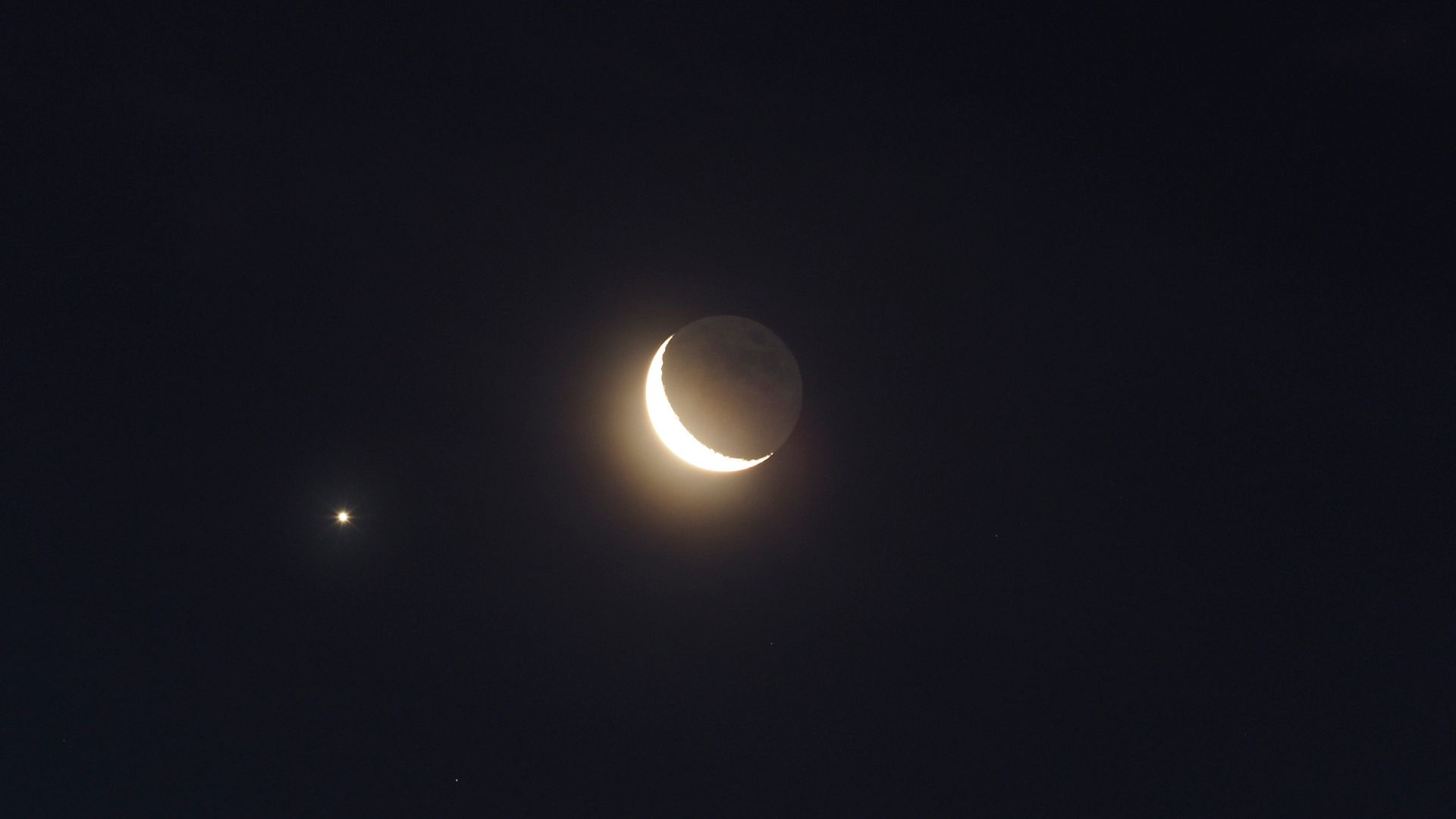
You may have watched the moon block out the sun during a solar eclipse, but have you ever seen it do that to a planet? Early Tuesday (Oct. 6) morning, skywatchers across much of eastern North America will have an opportunity to watch a crescent moon pass directly in front of Jupiter. The rare alignment won't happen again for 11 years.During the event, known as a lunar occultation, Jupiter will disappear behind the moon for up to about an hour before suddenly reappearing. The occultation will be visible before dawn from much of the eastern and central U.S., Canada and the Caribbean, while parts of Africa will experience the event during daylight, according to In-The-Sky.org.The moon will be a...

📅 2026-10-05 20:20:56    •    Live Science
Read Original Article →
A health app designed for teachers
Science News

A health app designed for teachers

A new app is designed to help teachers stay healthy in their day-to-day work. The digital tool is the result of a three-year collaborative project between the Technical University of Munich (TUM) and health insurance provider AOK Bayern.

📅 2026-10-05 20:20:21    •    Phys.org
Read Original Article →
Atomic motion could help push solar cells beyond conventional limits
Science News

Atomic motion could help push solar cells beyond conventional limits

The bulk photovoltaic effect (BPVE), a photoelectric effect that generates photocurrent without a p–n junction, can persist even when a material's average crystal structure remains centrosymmetric, a study from Institute of Science Tokyo has found. Researchers demonstrated this in CuCrP2S6, a van der Waals material that transitions from a noncentrosymmetric to a centrosymmetric average structure. The finding challenges the conventional view of BPVE and suggests a new strategy for enhancing photoelectric conversion.

📅 2026-10-05 20:20:16    •    Phys.org
Read Original Article →
Quantum systems never quite forget where they came from
Science News

Quantum systems never quite forget where they came from

Even the most chaotic quantum systems keep a permanent mark of their own past—a "quantum birthmark"—that never fades. Researchers from Tampere University, Harvard University and TU Dresden discovered the feature in their recent study. Their findings shed new light on the elusive relationship between classical and quantum mechanics. Looking ahead, these quantum birthmarks, along with related phenomena known as "scars," could eventually be harnessed to power next-generation nanoelectronics.

📅 2026-10-05 20:00:13    •    Phys.org
Read Original Article →
Unmowed strips attract insects, but many abandon partially mowed dikes
Science News

Unmowed strips attract insects, but many abandon partially mowed dikes

Municipalities are increasingly mowing dikes and verges in stages, so that insects can make longer use of the plants growing there. Mowing is essential to keep a dike strong, explains ecologist Constant Swinkels of Radboud University. "If you don't mow, trees or sturdy shrubs such as blackberries may start to grow. You don't want that, because their roots are so thick that they can cause dikes to collapse."

📅 2026-10-05 20:00:06    •    Phys.org
Read Original Article →
A novel path to fusion ignition: Heat first, then add fuel
Science News

A novel path to fusion ignition: Heat first, then add fuel

For more than 70 years, fusion energy researchers have used a particular equation to judge whether a plasma would stay hot and dense enough—for long enough—to reach a point where it could sustain itself without any more external power added. While that equation marks the finish line, also known as ignition, it says nothing about the best way to reach it. New research from the U.S. Department of Energy's (DOE) Princeton Plasma Physics Laboratory (PPPL) maps a path to ignition conditions using far less energy than any other path.

📅 2026-10-05 19:40:13    •    Phys.org
Read Original Article →
Local tipping points in dune landscapes: How does a dune system organize itself?
Science News

Local tipping points in dune landscapes: How does a dune system organize itself?

Building with nature is an important concept in our coastal defense. After all, by harnessing natural processes, we are more resilient to sea level rise. A good understanding of these processes is therefore indispensable. Ecologist Paul Berghuis, affiliated with Utrecht University and the Royal Netherlands Institute for Sea Research (NIOZ), delved into the world of dune formation and discovered that within young dune landscapes, dunes and grasses do not arrange themselves randomly but follow a fixed pattern.

📅 2026-10-05 19:00:20    •    Phys.org
Read Original Article →
Page 47of 159   •   3,800articles