Latest Science & Research News

Stay informed about scientific discoveries, research developments and new findings from around the world.

Latest News

View All →
Scientists identify avian cholera as major cause of penguin deaths in Antarctica
Science News

Scientists identify avian cholera as major cause of penguin deaths in Antarctica

Thousands of Adélie penguins found dead in Antarctica in 2024 were primarily victims of avian cholera, not high pathogenicity avian influenza (H5N1) as researchers initially suspected, according to a study published today in Proceedings of the Royal Society B: Biological Sciences. The findings highlight an underrecognized threat to Antarctic wildlife and the importance of comprehensive disease investigations, particularly as H5N1 continues to raise concerns for seabird and marine mammal populations.

📅 2026-10-14 21:10:01    •    Phys.org
Read Original Article →
Engineered enzyme could improve detection of HIV and other viruses
Science News

Engineered enzyme could improve detection of HIV and other viruses

Scientists have long used a powerful gene-editing tool called CRISPR to make precise changes to DNA. But a different version of the technology, known as Cas13a, targets RNA, the genetic material found in viruses such as HIV. Now, researchers at Rice University have developed an improved version of Cas13a that could make it easier to detect HIV and other RNA viruses in blood and environmental samples. The study was published in Cell Chemical Biology.

📅 2026-10-14 21:00:11    •    Phys.org
Read Original Article →
Chronic back pain may activate an unexpected brain network, study finds
Science News

Chronic back pain may activate an unexpected brain network, study finds

For people with chronic back pain, everyday movements like bending down to tie their shoes or picking up a grocery bag can trigger painful flare-ups. Now, scientists have made a surprising discovery: These episodes may activate a brain network that's associated with our sense of self.In a new study, the researchers found that movement-induced chronic back pain was tied to increased activity in the brain's default mode network, a group of connected brain regions that lights up during self-reflection and mind wandering. This finding was unexpected because the network typically becomes less active during acute pain, such as transient pain triggered from touching a hot stove or banging your knee...

📅 2026-10-14 20:35:40    •    Live Science
Read Original Article →
Examining fraud prevention in federal relief programs
Science News

Examining fraud prevention in federal relief programs

SUNY Polytechnic Institute (SUNY Poly) assistant professor of accounting Dr. Katie Matt, in collaboration with Daniel Hebert of Syracuse University, recently published research examining the widespread fraud associated with the federal Paycheck Protection Program (PPP) during the COVID-19 pandemic. Their article, "Governance and Fraud Prevention in Federal Relief Programs: Insights from the Paycheck Protection Program," was published in the Journal of Accounting, Ethics & Public Policy in September 2026.

📅 2026-10-14 20:30:09    •    Phys.org
Read Original Article →

New framework links magnetic phase boundaries to string-like defects in spin ice
Science News

New framework links magnetic phase boundaries to string-like defects in spin ice

A research team led by Haruki Watanabe, a professor in the Department of Physics and the Jockey Club Institute for Advanced Study (IAS) at The Hong Kong University of Science and Technology (HKUST), in collaboration with professor Yukitoshi Motome and graduate student Sena Watanabe from the University of Tokyo, has developed a unified theory that predicts when two states of matter are genuinely distinct and when they are actually the same.

📅 2026-10-14 20:20:08    •    Phys.org
Read Original Article →
Rare particle decays hint at deviations from Standard Model predictions
Science News

Rare particle decays hint at deviations from Standard Model predictions

Studying rare processes is part and parcel of particle physics, providing stringent tests of the Standard Model. At the recent International Conference on High Energy Physics (ICHEP), the CMS and LHCb collaborations presented their latest research into one such process: the transformation of a beauty quark into a strange quark, a muon and the oppositely charged antimuon (b→sμ⁺μ⁻).

📅 2026-10-14 19:50:01    •    Phys.org
Read Original Article →
DNA from centuries-old skeletons buried in Montreal reveals no genetic mixing between Indigenous people and French colonists
Science News

DNA from centuries-old skeletons buried in Montreal reveals no genetic mixing between Indigenous people and French colonists

Ancient DNA from skeletons buried in a historic cemetery in Quebec is changing people's understanding of their Indigenous ancestry. Contrary to popular belief, there may be little truth to stories of intermarriage between Indigenous and French people during the early days of colonization, according to a new archaeology study published Oct. 5 in the journal PNAS."Family stories of an Indigenous ancestor are very common" in Quebec, study first author Diane Martin-Moya, a biological anthropologist at the University of Quebec in Trois-Rivières in Canada, told Live Science in an email, and "commercial genealogy and DNA tests have amplified this." But distant or claimed Indigenous identities can a...

📅 2026-10-14 19:46:12    •    Live Science
Read Original Article →
Sheep grazing in solar fields offers farmers economic, ecological gains
Science News

Sheep grazing in solar fields offers farmers economic, ecological gains

Two new research papers shed light on the growing practice of grazing sheep in fields with solar arrays. One demonstrates that, in the right numbers, sheep grazing increases populations of beneficial insects like bees and lady beetles compared to mowing around solar panels. The other research describes a decision-making support tool to help farmers profitably grow their solar grazing herds.

📅 2026-10-14 19:40:07    •    Phys.org
Read Original Article →
Tapeworm drug could help treat endometriosis, mouse study hints
Science News

Tapeworm drug could help treat endometriosis, mouse study hints

A modified tapeworm medication could be a promising new treatment for endometriosis, an early study in mice hints. In endometriosis, tissue similar to the lining of the uterus grows outside the organ, and these patches of tissue, called "lesions," trigger painful inflammation and heavy menstrual bleeding. In the new study, scientists fitted an anti-worm drug with nanotech armor, and it directly targeted these painful lesions in laboratory mice. The treatment reduced inflammation and slowed or prevented further spread of the lesions, researchers reported in August in the journal Advanced Healthcare Materials. The team is already working on bringing the new drug to clinical trials and hopes th...

📅 2026-10-14 19:34:46    •    Live Science
Read Original Article →

Ancient Indigenous people in New Mexico lived through extreme climate change 23,000 years ago, study suggests
Science News

Ancient Indigenous people in New Mexico lived through extreme climate change 23,000 years ago, study suggests

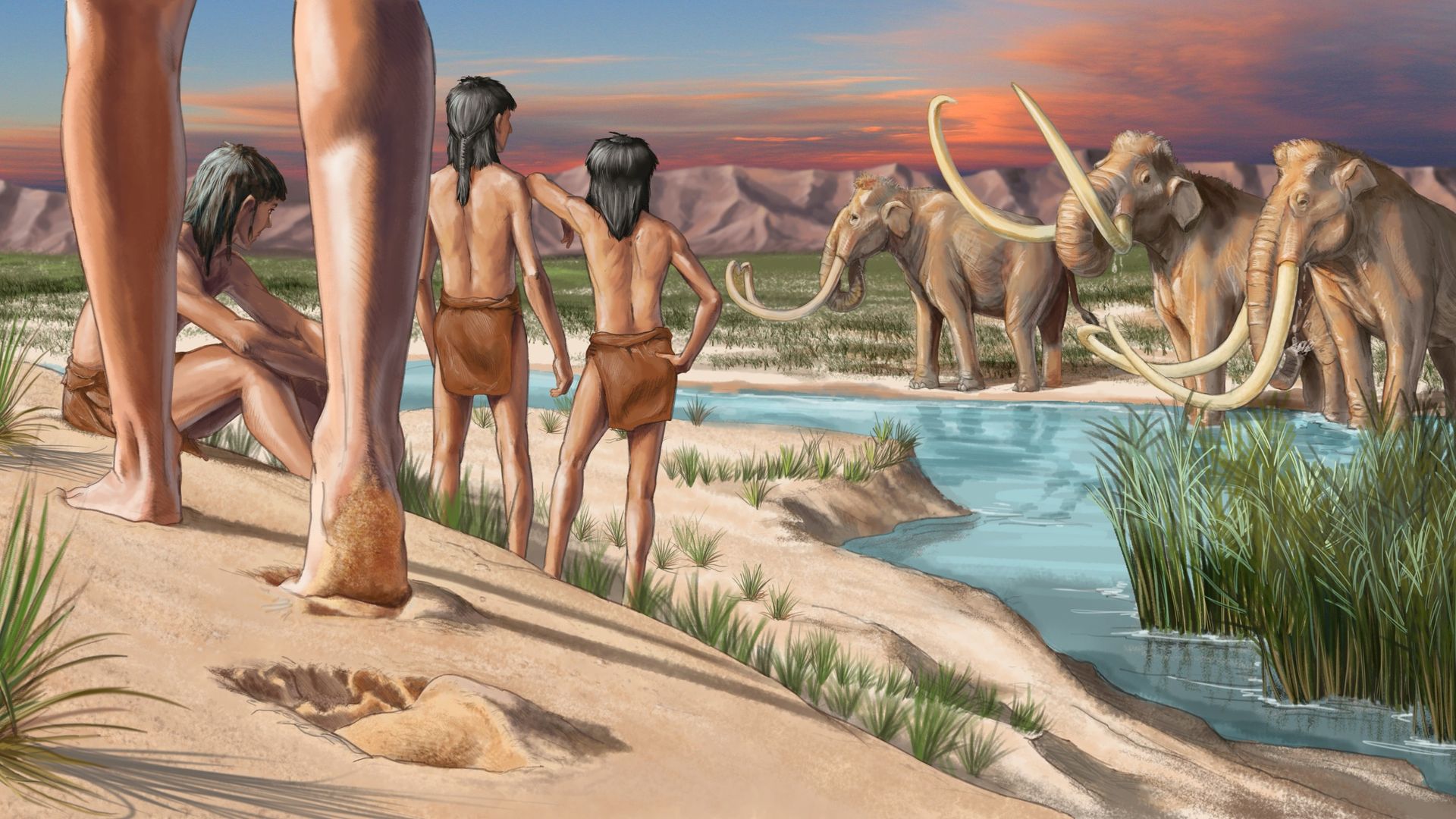
Some of the first people in North America lived through extreme climate change at the peak of the last ice age, a new study suggests. Researchers studied ancient pollen locked in rocks at White Sands National Park in New Mexico, which houses an archaeological site thought to contain the oldest human footprints in the Americas. The researchers previously dated those footprints to around 21,000 to 23,000 years ago, though their age is the subject of some scientific debate because they are significantly older than other Indigenous sites in the Americas.The new findings, published Wednesday (Oct. 14) in the journal Science Advances, suggest that humans kept using White Sands after temperatures w...

📅 2026-10-14 18:19:41    •    Live Science
Read Original Article →

Self-replicating AIs are a great digital horror story – here’s the reality
Science News

Self-replicating AIs are a great digital horror story – here’s the reality

Is self-replicating AI really just months away?janiecbros/Getty Images Much of the AI industry is built on stories, from the idea that AI could kill us all to the goal that it might one day become superintelligent. This often leads to problems, because when people have a story in their head, they don’t always look at the facts on the ground to check that they actually match the fiction. That has happened this week, with widely reported claims from Anthropic that we are mere “months away” from self-replicating AIs taking over smart devices. That’s a great headline, and it’s hard to resist clicking, but it almost certainly isn’t true. Read more AI or ‘super intelligence’? Trump isn’t the only ...

📅 2026-10-14 18:11:02    •    New Scientist
Read Original Article →
We can rescue the AMOC after its collapse – but it won’t be easy
Science News

We can rescue the AMOC after its collapse – but it won’t be easy

Icebergs near GreenlandCavan Images/Alamy A collapse in the Atlantic Meridional Overturning Circulation (AMOC) would be catastrophic, bringing “ice age” winters to Europe, raising sea levels in North America and disrupting vital monsoons in Africa and Asia. But there is a sliver of good news: a climate-driven collapse of the AMOC might not be permanent. The AMOC could weaken significantly under rising global temperatures over the coming decades, but it could recover its strength just as quickly if global cooling occurs. “There’s a very linear relationship between the global mean temperature and the AMOC response,” says Chuncheng Guo at the Danish Meteorological Institute. “When people talk a...

📅 2026-10-14 18:00:00    •    New Scientist
Read Original Article →
Page 13of 148   •   3,548articles