Latest Scientific Discoveries

All News →
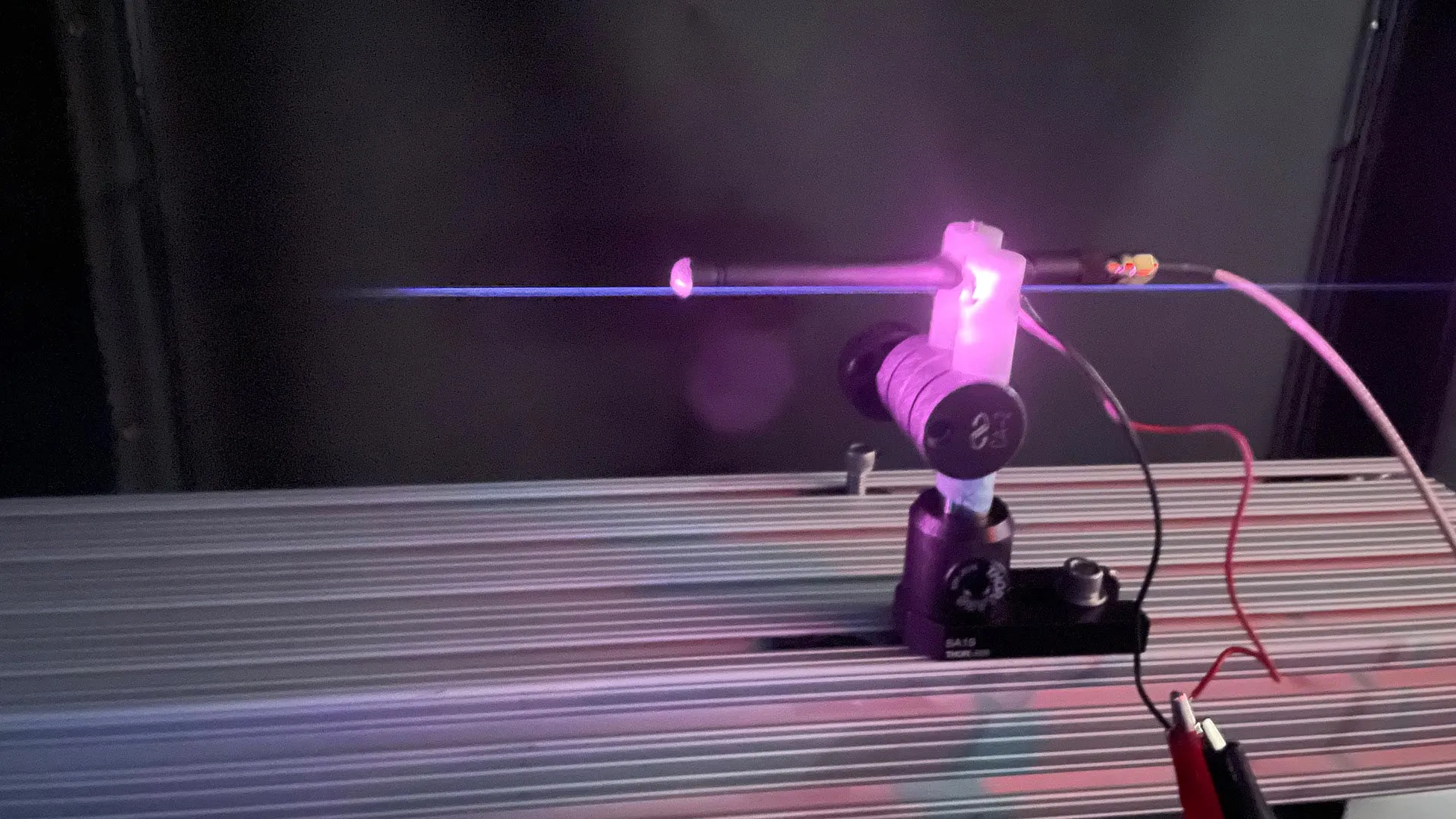
Scientists create a lightsaber-like laser antenna that transmits radio waves
Science News

Scientists create a lightsaber-like laser antenna that transmits radio waves

Scientists have demonstrated a remarkable new antenna that resembles a lightsaber, using a laser to create a tunable beam of plasma capable of transmitting radio waves. The technology could revolutionize wireless communications by allowing antennas to change their size and direction on demand, with promising applications in satellites, radar, and space exploration.

📅 2026-10-09 17:55:59    •    ScienceDaily
New sensing method expands label-free particle detection beyond sensor surfaces
Science News

New sensing method expands label-free particle detection beyond sensor surfaces

Finding a single cancer cell in a tube of blood is a bit like finding a needle in a haystack. As researchers seek to detect ever-smaller and rarer targets, from viruses to circulating tumor cells in blood, the demand for ultrasensitive, robust sensors that are practical for real-world samples continues to grow.

📅 2026-10-09 17:40:06    •    Phys.org
Hubble Space Telescope may have found a planet born after its star died
Science News

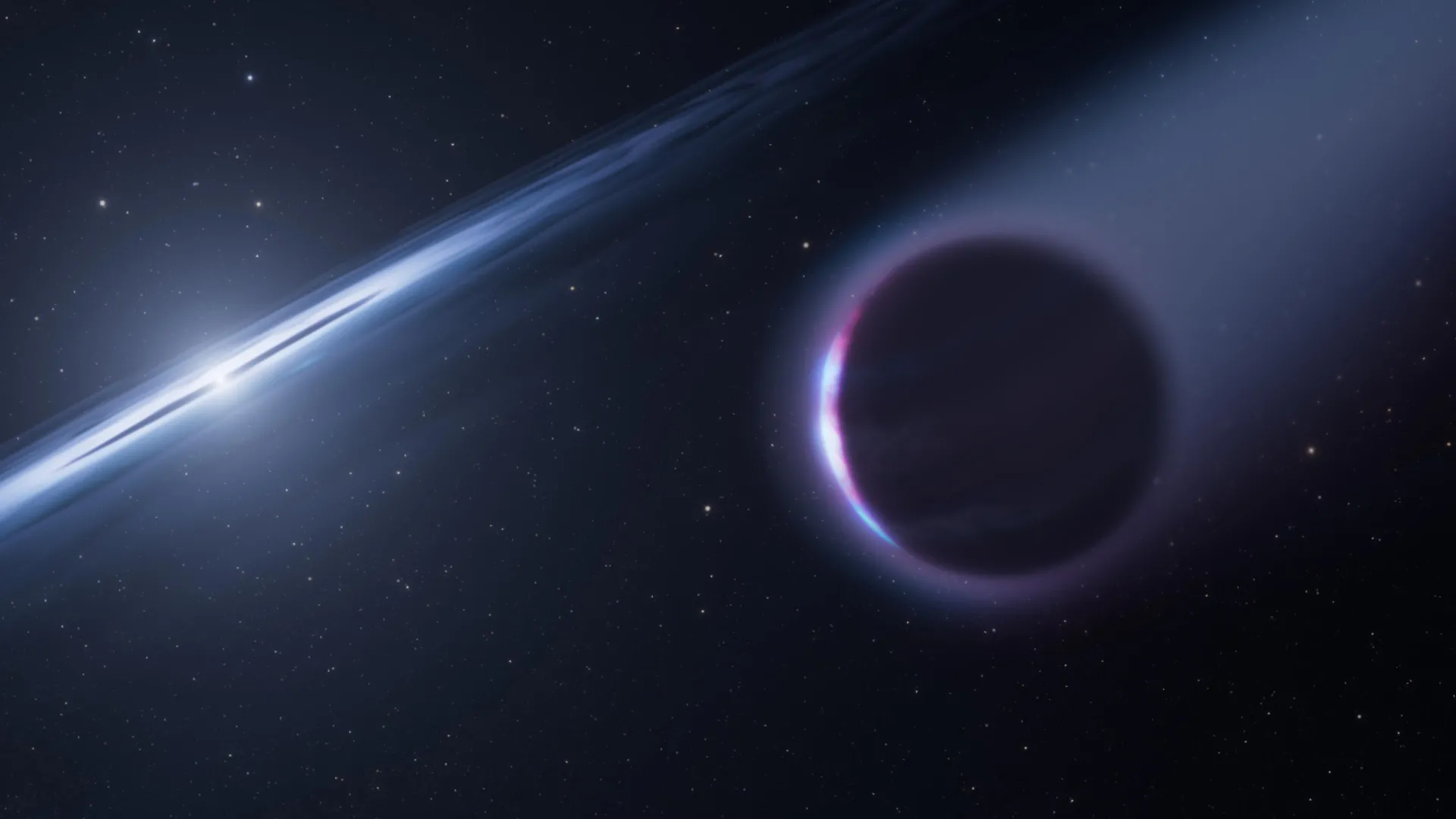
Hubble Space Telescope may have found a planet born after its star died

A strange chemical signature in old Hubble observations may point to a planet that formed after its star had already died. Astronomers found unusually high levels of niobium around the white dwarf HS 0209+0832, suggesting some of the star’s expelled material may have assembled into a new gas giant. TESS data also hints at a Jupiter-sized planet orbiting just 3.7 million miles from the star.

📅 2026-10-09 17:31:02    •    ScienceDaily
Strong magnetic fields could allow white dwarfs to grow beyond the Chandrasekhar limit
Science News

Strong magnetic fields could allow white dwarfs to grow beyond the Chandrasekhar limit

When a dying star runs out of fuel and sheds its outer layers, its remaining core can become an approximately Earth-sized, extremely dense stellar remnant called a white dwarf. For a white dwarf that is not strongly rotating or magnetized, there is a well-known upper mass limit of about 1.4 times the mass of the sun, known as the Chandrasekhar limit.

📅 2026-10-09 17:20:19    •    Phys.org
Confidence in a relationship's future is linked to feelings of romantic security
Science News

Confidence in a relationship's future is linked to feelings of romantic security

Feeling secure in a relationship is not only about how people connect with their partners today. It may also depend on how confident they are that the relationship will continue into the future. Feelings of closeness, trust and connection, together with a sense that the relationship is stable and has a future, can shape how people experience their romantic relationships.

📅 2026-10-09 17:20:13    •    Phys.org
Quantum chip holds multiple photons at once, opening path to scalable memory
Science News

Quantum chip holds multiple photons at once, opening path to scalable memory

For highly fragile quantum information systems, the ability to store quantum information is vital—but also challenging. Quantum information is transported in particles of light called photons, which often must be temporarily paused (or "stored") while other, slower quantum operations catch up. This storage must be performed on microchips as small as 1 centimeter (0.4 inches)—a distance covered by light in a few trillionths of a second. Storing photons for a microsecond would represent a massive leap forward for the capabilities of quantum chips.

📅 2026-10-09 17:00:10    •    Phys.org
Kīlauea's swelling summit helps scientists forecast lava fountain eruptions
Science News

Kīlauea's swelling summit helps scientists forecast lava fountain eruptions

Episodic lava fountaining is a rare volcanic behavior in which repeated, hours-long bursts of molten lava and gas are spewed from volcanic vents, with quiet pauses lasting days to weeks between episodes. These lava fountains have been observed in active volcanoes in places like Hawaii, Iceland and Italy, but researchers still do not fully understand what starts, sustains or stops these individual fountain episodes.

📅 2026-10-09 16:40:08    •    Phys.org