Latest Scientific Discoveries

All News β†’
Europe's forests are still standing, but many are losing the ability to recover
Science News

Europe's forests are still standing, but many are losing the ability to recover

A forest can look intact from the roadside and still have lost much of its capacity to bounce back. That gap between appearance and function is at the center of a new policy brief published by eLTER, the European research infrastructure for long-term ecosystem, critical zone and socio-ecological research.

πŸ“… 2026-09-09 20:30:02    β€’    Phys.org
Electrochemical system extracts pure hydrogen from ammonia at substantially lower temperatures
Science News

Electrochemical system extracts pure hydrogen from ammonia at substantially lower temperatures

As a liquid that is easily stored and transported, ammonia (NH3) is an attractive carrier for hydrogen, which is used in fuel cells, semiconductor manufacturing, chemical processing and other applications. However, breaking ammonia into hydrogen and nitrogen typically requires high temperatures, and the resulting gas mixture must undergo additional purification before the hydrogen can be used in many applications.

πŸ“… 2026-09-09 20:00:12    β€’    Phys.org
Watch the first-ever footage of a rare deep-sea squid in the northeastern Pacific
Science News

Watch the first-ever footage of a rare deep-sea squid in the northeastern Pacific

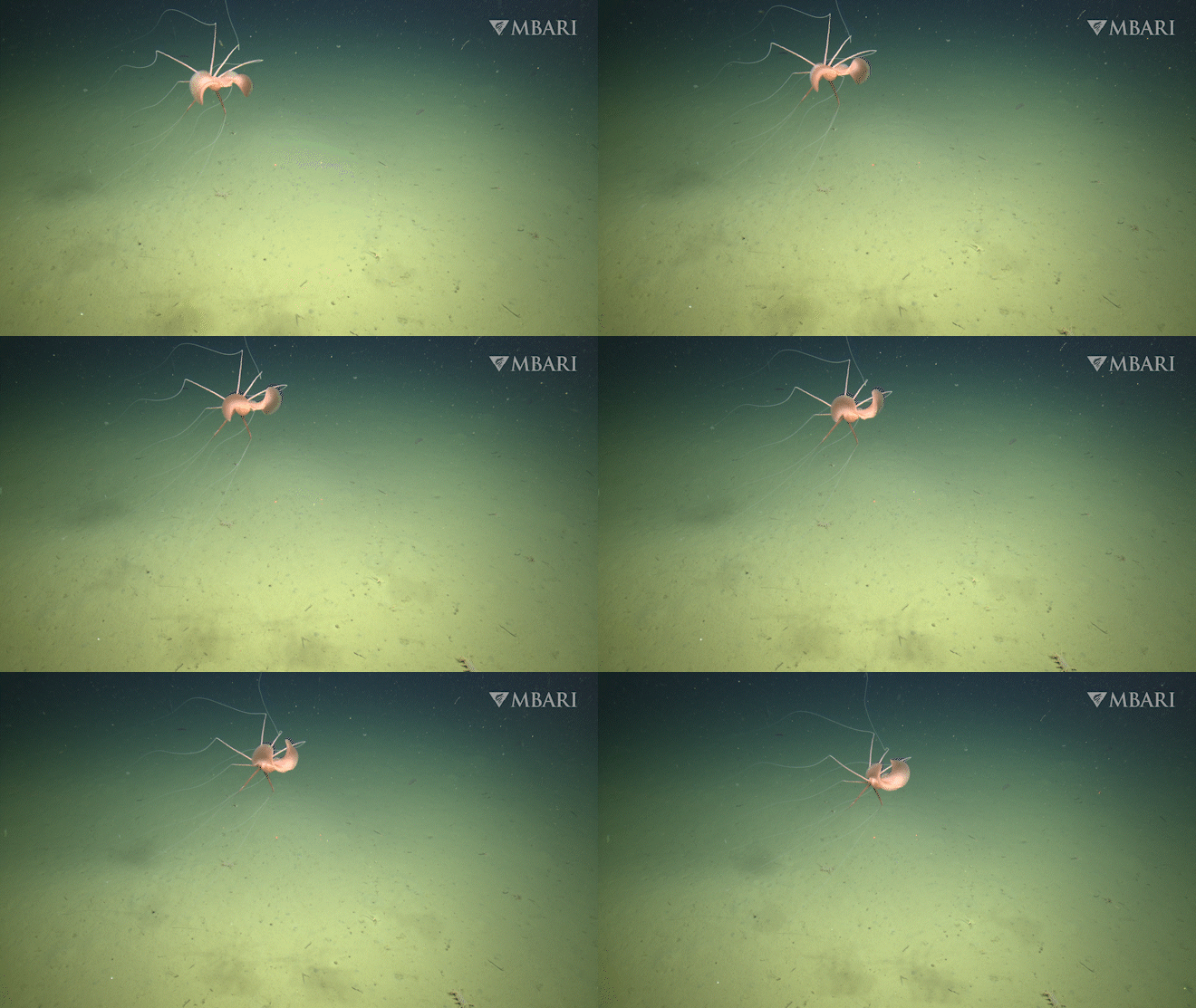
A bizarre squid has been filmed haunting the northeastern Pacific Ocean for the first time. Researchers spotted the bigfin squid (Magnapinna) via remote video while using an uncrewed submersible to explore underwater mountains, known as seamounts, at a depth of more than 10,000 feet (3,000 meters) off the coast of California. The footage, captured Aug. 7, represents the first confirmed live observation of a bigfin squid in the northeastern Pacific, according to the Monterey Bay Aquarium Research Institute (MBARI), whose scientists made the discovery with collaborators from the National Oceanic and Atmospheric Administration (NOAA).OlΓ­via Soares Pereira, a deep-sea ecologist and postdoctoral ...

πŸ“… 2026-09-09 19:58:56    β€’    Live Science
'Why would you ruin your career?': OpenAI claims to have cracked one of math's greatest unsolved problems, but mathematicians allege it played dirty
Science News

'Why would you ruin your career?': OpenAI claims to have cracked one of math's greatest unsolved problems, but mathematicians allege it played dirty

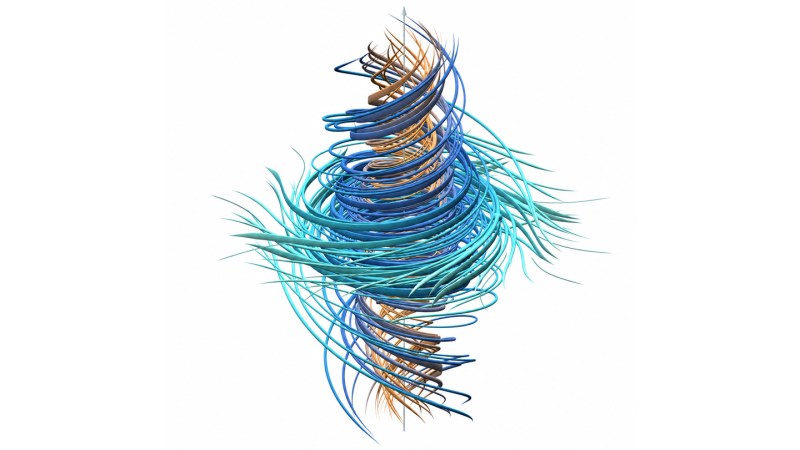
Tristan Buckmaster, a mathematician at New York University, had just spent months working on what he believed could be a life-defining mathematical proof. Then, during a Sept. 6 meeting with OpenAI employees, he claims that he was issued a stark warning: "Why would you ruin your career?"That exchange, which Buckmaster described in a detailed public statement this week, sits at the heart of a ballooning controversy around a famous set of mathematical equations called Navier-Stokes. OpenAI says its artificial intelligence (AI) model has solved an outstanding problem tied to this 200-year-old set of fluid dynamics equations. The set of equations appears on the list of one of the seven Millenniu...

πŸ“… 2026-09-09 19:25:51    β€’    Live Science
Record-breaking rain in California was caused by abnormally high temperatures on the other side of the world, study finds
Science News

Record-breaking rain in California was caused by abnormally high temperatures on the other side of the world, study finds

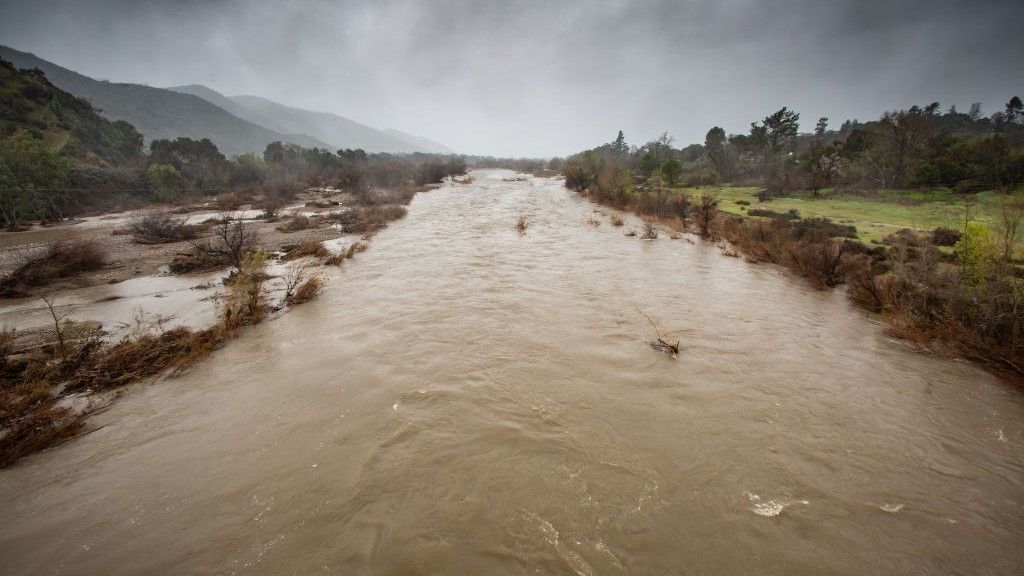
Abnormally high temperatures on the Tibetan Plateau triggered two catastrophic rainfall events halfway around the world in California and nearby states in early 2017 and 2023, a new study reports.This is the first time that researchers have identified this link, known as a climate teleconnection. The results could improve forecasts of extreme weather in the western U.S., which, in turn, could improve warnings for coastal communities and potentially save lives as well as billions of dollars in property damage, the study's authors say.In December 2016 and February 2023, the Tibetan Plateau was warmer than usual for these times of the year. Roughly one month after each of these hotspots appeare...

πŸ“… 2026-09-09 18:00:00    β€’    Live Science
World's oldest evidence of habitual drug use traced back 25,000 years to Indonesia
Science News

World's oldest evidence of habitual drug use traced back 25,000 years to Indonesia

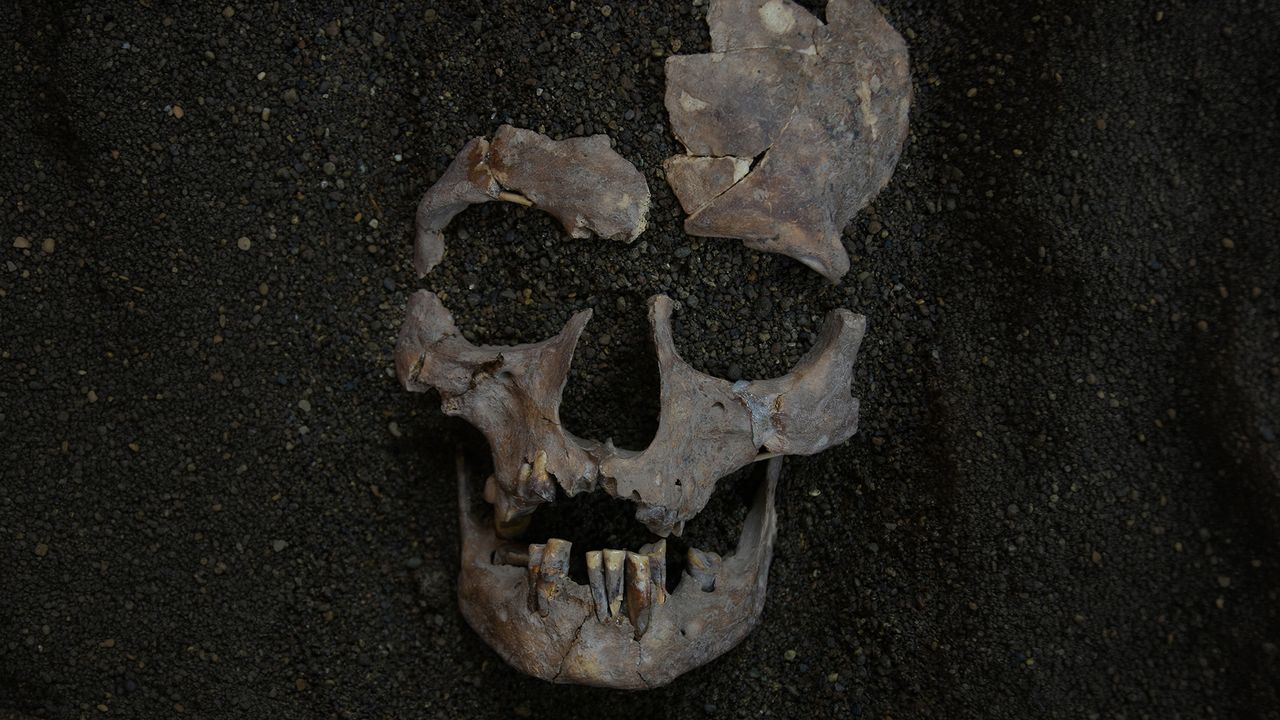
The world's oldest known habitual drug use can be traced to an island in Indonesia, where ice age hunter-gatherers sucked on betel nuts β€” palm seeds that contain a neuroactive substance, a new study finds. Scientists made the discovery after studying strange grooves in the teeth of two prehistoric hunter-gatherers. The deep grooves were caused by regularly sucking on betel nuts (Areca catechu), likely for relief from the pain of toothache, according to the study, which was published Wednesday (Sept. 9) in the journal Science Advances.The partial skeletons of the two people were found on the island of Sulawesi, but their lives were separated in time by thousands of years. One of them, a man w...

πŸ“… 2026-09-09 18:00:00    β€’    Live Science
See the highest-resolution footage of a black hole jet ever taken, thanks to AI and 27 years of observations
Science News

See the highest-resolution footage of a black hole jet ever taken, thanks to AI and 27 years of observations

Astronomers just dropped a video 27 years in the making: the highest-definition animation of a gargantuan black hole jet blasting out of a distant galaxy and twisting off into space.The video, made from 116 images taken between 1995 and 2022, captured a blazar known as 3C 345, in the constellation Hercules. A blazar is a sort of quasar β€” a bright, feeding supermassive black hole embedded in the center of a faraway galaxy β€” that emits huge jets of gas into its environment. The jets blaze at nearly the speed of light and are charged with highly concentrated X-rays and gamma rays.As described in an Aug. 26 study in the journal Nature, scientists gathered the images of 3C 345 using decades of ob...

πŸ“… 2026-09-09 17:34:51    β€’    Live Science