Latest Scientific Discoveries

All News β†’
Scientists got diamond's melting point wrong by more than 1,000 degrees, crushing new laser experiment reveals
Science News

Scientists got diamond's melting point wrong by more than 1,000 degrees, crushing new laser experiment reveals

Scientists melted diamonds with a powerful laser to take some of the most precise measurements of the mineral's elusive melting point β€” and found that previous experiments were off by more than 1,300 degrees Fahrenheit (700 degrees Celsius).It's odd to think of diamond, the hardest natural material on Earth, melting β€” but melt it does when blasted with extremely powerful lasers under the right conditions. Understanding how diamond responds to shock waves from lasers is an important part of developing nuclear fusion, the process that powers stars. Nuclear fusion is also a potential energy source for the future, so researchers have put a lot of effort into developing models that describe and p...

πŸ“… 2026-09-12 14:00:00    β€’    Live Science
Scientists find Ozempic may slow aging itself
Science News

Scientists find Ozempic may slow aging itself

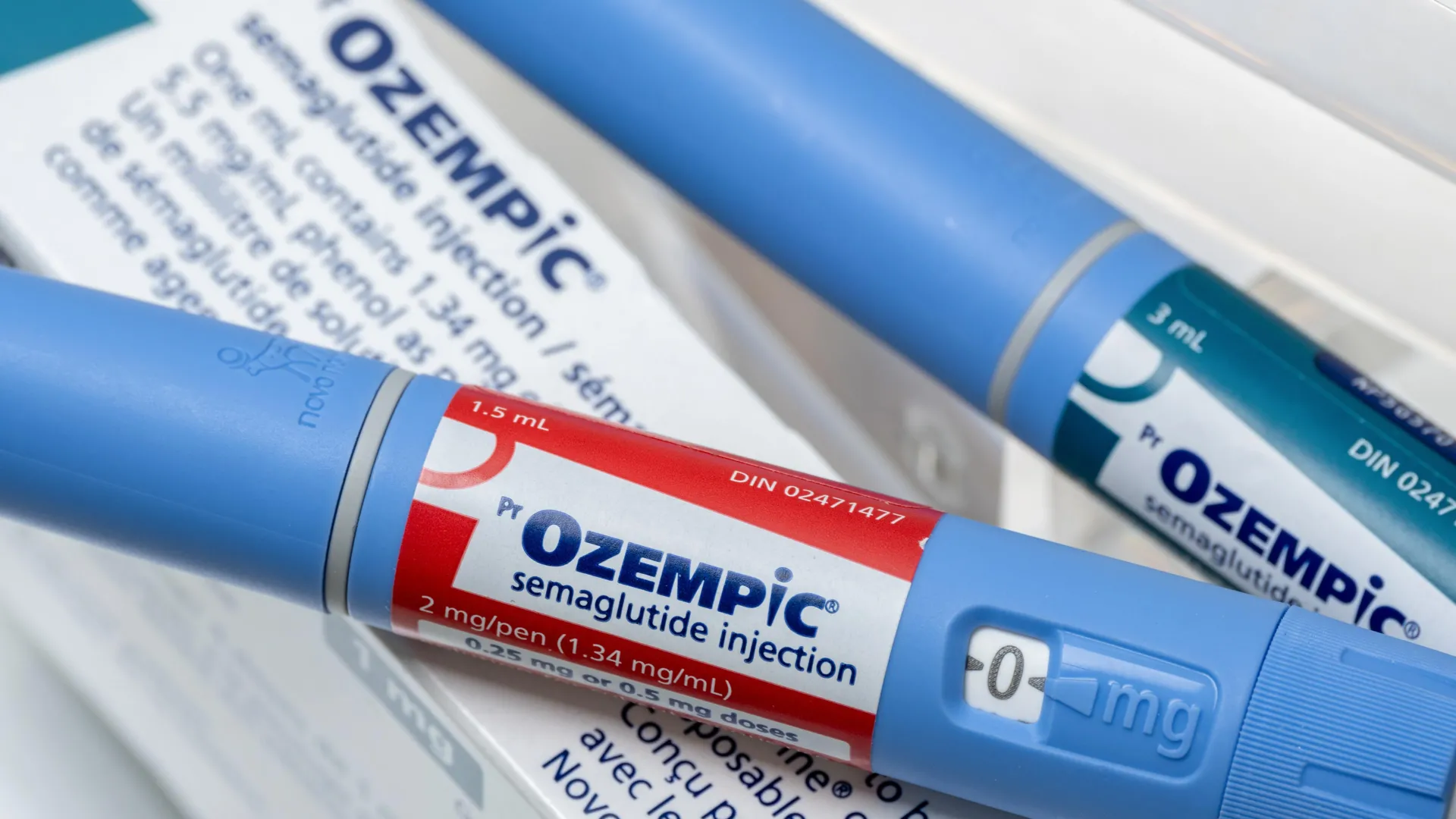
Semaglutide helped older healthy mice live longer while improving memory, muscle function, blood sugar control, and several biological signs of aging. Its effects went beyond those seen with calorie restriction, raising the possibility that GLP-1 drugs could tap into a separate biological pathway linked to longevity.

πŸ“… 2026-09-12 13:52:50    β€’    ScienceDaily
Researchers find a Wordle strategy that wins 99% of the time
Science News

Researchers find a Wordle strategy that wins 99% of the time

Researchers at Binghamton University have developed a mathematical strategy that can solve Wordle with a 99% success rate. Instead of simply guessing words packed with common letters or choosing the most likely answer, the method uses Shannon entropy, a measure from information theory, to identify guesses that reveal the most useful information. Each guess is designed to rapidly shrink the pool of possible answers, even when the guessed word itself seems unlikely to be correct.

πŸ“… 2026-09-12 13:35:56    β€’    ScienceDaily
Tiny cyanobacteria may be the secret heroes of ocean carbon sequestration
Science News

Tiny cyanobacteria may be the secret heroes of ocean carbon sequestration

A process known as the biological carbon pump (BCP) moves organic carbon from near the ocean's surface to the ocean floor. That carbon often stays there for hundreds or thousands of years, making the BCP a primary source of carbon sequestration in the oceans. Scientists have thought that relatively large phytoplankton are more efficient at exporting carbon to the deep ocean than tiny cyanobacteria, but new research by Jingjing Zhang and colleagues published in AGU Advances now calls that belief into question.

πŸ“… 2026-09-12 13:30:01    β€’    Phys.org
Why are the stars around our galaxy's black hole missing their companions?
Science News

Why are the stars around our galaxy's black hole missing their companions?

A new study suggests that the young stars orbiting the Milky Way's central black hole may have a surprisingly ordinary origin. But the black hole's influence may be what makes their origin look more exotic than it really is. Along with shaping their orbits, it may also destroy their stellar companions. The paper outlining this work was published in Astronomy & Astrophysics on Aug. 11.

πŸ“… 2026-09-12 12:40:01    β€’    Phys.org
Rubin observatory peers deep into the famous COSMOS field
Science News

Rubin observatory peers deep into the famous COSMOS field

The COSMOS field, or Cosmic Evolution Survey Deep Field, is one of the most famous patches of the universe observed by astronomers. Located in the constellation Sextans, this region was photographed by the Hubble Space Telescope (HST) in segments from 2003 to 2005 using its Advanced Camera for Surveys (ACS). With support from ground-based and other space-based telescopes, the resulting images were then stitched together to create a stunning picture of cosmic evolution.

πŸ“… 2026-09-12 12:00:08    β€’    Phys.org
AI trained to 'think' like human pathologists may be better at spotting cancer
Science News

AI trained to 'think' like human pathologists may be better at spotting cancer

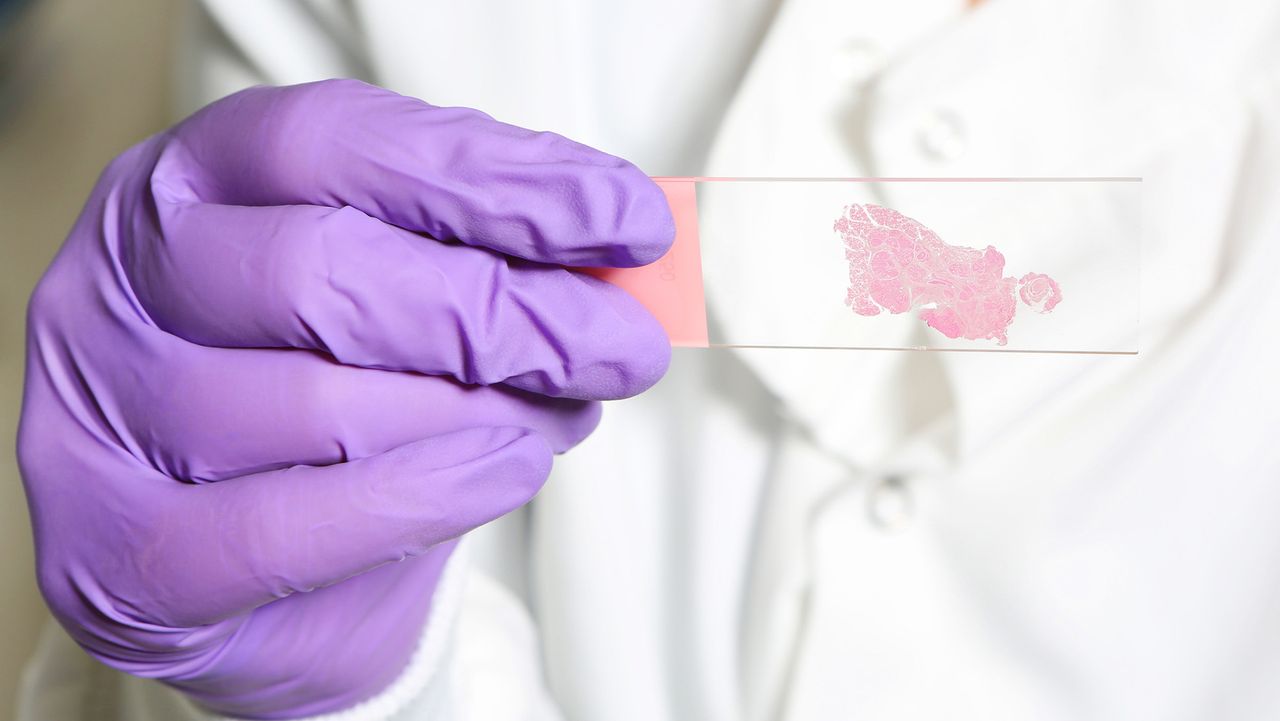
Artificial intelligence (AI) algorithms that hunt for cancer may do a better job when they approach the analysis as if they were a human pathologist, a new study suggests.Many AI systems analyze preselected regions of a tissue sample, or they split a whole pathology slide into patches of a fixed size. By contrast, a pathologist searches more dynamically, panning across the tissue, zooming in and out, and pausing over areas that raise red flags. A whole slide can contain billions of pixels, while the evidence of cancer may occupy only a tiny patch.Study co-author Zhi Huang, an assistant professor of pathology and laboratory medicine at the University of Pennsylvania, compared the process to a...

πŸ“… 2026-09-12 12:00:00    β€’    Live Science
Celestron StarSense Explorer DX 130AZ review
Science News

Celestron StarSense Explorer DX 130AZ review

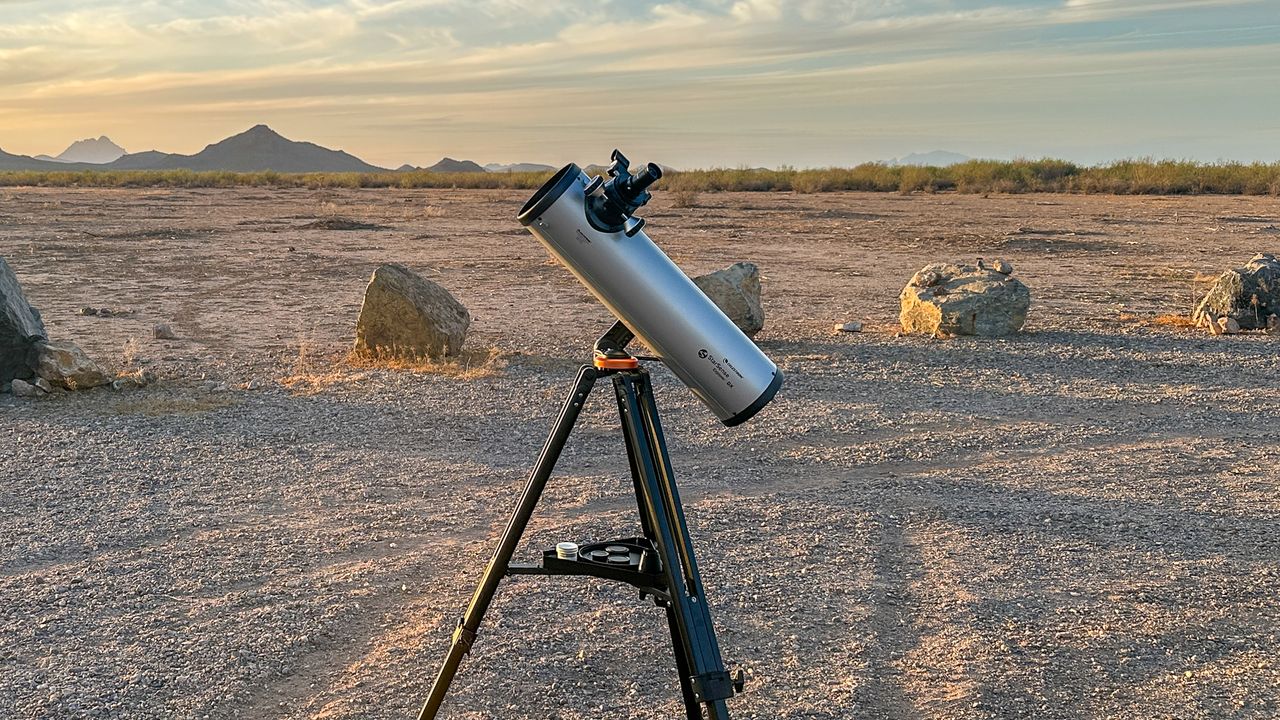
The Celestron StarSense Explorer DX 130AZ is a 5.1-inch (130mm) f/5 Newtonian reflector, one of many 130mm f/5 reflectors offered by Celestron. The DX 130AZ is also one of two 130mm StarSense Explorer variants, the other being a tabletop Dobsonian. The optical tube here rides on an alt-azimuth tripod instead and uses a 2-inch focuser, but otherwise, there are no major differences. The DX 130 AZ is certainly one of the better telescopes in the StarSense Explorer series; there are also several decent Dobsonians, a pair of decent Schmidt-Cassegrains, the merely acceptable DX 102 refractor, a 114mm Bird-Jones model and some small refractors that aren’t of much use. The DX 130AZ is definitely on ...

πŸ“… 2026-09-12 11:00:00    β€’    Live Science
How AI can help with early schizophrenia diagnosis
Science News

How AI can help with early schizophrenia diagnosis

The speech of people with schizophrenia sounds subtly different from their healthy counterparts. Can AI hear those differences better than human psychiatrists?

πŸ“… 2026-09-12 11:00:00    β€’    Scientific American
Why is Venus hotter than Mercury, when Mercury is closer to the sun?
Science News

Why is Venus hotter than Mercury, when Mercury is closer to the sun?

Given that it's the closest planet to the sun, Mercury seems like it should be the hottest planet in our solar system.However, at a blistering 900 degrees Fahrenheit (480 degrees Celsius), Venus tops Mercury's 800 F (430 C) highest surface temperature, despite being an average of 31 million miles (50 million kilometers) farther from the sun. So how can the second planet from our star be hotter than the closest planet to it?It all comes down to reflectivity, atmospheric composition and geological history, experts told Live Science.Totally different atmospheresA planet's distance from its star is not the only factor that influences the planet's temperature."Distance tells us how much sunlight ...

πŸ“… 2026-09-12 09:00:00    β€’    Live Science
As antibiotic resistance grows, researchers turn to copper to fight infections
Science News

As antibiotic resistance grows, researchers turn to copper to fight infections

When bacteria invade the urinary tract, the body has its own arsenal for fighting back. Among those weapons is an unlikely tool: copper. Researchers at the Texas A&M College of Veterinary Medicine and Biomedical Sciences (VMBS) are investigating how the body uses the essential trace mineral to fight urinary tract infections (UTIs), how bacteria manage to survive that attack and whether those discoveries could eventually lead to new ways of treating infections that are increasingly difficult to control with antibiotics.

πŸ“… 2026-09-12 02:40:02    β€’    Phys.org