Latest Scientific Discoveries

All News →
Aqueduct deposits suggest Plague of Cyprian may have emptied Nîmes around 270 A.D.
Science News

Aqueduct deposits suggest Plague of Cyprian may have emptied Nîmes around 270 A.D.

Researchers at Johannes Gutenberg University Mainz (JGU) have gleaned new insights into ancient water management in the French region around Nîmes by analyzing carbonate deposits within the Roman aqueduct that features the famous Pont du Gard bridge. Among other findings, the aqueduct—built around 50 A.D.—was expanded to include an additional water source after 11 years of operation; this event coincided with a historically documented dry spell. A century after the aqueduct's construction, the water supply to the city was deliberately throttled; it is likely that some of the water was diverted to agricultural land in the surrounding area instead.

📅 2026-09-16 18:20:09    •    Phys.org
Britain's most artificial landscape may not survive climate change
Science News

Britain's most artificial landscape may not survive climate change

Stretching across much of eastern England, the Fens produce a third of the country's vegetables and support tens of thousands of jobs. Yet around 33% of the region lies below average sea level, while 87% is below the highest spring tides.

📅 2026-09-16 18:20:05    •    Phys.org
Bone strength study reveals new clues about human evolution
Science News

Bone strength study reveals new clues about human evolution

Bipedalism, or walking on two legs, is one of the key features that distinguishes humans from other apes. But when and why our ancestors transitioned from a life often spent in trees to a life spent almost exclusively on the ground remains a subject of debate.

📅 2026-09-16 18:00:29    •    Phys.org
Incarceration may escalate criminal behavior in South Africa
Science News

Incarceration may escalate criminal behavior in South Africa

Allowing petty offenders in South Africa to remain in the community may reduce their risk of committing serious crimes compared with imprisonment, according to a study published in PLOS One by Farai Nyabadza of the University of Johannesburg, South Africa.

📅 2026-09-16 18:00:26    •    Phys.org
Tyrannosaurus rex teeth reveal a body temperature close to the human average
Science News

Tyrannosaurus rex teeth reveal a body temperature close to the human average

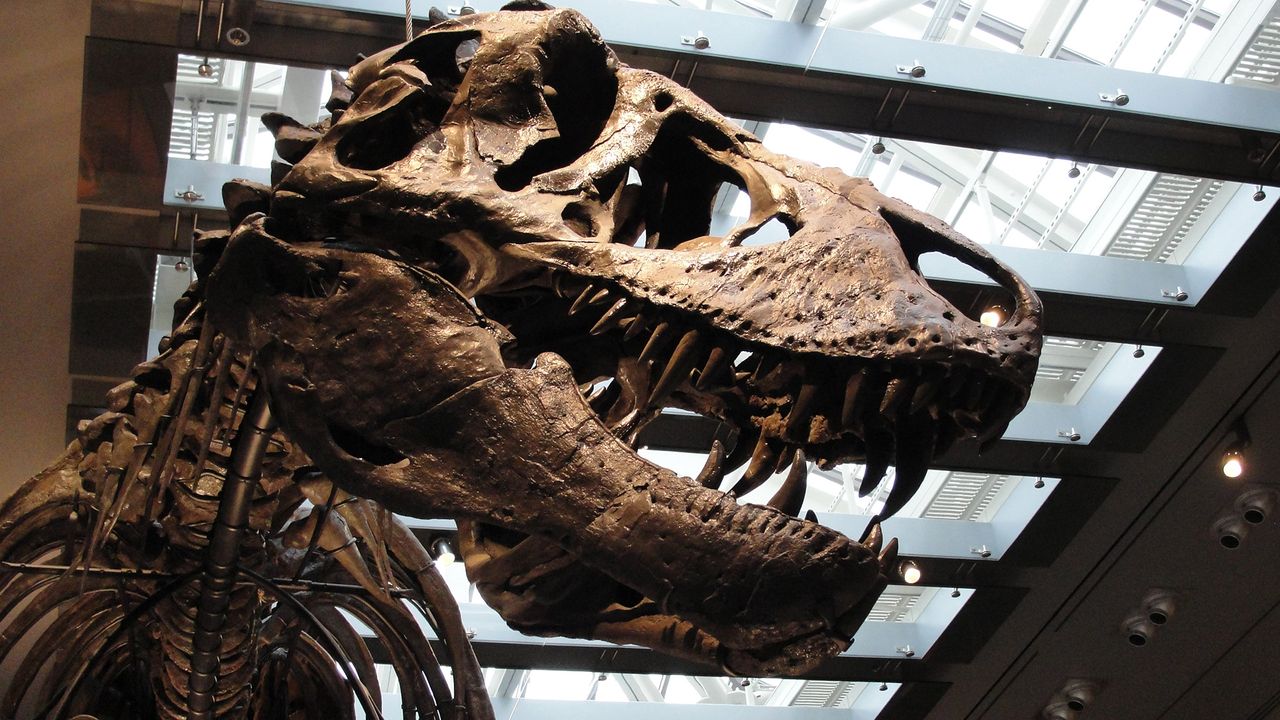
When picturing a scaled, toothy Tyrannosaurus rex stomping across North America, building nests and eating other dinosaurs, it's easy to forget that scientists have gleaned everything we know about T. rex from clues left more than 60 million years ago. While the presence of fossils in Alaska suggested that this prehistoric ancestor of birds was already on the evolutionary path from cold-blooded reptile to warm-blooded avian, there wasn't a way to take T. rex's temperature—until now.

📅 2026-09-16 18:00:19    •    Phys.org
Deep ocean, familiar trash: Plastic waste found alongside possible new species
Science News

Deep ocean, familiar trash: Plastic waste found alongside possible new species

It's no secret that plastic and other human trash are a problem for marine life, but our understanding has long focused on the ocean's surface. As described in a study published in PLOS One, a more complete picture is coming into focus, revealing that even some of our planet's greatest depths have become home to our debris.

📅 2026-09-16 18:00:11    •    Phys.org
Conserving just 35% of the nation's waterways could sustain freshwater biodiversity
Science News

Conserving just 35% of the nation's waterways could sustain freshwater biodiversity

By evaluating the health of waterways across the U.S., researchers have identified a network encompassing about one-third of rivers and streams that, if conserved and restored, could sustain the nation's freshwater biodiversity in the face of habitat degradation and climate change. Mark Anderson of The Nature Conservancy, U.S., led the new study, published Sept. 16, 2026, in the journal PLOS One.

📅 2026-09-16 18:00:07    •    Phys.org
AI reveals novel nighttime feeding behaviors in right whales
Science News

AI reveals novel nighttime feeding behaviors in right whales

Right whales forage near the water's surface at night, putting them at greater risk of potentially fatal collisions with boats, Jay Kirkham at Dalhousie University, Canada, and colleagues report Sept. 16, 2026, in the journal PLOS ONE.

📅 2026-09-16 18:00:03    •    Phys.org
We may soon be able to read long-lost ancient scrolls damaged by the eruption of Mount Vesuvius
Science News

We may soon be able to read long-lost ancient scrolls damaged by the eruption of Mount Vesuvius

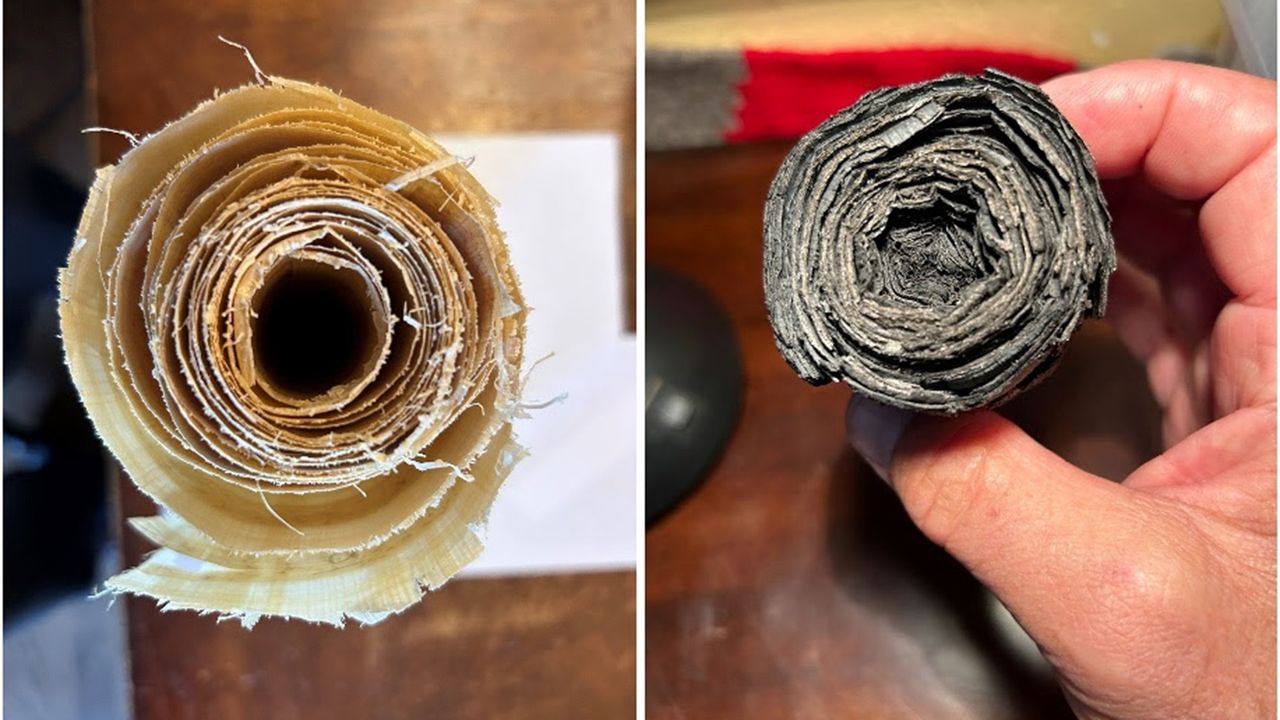
X-ray technology and artificial intelligence—along with the discovery of lead in the ink of fragments from a collection of ancient Roman scrolls—could soon help scientists read long-lost texts buried by the eruption of Mount Vesuvius in 79 CE, according to a study published Sept. 16, 2026, in the journal PLOS One by Douglas Seiler, an affiliate of the University of California, Berkeley, U.S.; Jacob Michael LaManna of the National Institute of Standards and Technology, U.S.; David Kreimer of the University of California, Berkeley, U.S.; and colleagues.

📅 2026-09-16 18:00:01    •    Phys.org
New trick could reveal text on 2,000-year-old scrolls charred by eruption of Mount Vesuvius
Science News

New trick could reveal text on 2,000-year-old scrolls charred by eruption of Mount Vesuvius

The long-lost words of ancient philosophers may finally be revealed nearly 2,000 years after the violent eruption of Mount Vesuvius scorched and buried them, thanks to a heavy metal that was used in the ink that penned them, a new study finds.The new research investigates the lead-enriched ink within some of the nearly 2,000 papyrus scrolls, which were found at a villa in the ancient town of Herculaneum in the 1750s. In a new paper, a team created modern scrolls with leaded ink, scorched them and found that they could read the text after using several techniques, including X-ray technologies and artificial intelligence (AI). "It's amazing what you can get electrons to do," Douglas Seiler, a ...

📅 2026-09-16 18:00:00    •    Live Science
Scientists finally figured out the temperature of T. rex's blood ‪— and it was as hot as ours
Science News

Scientists finally figured out the temperature of T. rex's blood ‪— and it was as hot as ours

Tyrannosaurus rex was a hottie with a body temperature similar to our own, according to a new analysis of their teeth.The finding supports the idea that T. rex was a fast, energetic predator and scavenger, not an animal that basked in the sun to gain energy like most modern-day reptiles.T. rex, which lived between about 68 million and 66 million years ago, at the end of the Cretaceous period (143.1 million to 66 million years ago), was one of the largest carnivorous dinosaurs that ever lived.Previous studies have already suggested that T. rex and its relatives were warm blooded, but now scientists have estimated the dinosaur's body temperature for the first time by studying different isotope...

📅 2026-09-16 18:00:00    •    Live Science