
Science News
Will the U.S. megadrought ever end?
For 27 years, the Southwest has been gripped by a historic drought. Scientists think it might be here to stay.
📅
2026-09-18 17:00:00
•
Science News
Explore the latest scientific discoveries, science news, breakthroughs and developments from around the world.
For 27 years, the Southwest has been gripped by a historic drought. Scientists think it might be here to stay.

The humble coffee filter has the relatively simple job of letting the coffee through and leaving the grounds behind. But researchers from the ARC Center of Excellence for Carbon Science and Innovation (COE-CSI) are exploring whether a filter operating on the molecular scale can do something much more difficult: separate the caffeine from the coffee itself.

Though the spiral galaxy in this new image from the NASA/ESA Hubble Space Telescope seems serene, it hides a chaotic secret. This galaxy is NGC 4698, and it lies about 55 million light-years away in the constellation Virgo. It's one of more than a thousand galaxies in the Virgo Cluster, the nearest large cluster of galaxies bound together by gravity.

Legislation that affects or discriminates against transgender and gender-diverse individuals can cause more psychological distress than personal experiences of discrimination, according to new Virginia Commonwealth University research published in the journal American Psychologist. The study also found that individuals with those identities experienced psychological distress from anti-transgender laws even if they lived in a state with legislation that is friendly toward transgender and gender-diverse individuals.

Molecular gases are a new form of artificial quantum matter. However, when these molecules collide, they are often lost extremely rapidly. Researchers from Radboud University and Columbia University have been able to suppress this collisional loss, paving the way for strongly interacting quantum matter. This new artificial quantum matter allows researchers to study quantum behavior relevant to electrons in real materials. Their results are published in Science.

When a multimillion-dollar masterpiece vanishes from a museum, the public calls for tougher criminal penalties and better-funded police task forces. But research from Wake Forest University suggests that some of these intuitive solutions can backfire, resulting in more art crime, not less.

During routine beach litter surveys on the subtropical island of Okinawa, Japan, researchers came across small, brightly colored specks in the pale coral rubble. Back at the lab, spectroscopic and microscopic analyses revealed that these specks are, in fact, melted polymers from common household plastics that have seeped inseparably into the skeletal pores of the dead coral pieces.
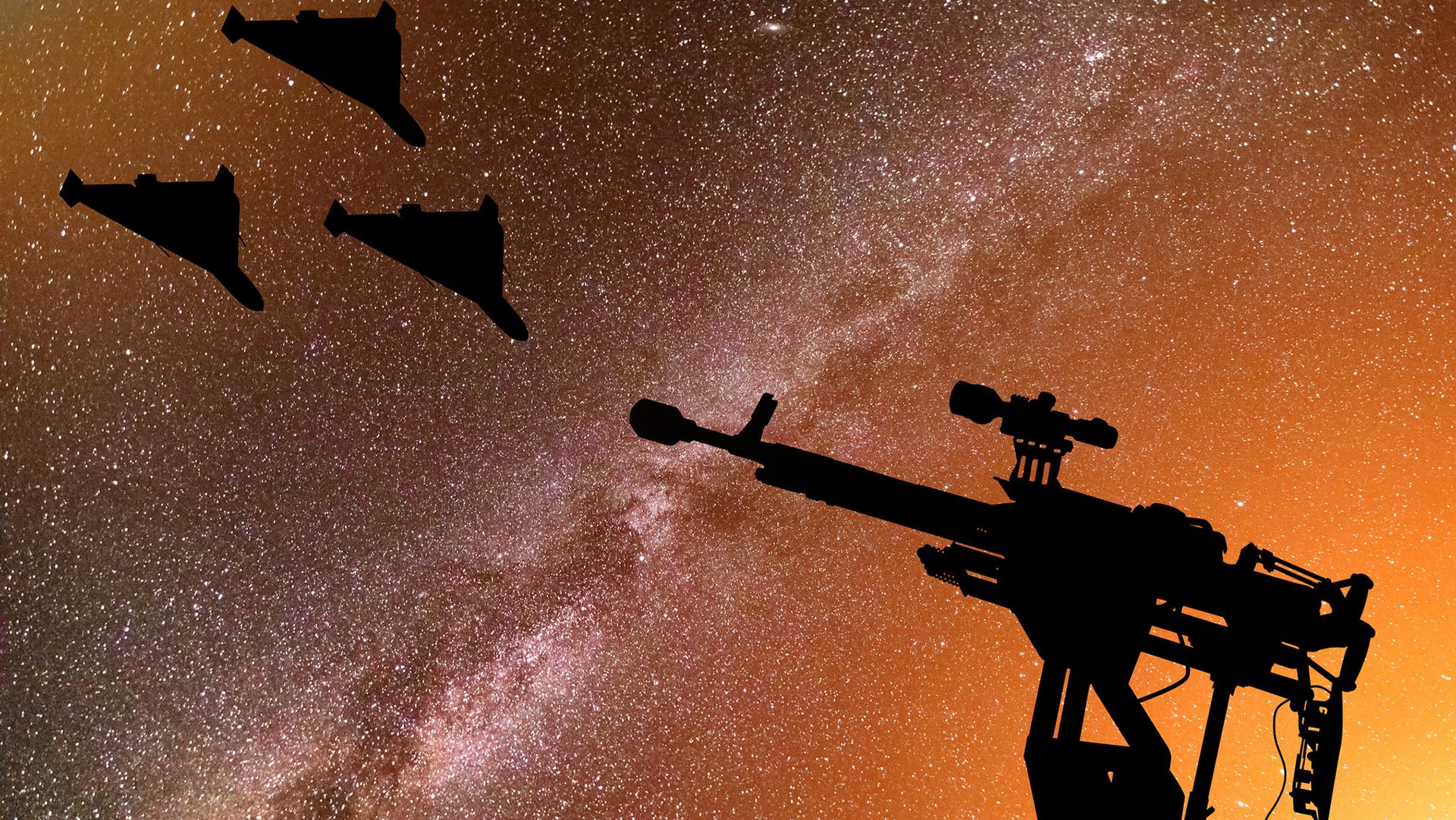
The idea of weapons in space, once a plot of science fiction, became a reality Monday (Sept. 14), when U.S. Air Force Secretary Troy Meink revealed at the Air, Space and Cyber Conference in Maryland that the United States had deployed "on-orbit space control weapons capable of defending the Joint Force against hostile adversary action."Experts are worried that with this new announcement, outer space may become the next frontier for an arms race. The 1967 Outer Space Treaty, signed by both the U.S. and the Soviet Union, dictated that no weapons should be placed in orbit. But the treaty had no enforcement mechanism, meaning the U.S.' announcement may not result in any international sanctions, ...

When the solar system first took up the task of building solid bodies—such as planets, moons and protoplanets—it basically had a choice between two ingredients: heat-forged chondrules, which were millimeter-sized bits of rock, and matrix, a fine-grained, cold dust loaded with water ice and organic molecules. And from the get-go, the solar system chose fire.

Humans are social animals, but we have a diversity of societies, each with its own customs, behaviors and expectations. It's obvious that those can affect how we respond to someone—favoring the comfort of familiar behaviors, for example—and people often try to account for that in themselves and others. But sometimes the effect is more subtle.

A sickle across the throat and a padlock on the toe were likely meant to keep this 17th-century Polish teen from resurrecting.
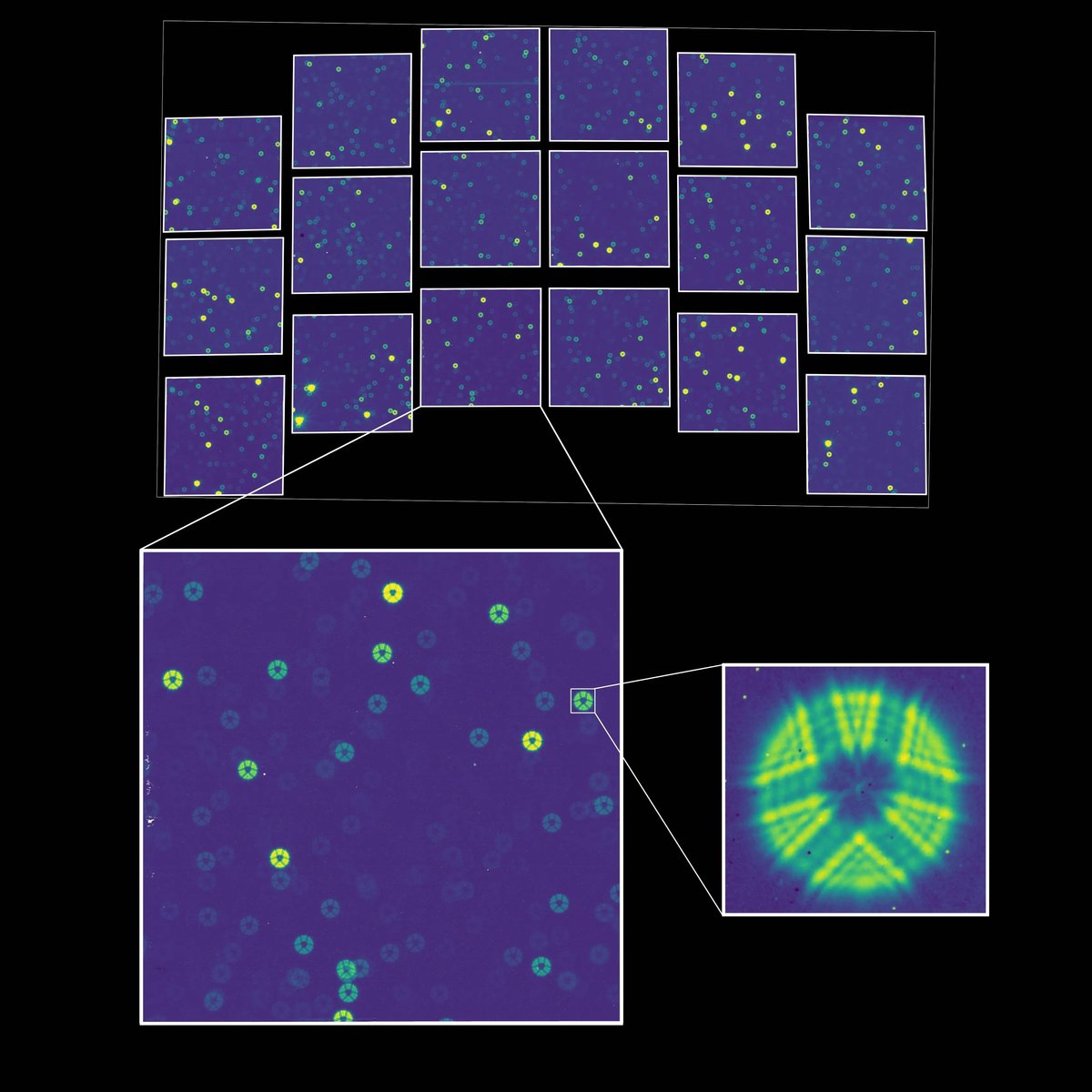
The space telescope is set to reveal thousands of new exoplanets and scour the universe for signs of dark matter and energy