Latest Scientific Discoveries

All News →
What is an itch, and why can a simple touch calm it?
Science News

What is an itch, and why can a simple touch calm it?

This question was posed as part of New Scientist’s Last Word series, in which readers give scientific answers to each other’s questions. Here’s what our readers had to say

šŸ“… 2026-09-23 17:00:00    •    New Scientist
What is the fastest way to empty a full jug of water?
Science News

What is the fastest way to empty a full jug of water?

This question was posed as part of New Scientist’s Last Word series, in which readers give scientific answers to each other’s questions. Here’s what our readers had to say

šŸ“… 2026-09-23 17:00:00    •    New Scientist
Why do we feel emotional about fictional characters? part 2
Science News

Why do we feel emotional about fictional characters? part 2

This question was posed as part of New Scientist’s Last Word series, in which readers give scientific answers to each other’s questions. Here’s what our readers had to say

šŸ“… 2026-09-23 17:00:00    •    New Scientist
This week’s new questions
Science News

This week’s new questions

Is it faster to jog up stairs or take them two at a time? If the world we observe is just our brain’s interpretation of the electro-chemical signals it receives from our eyes, what is the world actually like?

šŸ“… 2026-09-23 17:00:00    •    New Scientist
Researcher finds that cats lie around for a ridiculous amount of time
Science News

Researcher finds that cats lie around for a ridiculous amount of time

Josie Ford Feedback is our weekly column of bizarre stories, implausible advertising claims, confusing instructions and more A little catty Feedback’s felines are often nowhere to be seen. For hours at a time – in the case of the more free-range cat, sometimes several days – they vanish from sight. What might they be doing? Torturing the local small-animal population perhaps, or chasing fallen leaves around the yard, or visiting the local school to cause as much disruption to learning as possible, or perhaps just lazing in a warm spot to sleep. But who knows? One person who does know is Michelle Smit at Massey University in New Zealand, because she and her colleagues put collar-mounted accel...

šŸ“… 2026-09-23 17:00:00    •    New Scientist
Earth's first bats didn't come from where we thought, landmark genetic study reveals
Science News

Earth's first bats didn't come from where we thought, landmark genetic study reveals

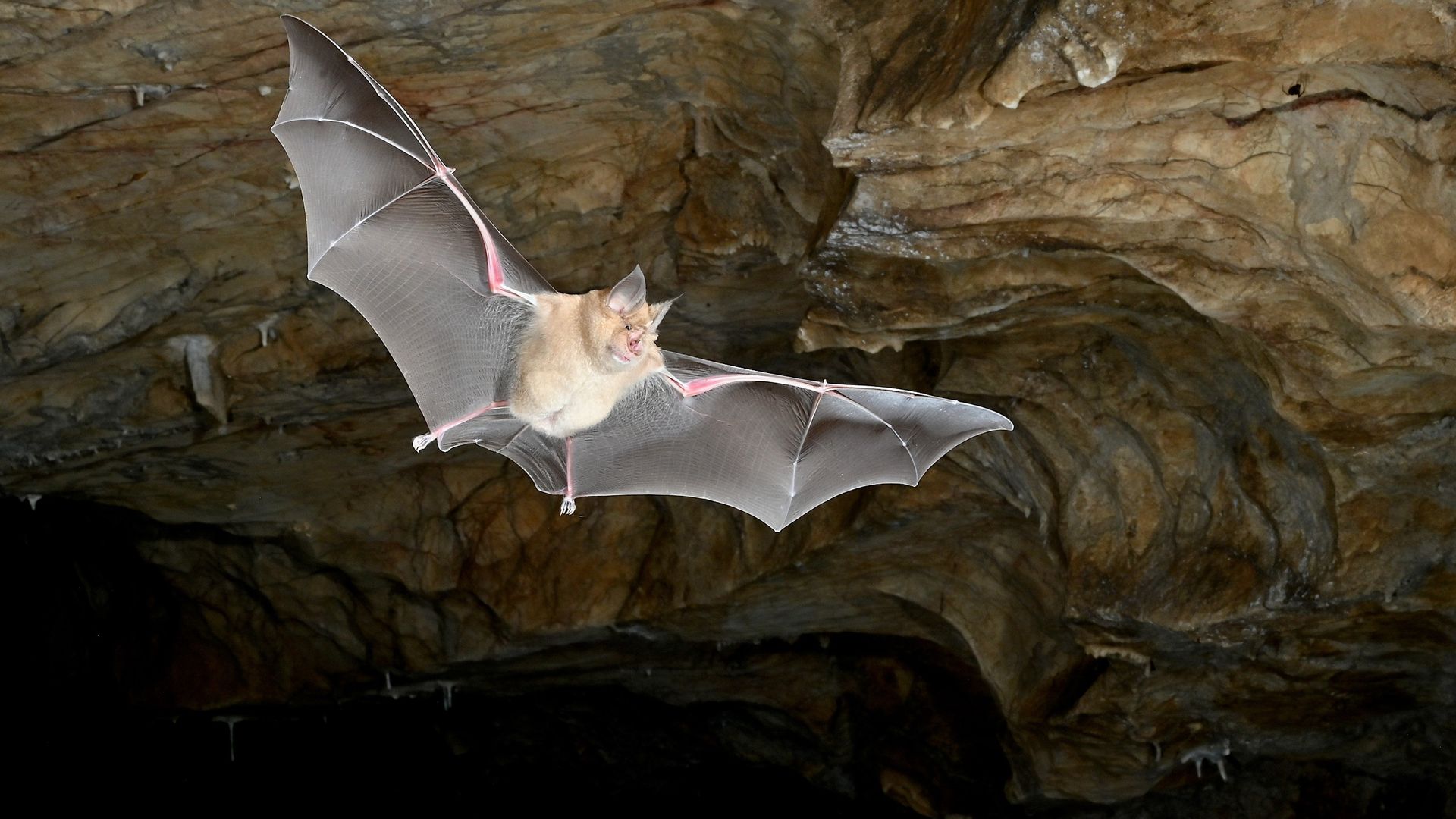
Scientists may have settled a decades-long debate about bat evolution, including controversial questions about when bats began to communicate and fly, a landmark study shows.The new research, published Wednesday (Sept. 23) in the journal Nature, is the biggest bat DNA and fossil study ever conducted. Researchers created new, top-quality genome assemblies for 41 bat species, which they analyzed together with 62 existing sequences, providing a record dataset of 103 bat genomes and 44 bat fossils."It is extraordinary," study co-author Emma Teeling, a professor of molecular evolution and mammalian phylogenetics at University College Dublin, told Live Science in an email; "after decades of resear...

šŸ“… 2026-09-23 16:05:28    •    Live Science
Missing Celtic fort annihilated by Julius Caesar finally found under Paris hospital
Science News

Missing Celtic fort annihilated by Julius Caesar finally found under Paris hospital

Archaeologists excavating a Paris hospital's courtyard, a stone's throw from Notre-Dame, have discovered the first evidence of a Celtic fort that Julius Caesar tried to conquer in 52 B.C. The ancient walls show evidence of a violent fire, seemingly confirming the claim that the Celtic group who lived there, known as the Gauls, burned down their own town so that it wouldn't fall into Caesar's hands."The wall's architecture, with its large blocks and interlocking beam system, immediately led us to believe it was a wall of Gallic tradition," DorothĆ©e Chaoui-Derieux, chief curator of heritage at the Ǝle-de-France Regional Archaeology Service, said in a translated statement. Traces of fire and fi...

šŸ“… 2026-09-23 16:03:51    •    Live Science
Astronomers detected radio signals coming from an exoplanet for the first time. Spoiler alert: It's not aliens.
Science News

Astronomers detected radio signals coming from an exoplanet for the first time. Spoiler alert: It's not aliens.

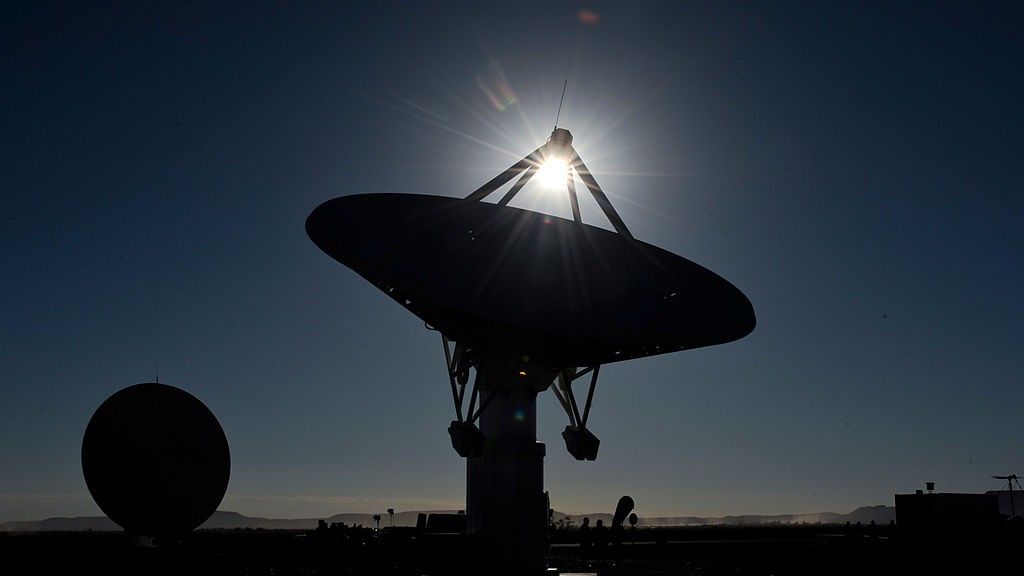
For the first time, astronomers have detected radio signals coming directly from a planet outside our solar system, according to a new preprint study. Spoiler alert: It's not aliens. But astrophysicists are still very excited about this discovery. "Astronomers have been looking for radio signals from exoplanets for some time," Suzanne Aigrain, a professor of astrophysics at the University of Oxford who was not involved in the study, told Live Science in an email. "There have been tentative, indirect detections before, but this is the first truly convincing direct detection, and it hopefully paves the way for many more."Artificial radio signals are a key focus in the search for extraterrestri...

šŸ“… 2026-09-23 15:45:19    •    Live Science