Science News

Latest science news, discoveries and scientific developments.

One of America’s largest reservoirs just hit a record low
Science News

One of America’s largest reservoirs just hit a record low

Lake Powell has fallen to its lowest level on record after an exceptionally dry and warm winter left the Colorado River Basin with little mountain snow to melt. Lake Mead also reached record lows, raising concerns for a river system that supplies water and power to more than 40 million people. Federal officials have taken emergency steps to stabilize Lake Powell, including sending in water from another reservoir and reducing releases downstream.

📅 2026-09-23 02:01:16    •    ScienceDaily
It's OK if managers step in to help their sales staff—but not too much
Science News

It's OK if managers step in to help their sales staff—but not too much

Workers in sales might roll their eyes when they deal with a micromanaging boss. But many customers actually appreciate it if a store manager offers to help when they're mulling over a purchase, whether it's a dishwasher, a tablet or a lawn mower.

📅 2026-09-23 02:00:02    •    Phys.org
This new drug could break cancer’s resistance to treatment
Science News

This new drug could break cancer’s resistance to treatment

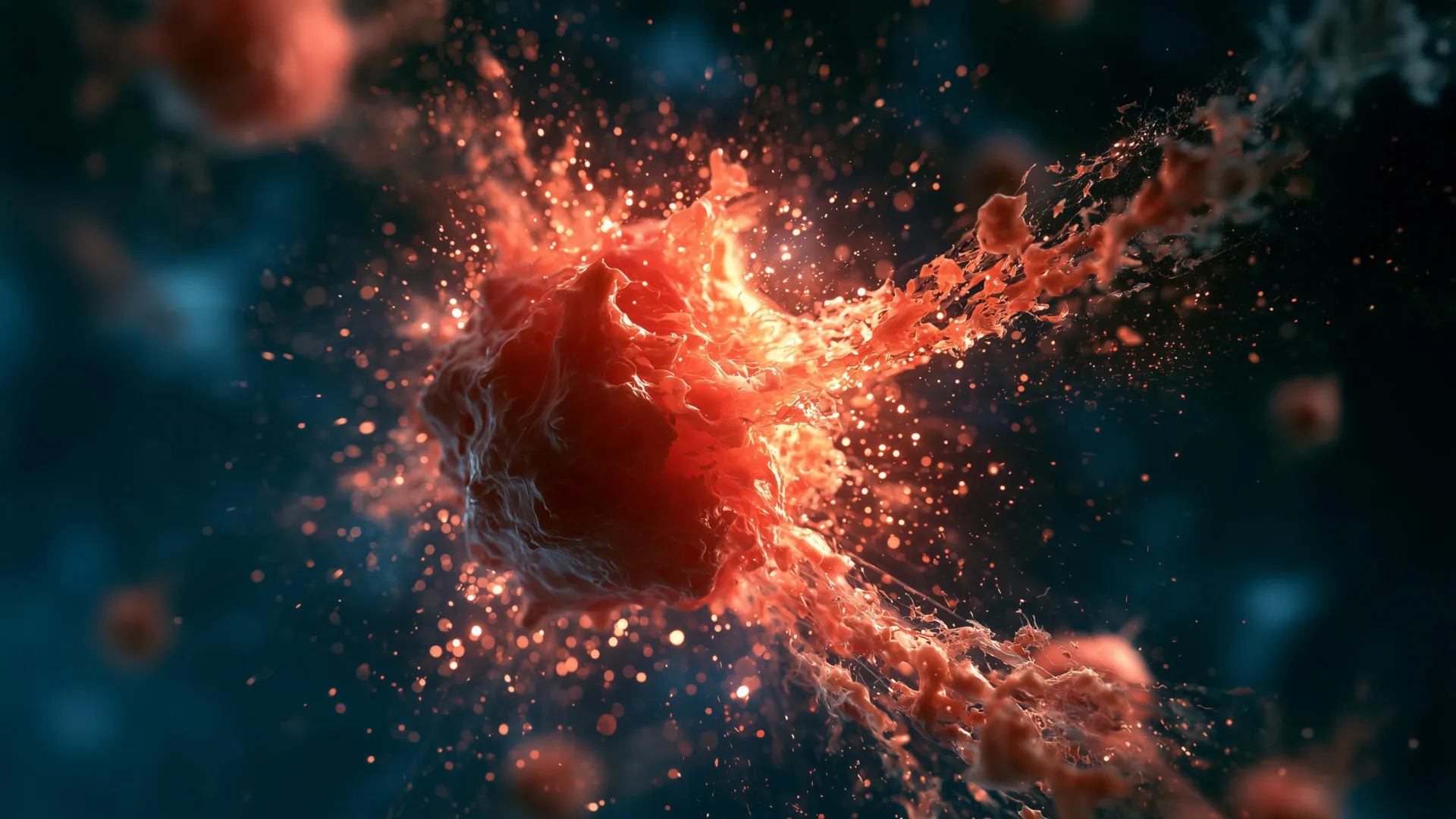
A new experimental drug called CS18 may help break through cancer drug resistance by disabling several of the defenses tumors use to survive treatment. It strengthened existing therapies, restored drug sensitivity in resistant lung cancer cells, and slowed tumor growth in animal models.

📅 2026-09-23 01:27:00    •    ScienceDaily
How can parents handle squabbles between kids?
Science News

How can parents handle squabbles between kids?

School vacations inevitably mean more squabbles. Longer days together, less structure and more sharing (of toys, screens, space and parental attention) all lead to children demanding that you referee fights and arguments.

📅 2026-09-23 01:00:03    •    Phys.org
How the pro‑nicotine 'wellness' movement rebranded an addictive drug
Science News

How the pro‑nicotine 'wellness' movement rebranded an addictive drug

An ironic development emerging alongside the "Make America Healthy Again" movement is the portrayal of nicotine as a wellness and performance-enhancing product. Across social media, podcasts, wellness communities and tech startups, prominent wellness personalities and other influencers are portraying nicotine as a misunderstood compound whose potential benefits have been overshadowed by its negative association with cigarette smoking.

📅 2026-09-23 00:00:01    •    Phys.org
The secret to a perfect crystal may be a precisely calibrated extra turn
Science News

The secret to a perfect crystal may be a precisely calibrated extra turn

Creating a perfect crystal sounds straightforward: Arrange identical building blocks into a repeating, orderly structure. At the microscopic scale, though, even subtle biases in how particles interact can push them in preferred directions, making it harder to form uniform crystalline materials.

📅 2026-09-22 23:20:05    •    Phys.org
Queasy plesiosaurs swam to shore to vomit, Jurassic fossils reveal
Science News

Queasy plesiosaurs swam to shore to vomit, Jurassic fossils reveal

Plesiosaurs swam into river deltas to vomit up shells and other indigestible elements of their marine meals, suggests new research published by Cambridge University Press. The behavior resembles that of today's fur seals and marine crocodiles.

📅 2026-09-22 23:00:01    •    Phys.org
Injectable nanoparticles make blind retinas respond to light in preclinical study
Science News

Injectable nanoparticles make blind retinas respond to light in preclinical study

An international research team has developed microscopic particles that can make blind retinas respond to light. The particles act as tiny light receptors. Researchers inject them into the eye, where they settle close to nerve cells in the retina. When light hits the particles, it triggers electrical and chemical processes that can activate the nerve cells and prompt them to send signals toward the brain.

📅 2026-09-22 22:40:02    •    Phys.org
Corals show 'vaccine-like' responses after pathogen exposure
Science News

Corals show 'vaccine-like' responses after pathogen exposure

To boost corals' resilience amid rising sea temperatures and the spread of disease, KAUST researchers have found that controlled, low-level exposure to dead pathogenic cells can help corals resist future infection.

📅 2026-09-22 22:20:06    •    Phys.org
Tech solution that makes drone operations much more wildlife friendly
Science News

Tech solution that makes drone operations much more wildlife friendly

This summer, Norwegian news has reported (in Norwegian) multiple stories about Lofoten residents who shot at drones out of sheer frustration. But not everyone exposed to approaching drones has a gun with which to defend themselves.

📅 2026-09-22 22:20:04    •    Phys.org
From swarming bacteria to tissue cells, living matter defies classic physical models of motion
Science News

From swarming bacteria to tissue cells, living matter defies classic physical models of motion

A new study led by researchers from Ben-Gurion University of the Negev (BGU) reveals that living matter violates previously known physical principles of symmetry when cellular flows form and break down collective patterns. The research, published in Nature Physics, challenges conventional liquid-crystal physics by showing that moving single-celled bacteria and human respiratory cells spontaneously break mirror symmetry, moving in curved, irreversible spiral paths.

📅 2026-09-22 21:40:05    •    Phys.org
Psychologists provide tips on how to talk about identity
Science News

Psychologists provide tips on how to talk about identity

Imagine your child asks you out of the blue, "If we speak Spanish, will they take you away?" Or imagine them suddenly asking what an offensive slur means. When a child asks these types of questions, it can be difficult to trace them back to a specific news story or event. But you may not need to. The question itself tells you that your child is trying to make sense of something they heard.

📅 2026-09-22 21:40:01    •    Phys.org
AI companions may erode social skills among isolated users, framework suggests
Science News

AI companions may erode social skills among isolated users, framework suggests

As AI companions become more commonplace, new research from Singapore Management University (SMU) and Duke-NUS Medical School argues that the real question is no longer whether these technologies are beneficial or harmful, but who benefits, who is most at risk and how society can ensure AI serves everyone equitably.

📅 2026-09-22 21:20:04    •    Phys.org
'There was something bigger in the ground here': Metal detectorist in Germany discovers giant Roman-era hoard from time of emperor Hadrian
Science News

'There was something bigger in the ground here': Metal detectorist in Germany discovers giant Roman-era hoard from time of emperor Hadrian

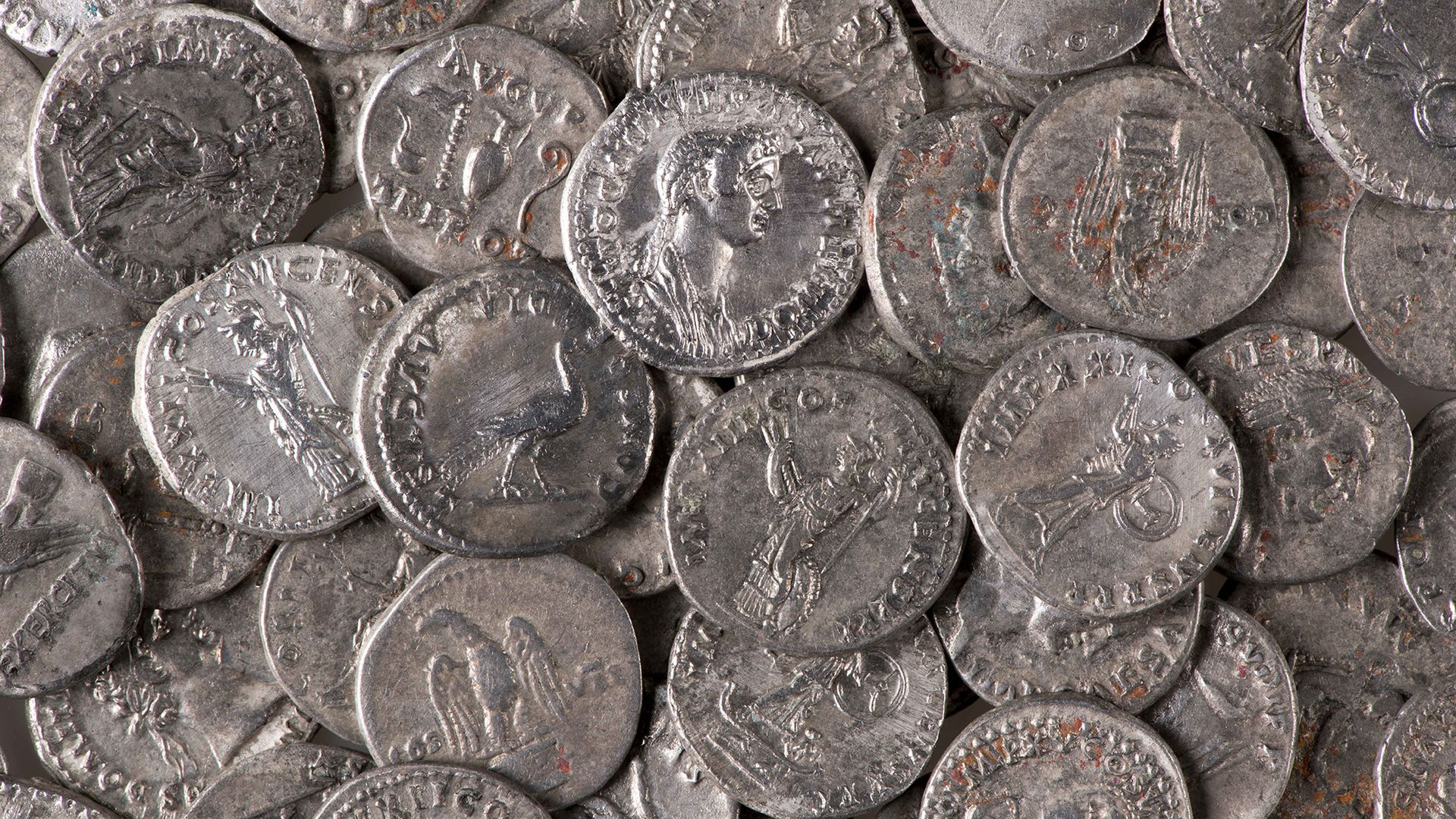
A metal detectorist in the west of Germany has discovered one of the largest hoards of Roman silver coins ever found in that country from the reign of the Emperor Hadrian. The pile includes more than 900 silver denarii — the denarius was the standard coin of the early Roman Empire — and weighs almost 7 pounds (3.1 kilograms).The stash was discovered about a year ago in a field near the small city of Wesseling, a few miles south of Cologne, according to a translated statement from Germany's Rhineland regional government. It's now on display at the Rhineland Regional Museum in Bonn (LVR-Landesmuseum Bonn).Archaeologists think the hoard was buried at the time of the Emperor Hadrian, who ruled f...

📅 2026-09-22 21:13:32    •    Live Science
What is your dog really saying? AI is helping researchers decode animal communication
Science News

What is your dog really saying? AI is helping researchers decode animal communication

Is a dog's bark simply an expression of emotion, or does it contain specific information that humans cannot understand? Artificial intelligence (AI) can already analyze thousands of animal sounds and identify patterns that would go unnoticed by the human ear. But researchers are asking a far more ambitious question: Could technology one day help us understand what animals are actually saying?

📅 2026-09-22 21:00:10    •    Phys.org
RHIC data reveal intriguing dip in momentum fluctuations in high-density nuclear matter
Science News

RHIC data reveal intriguing dip in momentum fluctuations in high-density nuclear matter

Scientists using the STAR detector to study particle collisions at the Relativistic Heavy Ion Collider (RHIC) have found an intriguing dip in their data in a relatively unexplored region of the nuclear phase diagram—a map of how nuclear matter behaves under various conditions of temperature and density. The dip appears in data tracking collision-by-collision variations in the momenta of particles emerging from collisions between gold nuclei at RHIC, near RHIC's lowest collision energies. These collisions create the highest-density nuclear matter and may indicate that something interesting is happening in that dense region of the phase diagram. The findings are described in a paper just publi...

📅 2026-09-22 20:40:08    •    Phys.org
Cash flow lessons help individual investors look beyond reported earnings
Science News

Cash flow lessons help individual investors look beyond reported earnings

Why are individual investors, commonly known as "retail investors," prone to losing money in the stock market? A Lingnan University joint study of more than 4,600 Chinese and U.S. stocks finds that investors are less likely to buy stocks blindly when they understand the difference between a company's "reported earnings" and its "actual cash flows."

📅 2026-09-22 20:20:09    •    Phys.org