
Science News
It's hard to predict who will be suicidal: It's easier to ensure people can't shoot themselves
Dr. Paul Nestadt is about as steeped in suicide prevention as a person can be.
Latest science news, discoveries and scientific developments.
Dr. Paul Nestadt is about as steeped in suicide prevention as a person can be.

The asteroid Bennu orbits the sun once every 1.2 years and approaches Earth every six years, passing within around 300,000 kilometers. NASA took advantage of this to collect material from the celestial body. In a spectacular operation in 2023, the US space agency collected samples from the surface of the asteroid Bennu by its OSIRIS-REx probe.

Brazilian researchers have developed a biodegradable, starch-based sensor that changes color when moisture enters food packaging. With the addition of cobalt chloride, the sensor changes from blue to pink as moisture levels rise and back to blue as they fall. Consumers and manufacturers could use it to monitor the quality and crispness of foods such as cookies with the naked eye or a cellphone camera, without complex equipment.

Sejong University researchers have developed a high-quality soybean with improved oxidative stability, reduced saturated fat and increased seed fatty acid content. The research team led by Hyun Uk Kim, a professor in the Department of Bio-Industrial Resources Engineering at Sejong University, created the soybean line containing up to 90.2% oleic acid using CRISPR/Cas9 gene-editing technology. The study is published in the Plant Biotechnology Journal.

Propolis may not only inhibit the growth of certain fungi but also affect the activity of drugs used to treat fungal infections. Researchers have investigated how an ethanolic extract of Polish propolis interacts with various antifungal agents.

Telltale signs of financial abuse, such as depleted savings, increasing debts and declining credit scores, can be identified in bank records, according to an analysis of U.K. banking data published in Nature. The findings reveal up to 373 indicators of financial behavior that could help pinpoint customers who may be experiencing economic abuse.

A researcher from Sejong University has used a new theory of gravity proposed by Erik Verlinde to predict the observed central surface density of dark matter. The study was published in Physics of the Dark Universe on Sept. 20.

The Compact Accelerator System for Performing Astrophysical Research (CASPAR) recreates conditions inside stars to study how elements are made. The experiment recently restarted with a new target—the ninth element on the periodic table, fluorine.

A team of Chilean and Spanish researchers has published the results of one of the longest-running in-situ warming experiments in maritime Antarctica in the journal Physiologia Plantarum. The experiment exposed the Antarctic continent's only two native vascular plant species, Deschampsia antarctica (Antarctic hairgrass) and Colobanthus quitensis (Antarctic pearlwort), to passive warming chambers (Open Top Chambers, OTCs) for seven years.

Scientists have shown that the two exponents (inelastic scattering exponent and dephasing exponent) commonly used to describe electron scattering in graphene do not necessarily follow the same behavior. Using gated epitaxial graphene, a multi-institutional team of researchers independently extracted the two exponents through current-heating measurements and weak-localization analysis. The contrasting gate-voltage dependence provides evidence that energy relaxation and loss of quantum phase coherence can be governed by different microscopic processes.

On Oct. 25, 2024, 10 days before the election that would return Republican Donald Trump to the White House and more than three months after Kamala Harris ascended to the top of the Democratic ticket, ChatGPT was still telling users that Joe Biden was running for a second term as president.

Tuberculosis, or TB, is a contagious bacterial infection that primarily affects the lungs. While curative treatments exist, more than 80% of cases occur in low- and middle-income nations, where drug-resistant strains are on the rise and the cost of medications is a burden. A new class of antibiotics has shown promise against multidrug- and extensively drug-resistant TB, but its manufacturing cost is a barrier to access in poorer countries that need the treatments most.

New research from Indiana University Lilly Family School of Philanthropy examines charitable gifts of $1 million or more from 2021 to 2023. The Million-Dollar-Plus Giving in the United States, 2021–2023 report offers insights into how these donors responded to a rapidly changing environment.
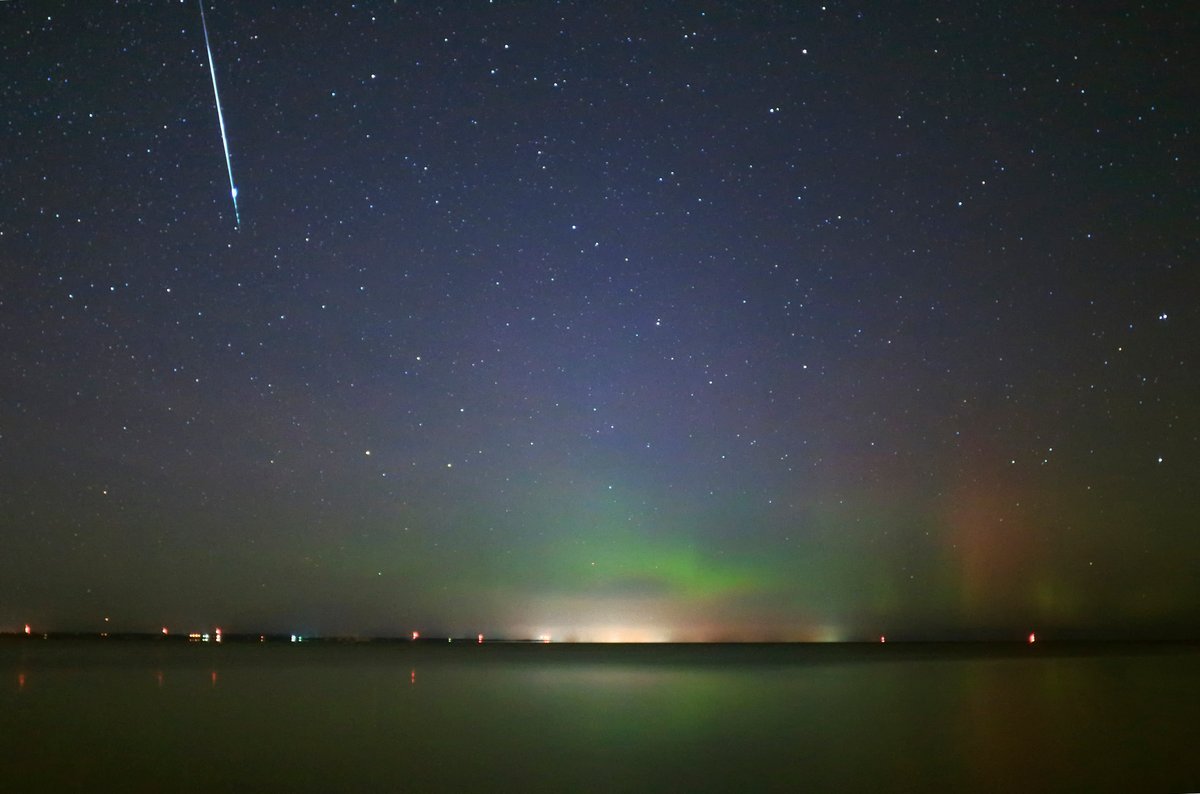
Lasting from mid-September until mid-December, the Taurid meteor showers are among the longest of the year
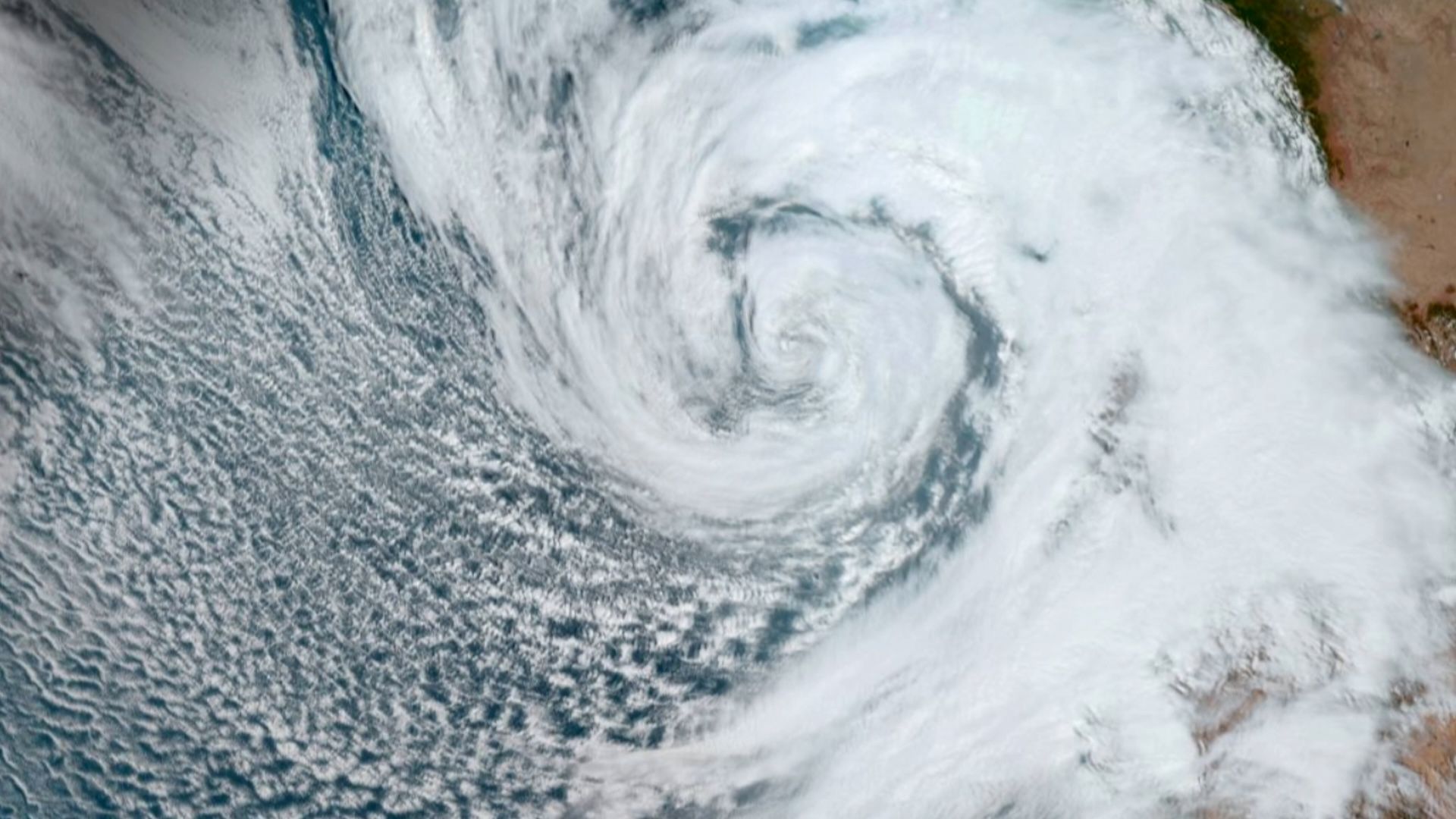
A Pacific cyclone dubbed Polo exploded from a tropical storm into a powerful Category 5 hurricane in less than 24 hours on Tuesday (Sept. 22), with winds reaching speeds of 180 mph (290 km/h). Now drifting off the southwest coast of Mexico, Polo has been downgraded to a Category 4 storm but remains "a very powerful major hurricane," the National Hurricane Center (NHC) said in an update Wednesday (Sept. 23).As Polo moves northwest, it is expected to drive torrential rainfall on parts of Mexico's southwest coast. Although the storm is not predicted to make direct landfall, the NHC has warned that heavy rain may produce life-threatening flooding and mudslides, as well as extremely hazardous oce...

A general election in Brazil next month is widely seen as a choice between Luiz Inácio Lula da Silva and Flávio Bolsonaro, son of former president Jair Bolsonaro

This question was posed as part of New Scientist’s Last Word series, in which readers give scientific answers to each other’s questions. Here’s what our readers had to say

This question was posed as part of New Scientist’s Last Word series, in which readers give scientific answers to each other’s questions. Here’s what our readers had to say

This question was posed as part of New Scientist’s Last Word series, in which readers give scientific answers to each other’s questions. Here’s what our readers had to say

This question was posed as part of New Scientist’s Last Word series, in which readers give scientific answers to each other’s questions. Here’s what our readers had to say