Science News

Latest science news, discoveries and scientific developments.

Women astronauts use social media to reframe science and femininity together
Science News

Women astronauts use social media to reframe science and femininity together

Why can't a flight jacket be pink or purple? That was the question a 6-year-old girl asked her mother, Kellie Gerardi, an astronaut, researcher and science communicator. When Gerardi later appeared in a TV interview wearing a bright pink flight jacket, her daughter pointed to her mom on the TV screen, smiling with delight. This exchangeβ€”which appeared in a post on Gerardi's Instagram accountβ€”was a personal moment, skillfully presented through the language and visuals of social media. But it also conveys a clear message: Femininity and scientific credibility are not mutually exclusive.

πŸ“… 2026-10-01 04:00:02    β€’    Phys.org
Caltech physicists finally measure a quantum energy ladder predicted 40 years ago
Science News

Caltech physicists finally measure a quantum energy ladder predicted 40 years ago

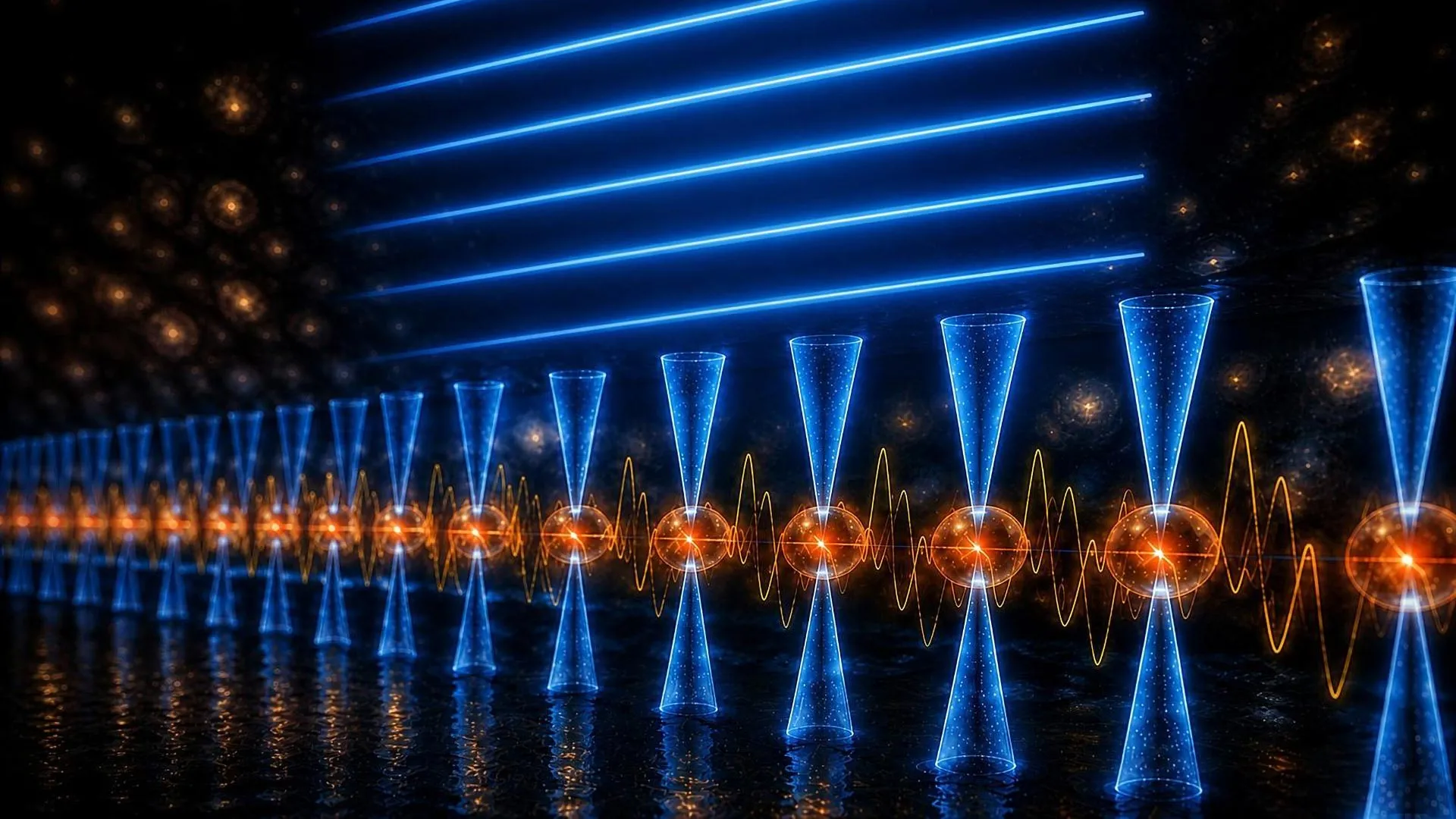
Researchers have experimentally observed energy patterns that physicists have predicted for about 40 years. By arranging laser-trapped atoms into a quantum simulator, they recreated two different quantum tipping points and watched the atoms fall into the exact energy ratios predicted by theory. The technique could now be used to explore mysterious quantum systems where scientists do not already know the answer.

πŸ“… 2026-10-01 03:06:56    β€’    ScienceDaily
Wildlife tracking to fill gaps in monarch migration research
Science News

Wildlife tracking to fill gaps in monarch migration research

Every fall, monarch butterflies fuel up on nectar from Iowa's fall-blooming wildflowers before embarking on an extraordinary migration from North America to Mexico. But the pathways they take and how their travel is affected by weather and other factors have largely remained a mystery.

πŸ“… 2026-10-01 02:40:01    β€’    Phys.org
This common mistake can add nearly 7 points to your blood pressure reading
Science News

This common mistake can add nearly 7 points to your blood pressure reading

A common mistake during blood pressure checks could make readings appear substantially higher than they really are. Johns Hopkins researchers found that leaving the arm unsupported can raise systolic readings by about 6.5 mmHg, potentially affecting a hypertension diagnosis.

πŸ“… 2026-10-01 02:11:51    β€’    ScienceDaily
Bacteria can make plant-based foods healthier for humans and animals
Science News

Bacteria can make plant-based foods healthier for humans and animals

New research from the DTU National Food Institute and Aarhus University shows that microorganisms can be used to specifically alter the amino acid composition of plant-based foods, making them more nutritious and therefore healthier.

πŸ“… 2026-09-30 23:20:07    β€’    Phys.org
Why some Ukrainian refugees struggle to rebuild their careers after arriving in Canada
Science News

Why some Ukrainian refugees struggle to rebuild their careers after arriving in Canada

The Russian invasion of Ukraine continues into 2026, with millions of Ukrainians displaced around the world. Many arrived in host countries with professional experience, degrees and specialized skills. Yet displacement often leaves highly educated refugees unable to continue their previous careers.

πŸ“… 2026-09-30 23:20:01    β€’    Phys.org
Devastating year for Switzerland's glaciers after extreme heat and low snow
Science News

Devastating year for Switzerland's glaciers after extreme heat and low snow

Switzerland's glaciers lost more than 5% of their ice volume in 2026. Although melt rates did not quite reach the record levels of 2022, glacier thickness decreased by an average of 2.5 to 4 meters (8 to 13 feet) this year, and some glacier tongues lost up to 10 meters (33 feet) of ice. The research is published in the journal GLAMOSβ€”Glacier Monitoring Switzerland.

πŸ“… 2026-09-30 23:00:01    β€’    Phys.org
Key protein for cells' gene regulation needs a chaperone to do its job
Science News

Key protein for cells' gene regulation needs a chaperone to do its job

A protein that's essential to every cell's ability to turn off unnecessary genes is well known for its key function of compacting genes and its connection to cancer when it undergoes mutation. But until now, scientists weren't quite sure how the protein gets where it needs to go to keep genes bound up so they aren't activated.

πŸ“… 2026-09-30 22:40:01    β€’    Phys.org
Peruvian mummies raise questions about Wari conquest of Nasca civilization
Science News

Peruvian mummies raise questions about Wari conquest of Nasca civilization

For centuries, historians have drawn the boundaries of where ancient people lived based on the evidence they left behind. By studying their remains, burial practices and other archaeological clues, they can determine the types of relationships they had with other people in the area. However, this can all change when new archaeological evidence is found.

πŸ“… 2026-09-30 22:20:16    β€’    Phys.org
Fluorescent sensors could help researchers see diabetes in action
Science News

Fluorescent sensors could help researchers see diabetes in action

Researchers from the University of Bath have developed fluorescent molecular probes that can detect changes in glucose levels inside living animals, giving scientists new ways of visualizing sugar uptake and studying diabetes, cancer and other metabolic diseases in whole organisms in real time. The findings are published in the journal Advanced Science.

πŸ“… 2026-09-30 22:00:01    β€’    Phys.org
Digging deep, researchers find high-altitude glacier endured last ice age
Science News

Digging deep, researchers find high-altitude glacier endured last ice age

Ice cores recovered from an ice cap in northwestern Tibet appear to preserve fragments of ancient ice from the last ice age, extending Earth's glacial record by more than 100,000 years and making them the oldest ice cores ever recovered from the region, according to a new study.

πŸ“… 2026-09-30 21:50:02    β€’    Phys.org