Science News

Latest science news, discoveries and scientific developments.

Animals may have evolved vastly earlier than fossil evidence suggests
Science News

Animals may have evolved vastly earlier than fossil evidence suggests

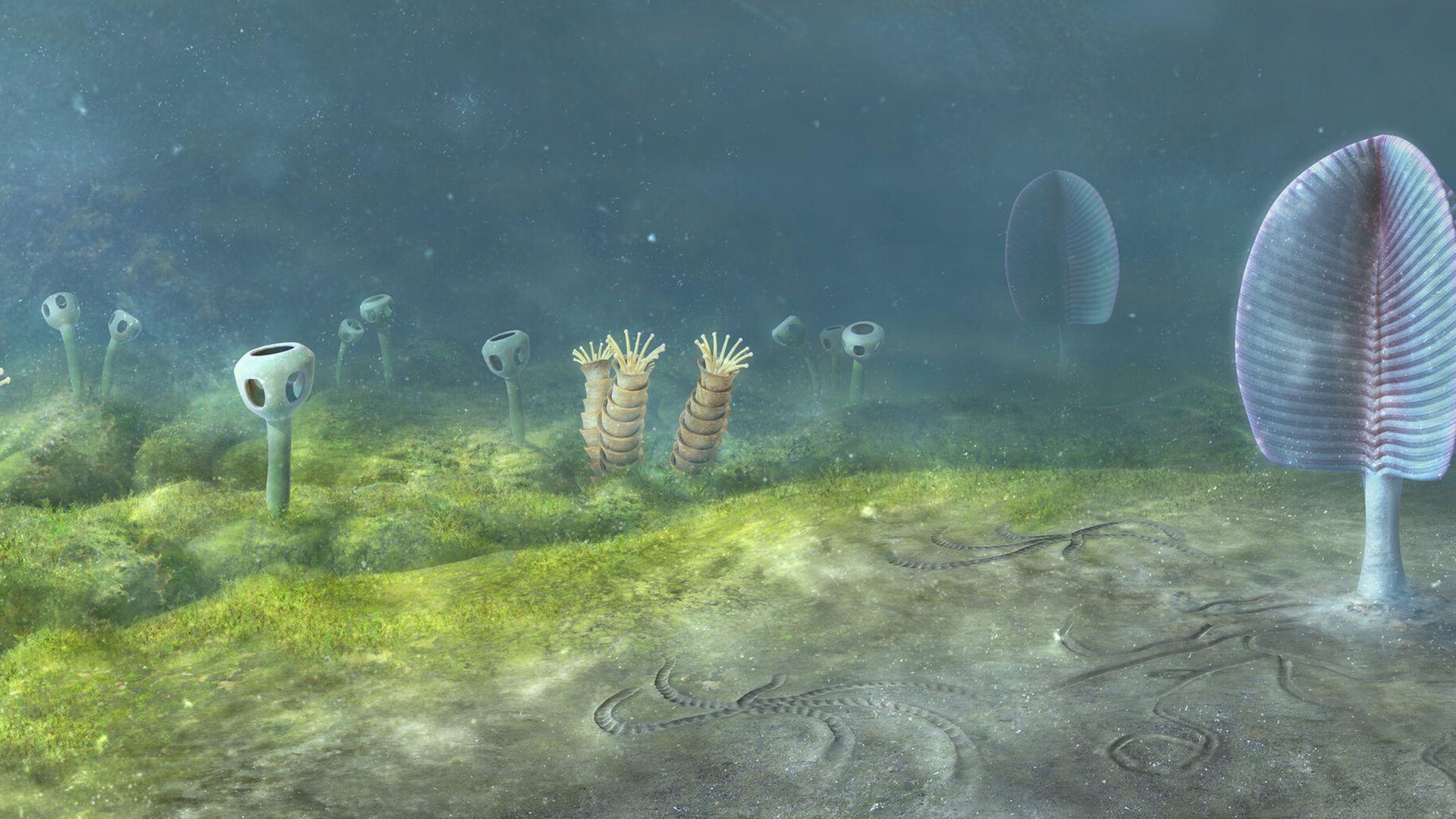
The earliest animals may have evolved hundreds of millions of years before their first unmistakable fossils appear in the fossil record, according to a new study led by the University of Oxford. The findings, published in Science Advances, suggest animals may have originated deep in the Neoproterozoic Era, even before some of the most extreme ice ages in Earth's history.

πŸ“… 2026-10-02 18:00:13    β€’    Phys.org
Physicists who uncovered the first particle accelerator were honored with a Nobel Prize 75 years ago
Science News

Physicists who uncovered the first particle accelerator were honored with a Nobel Prize 75 years ago

While scientists are known for their dedication to their research, crawling on the floor to avoid electrocution for the sake of a measurement seems a little excessive. But this is what British physicist John Cockcroft and Irish physicist Ernest T.S. Walton had to do in the early 1930s while studying the structure of atomic nuclei. Luckily, their efforts led to their receiving the Nobel Prize in 1951.

πŸ“… 2026-10-02 18:00:01    β€’    Phys.org
Animals may have evolved 200 million years earlier than previously thought, new study suggests
Science News

Animals may have evolved 200 million years earlier than previously thought, new study suggests

The first animals may have appeared on Earth hundreds of millions years earlier than their fossils suggest, a new modeling study suggests. Previously, the earliest fossil evidence of animals dated to around 574 million years ago, during the Ediacaran period (635 million to 538 million years ago). In the new paper, a research team argues that we can't just rely on the spotty fossil record, and suggests that animals first appeared up to 200 million years earlier than the oldest known animal fossils. In the study, published Friday (Oct. 2) in the journal Science Advances, the researchers argue that the absence of animal fossils in some exceptionally well-preserved ancient rocks doesn't mean the...

πŸ“… 2026-10-02 18:00:00    β€’    Live Science
Want to use AI to improve your work? Have it disagree with you
Science News

Want to use AI to improve your work? Have it disagree with you

Knowledge workers such as scientists, teachers, lawyers and business leaders are increasingly using generative artificial intelligence applications for tasks that demand imagination, creativity and problem-solving. Ironically, perhaps, recent research shows that people who interact with generative AI for work tasks can end up not thinking critically. They can surrender to AI's quick and confident answers, which can lead to speedy but low-quality solutions.

πŸ“… 2026-10-02 17:40:01    β€’    Phys.org
Ancient sea levels reveal when the Earth's poles went wandering
Science News

Ancient sea levels reveal when the Earth's poles went wandering

Earth's poles do not always stay in the same place. For example, a region once near the North Pole can end up near the equator, and an area near the equator can shift up toward the pole. This is known as true polar wander (TPW), and it's when Earth's crust and mantle shift together relative to its spin axis.

πŸ“… 2026-10-02 17:20:03    β€’    Phys.org
Fluorescent test speeds screening of thousands of enzyme variants that modify plant compounds
Science News

Fluorescent test speeds screening of thousands of enzyme variants that modify plant compounds

Many natural plant compounds have promising health-related properties, but their poor water solubility can limit how effectively they are absorbed and used. In previous work, researchers discovered an enzyme from Bacillus subtilis, called phenolic phosphate synthetase (BsPPS), that can attach phosphate groups to a broad range of phenolic compounds. This modification can help make these compounds more water-soluble and support the development of improved nutraceuticals and related products.

πŸ“… 2026-10-02 17:20:01    β€’    Phys.org
Millions of years of evolution guide AI search for pollution-fighting enzymes
Science News

Millions of years of evolution guide AI search for pollution-fighting enzymes

Databases around the world contain information on millions upon millions of enzymes that have the potential to degrade pollutants like plastic. Scientists at Murdoch University's Bioplastics Innovation Hub are combining machine learning technology and biochemistry to identify which of these enzymes have the potential to break down plastic and other harmful pollutants.

πŸ“… 2026-10-02 17:00:18    β€’    Phys.org
White nationalism's appeal runs deeper than partisan politics
Science News

White nationalism's appeal runs deeper than partisan politics

As Americans prepared to celebrate the nation's 250th birthday on the morning of July 4, sobering images flashed across their phones and TV screens. Hundreds of masked men marched through the streets of Washington carrying flags and chanting "Reclaim America!" It soon became clear from the logos on their identical baseball caps that the marchers were members of Patriot Front, a white nationalist group.

πŸ“… 2026-10-02 16:40:11    β€’    Phys.org
Enzymes become sturdy beads that could support more sustainable chemical production
Science News

Enzymes become sturdy beads that could support more sustainable chemical production

Thanks to enzyme-based biocatalysis, an enormous range of pharmaceutical active ingredients and other complex molecules can be synthesized in an environmentally friendly manner. Researchers at the Karlsruhe Institute of Technology (KIT) have now developed a technology that allows to assemble enzymes into millimeter-sized, storable beads. In this process, the enzymes not only act as catalysts but also constitute the beads' material itself. In a further variant, the enzyme networks can be combined with living cells. A patent application has been filed for the technology. The results have been published in Advanced Materials.

πŸ“… 2026-10-02 16:40:07    β€’    Phys.org
Iron Age skulls reveal some babies had flat head syndromeβ€”long before the 'Back to Sleep' campaign
Science News

Iron Age skulls reveal some babies had flat head syndromeβ€”long before the 'Back to Sleep' campaign

Nearly 3,000 years ago, in central Italy, dozens of Picene people were laid to rest curled up on their sides, as if asleep. When their eternal slumber was disturbed thousands of years later, researchers noted a curiously familiar pattern, one many modern parents and doctors fret over: As infants, many of them had developed a flat spot on their heads.

πŸ“… 2026-10-02 16:00:01    β€’    Phys.org
New research shows how water would behave on the moon
Science News

New research shows how water would behave on the moon

As humanity looks toward future bases on the moon, plant cultivation will be critical for sustaining life there. Plants can provide food, oxygen, medicine, water purification and waste recycling, making them indispensable for lunar development.

πŸ“… 2026-10-02 15:40:15    β€’    Phys.org
Can bioengineered bacteria help terraform Mars?
Science News

Can bioengineered bacteria help terraform Mars?

The nonprofit start-up Pioneer Labs claims to have made the first-ever β€œmicrobe for Mars.” Other experts aren’t so sure

πŸ“… 2026-10-02 15:30:00    β€’    Scientific American
How much are the world's oceans warming? New method reveals double-digit percentage gaps from climate models
Science News

How much are the world's oceans warming? New method reveals double-digit percentage gaps from climate models

The world's oceans behave like a thermometer: As the water warms, it expands and sea levels rise. Geodesy researchers at the University of Bonn are able to measure this and determine how much the oceans are warming. For individual ocean basins, their method has revealed significant deviations from model calculationsβ€”in some cases in the double-digit percentage range.

πŸ“… 2026-10-02 15:20:12    β€’    Phys.org