Science News

Latest science news, discoveries and scientific developments.

Scientists discover first type I superconductor that breaks time-reversal symmetry
Science News

Scientists discover first type I superconductor that breaks time-reversal symmetry

Superconductors are materials that conduct electricity with no resistance and expel magnetic fields when cooled to ultralow temperatures. And depending on their quantum structure, they can also showcase strange properties like magnetic levitation. But now things are getting a little weirder.
📅 2026-10-02 21:00:01    •    Phys.org
Rare two-headed turtle hatchling discovered on Cape Cod
Science News

Rare two-headed turtle hatchling discovered on Cape Cod

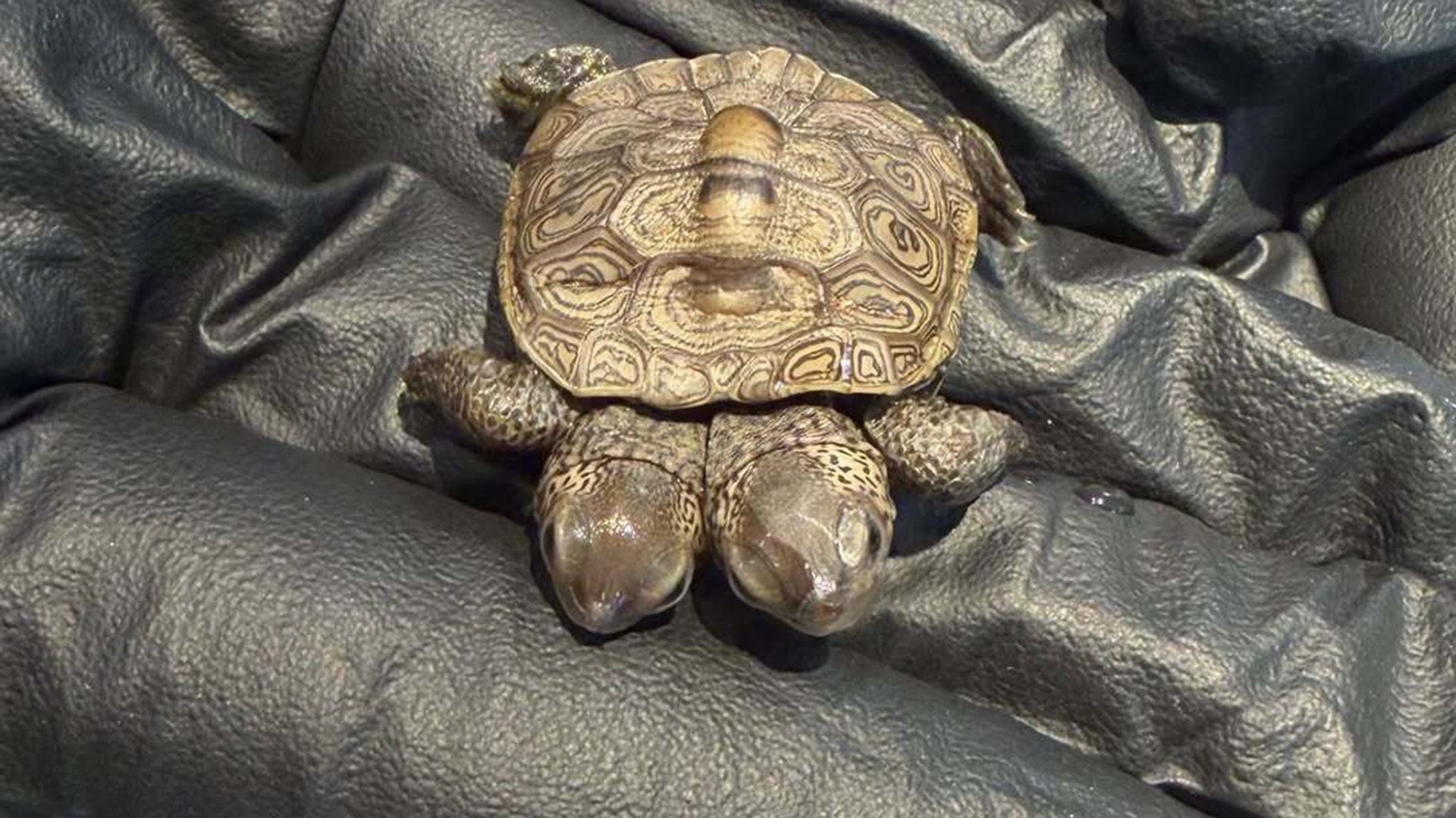
Cape Cod is known for its lobsters and its growing great white shark population, but now the holiday hotspot has another extraordinary animal to showcase: A rare two-headed diamondback terrapin that is surviving against the odds.The baby turtle, which weighed just 0.18 ounces (5.2 grams), was brought to the Cape Wildlife Center in Barnstable, Massachusetts, on Sept. 17, according to a Facebook post from the wildlife center. It was originally found by representatives of the Mass Audubon Wellfleet Bay Wildlife Sanctuary at a protected nesting site in the town of Wellfleet.The turtle's condition, known as bicephaly, is a rare developmental disorder that's typically caused by the incomplete spli...

📅 2026-10-02 20:49:38    •    Live Science
On complex political issues, most Americans take shortcuts to simplicity
Science News

On complex political issues, most Americans take shortcuts to simplicity

A core assumption in any democracy is that citizens with access to information will make reasoned decisions on political candidates and policy issues. But a new study by UC Berkeley social scientists finds that Americans usually don't consider the full scope of difficult issues, instead basing their opinions on mental shortcuts that sidestep complexity.

📅 2026-10-02 20:40:02    •    Phys.org
Colorful wildflowers bloom across Chile's Atacama Desert in wake of 'super' El Niño
Science News

Colorful wildflowers bloom across Chile's Atacama Desert in wake of 'super' El Niño

This year's exceptionally strong El Niño has brought a rare gift to Chile's Atacama Desert: rain. In one of the driest places on Earth, that rare moisture has awakened millions of seeds and bulbs that can remain dormant underground for years, transforming the landscape into a spectacular carpet of color. Known locally as "desierto florido," or "flowering desert," the phenomenon is one of nature's most remarkable transformations. Patches of purple, pink, white, red and yellow now spread across hillsides and plains that for much of the year appear almost completely lifeless. "It is a unique phenomenon; there are more than 200 plant species," Jorge Carabantes, head of the Protected Areas Depart...

📅 2026-10-02 20:34:57    •    Live Science
American beech trees may carry genetic resistance to deadly leaf disease
Science News

American beech trees may carry genetic resistance to deadly leaf disease

A study led by scientists at the Holden Arboretum has found evidence that beech leaf disease (BLD) symptom development is genetically controlled, providing the first evidence that some American beech trees may have genetic resistance. This finding supports further investigation and development of breeding populations for BLD resistance. Nearly a third of beech trees near BLD's epicenter in northeastern Ohio, the majority of which were smaller trees, have died since the disease was discovered in 2012.

📅 2026-10-02 20:20:06    •    Phys.org
Plasma-activated water tests show concentration matters for effective bacterial disinfection
Science News

Plasma-activated water tests show concentration matters for effective bacterial disinfection

In a study published in npj Clean Water, researchers from EPFL investigated how Escherichia coli responds to different concentrations of plasma-activated water (PAW) under nutrient-rich conditions. The team combined conventional colony-forming unit (CFU) counting with nanomotion sensing, a technique that detects nanoscale oscillations produced by metabolically active bacteria.

📅 2026-10-02 20:20:01    •    Phys.org
Why a food poisoning bacterium can cause severe wound infections
Science News

Why a food poisoning bacterium can cause severe wound infections

The toxin NheABC, produced by Bacillus cereus, is particularly active in the pH conditions found in open wounds. Researchers at Umeå University found that the toxin damages both cell membranes and mitochondria and helps the bacterium establish infection in wounded tissue.

📅 2026-10-02 20:00:02    •    Phys.org
Motivation matters more than working memory for improving student math skills, study finds
Science News

Motivation matters more than working memory for improving student math skills, study finds

Why do some students become ever better at mathematics, while others plateau? Many people may think that mathematics is primarily about cognitive skills. A new study from the Norwegian University of Science and Technology (NTNU) provides a more nuanced view. The paper is published in the journal Contemporary Educational Psychology.

📅 2026-10-02 19:40:08    •    Phys.org
Computer-designed protein targets immune receptor linked to inflammation at new 'undruggable' site
Science News

Computer-designed protein targets immune receptor linked to inflammation at new 'undruggable' site

To sense their environment and respond accordingly, cells enlist membrane proteins as communication hubs, receiving molecular messages from outside and triggering responses inside. One of these proteins is Toll-like receptor 4 (TLR4), an immune receptor that plays an essential role in protecting against infections. But overactivity of TLR4 has been linked to inflammatory disorders like sepsis, arthritis and inflammatory bowel disease, making it an attractive target for therapies. Despite its appeal, TLR4 is difficult to manipulate precisely, and no FDA-approved drugs specifically block it.

📅 2026-10-02 19:40:01    •    Phys.org
Small changes can have a big impact on sustainability transitions
Science News

Small changes can have a big impact on sustainability transitions

In her dissertation, Hanna Entsalo examines how public policies, such as policy strategies and legislation, influence transitions toward the circular economy and sustainability. Entsalo works as a researcher in the Circular Economy Solutions Unit at the Finnish Environment Institute. Her work focuses on circular economy policy instruments, sustainability transitions and innovation policy, particularly at the national and EU levels.

📅 2026-10-02 19:20:13    •    Phys.org
Black holes may grow quietly alongside galaxies even without violent mergers
Science News

Black holes may grow quietly alongside galaxies even without violent mergers

Astronomers analyzed 2,435 galaxies hosting actively feeding black holes using data from the Dark Energy Spectroscopic Instrument (DESI). Among them, they identified 546 "bulgeless" galaxies—systems with little or no central stellar bulge. Their paper, published in Monthly Notices of the Royal Astronomical Society, suggests that galaxies without a central bulge grow black holes just as effectively as galaxies that have one—a surprising sign that black holes don't need galaxy mergers to grow normally.

📅 2026-10-02 19:20:02    •    Phys.org
How does interdisciplinary collaboration work in practice? Three takeaways for teachers
Science News

How does interdisciplinary collaboration work in practice? Three takeaways for teachers

When we speak with Luyao Huang, her Ph.D. project at Leiden University is in full swing. Two papers—a systematic literature review and a case study on an interdisciplinary course—are already behind her. Next year, she will carry out a study in which teachers react to various scenarios. Today, Huang tells us about her most recent study: a deep dive into student collaboration.

📅 2026-10-02 19:00:01    •    Phys.org
Mirror-image crystals reverse the direction of light-driven currents
Science News

Mirror-image crystals reverse the direction of light-driven currents

The circular photogalvanic effect (CPGE), a phenomenon that generates helicity-dependent photocurrents in noncentrosymmetric materials, can originate purely from a crystal's internal structure without a contribution from the surface, a study from Science Tokyo reveals.

📅 2026-10-02 18:40:12    •    Phys.org
Forestry experts author national guidance on disaster preparedness
Science News

Forestry experts author national guidance on disaster preparedness

John Daigle, professor of forest recreation management at the University of Maine, co-authored the first paper in a series designed to help communities nationwide prepare for future natural disasters and other extreme weather events.

📅 2026-10-02 18:40:07    •    Phys.org
Q&A: How will quantum computers change society?
Science News

Q&A: How will quantum computers change society?

Once called a "pipe dream," quantum computers are now approaching practical use. Companies and research institutes around the world are in fierce competition to develop this technology, which has the potential to rapidly perform some calculations that are extremely difficult even for conventional supercomputers.

📅 2026-10-02 18:20:08    •    Phys.org