Science News

Latest science news, discoveries and scientific developments.

Sunlight gives biodiesel byproduct a second life as hydrogen and valuable chemicals
Science News

Sunlight gives biodiesel byproduct a second life as hydrogen and valuable chemicals

Australian researchers and international collaborators have demonstrated a solar-driven approach to convert glycerol, a low-value byproduct of biodiesel production, into hydrogen and higher-value chemicals. Using advanced techniques at the Australian Synchrotron, they revealed how the catalyst changed while it was working.

📅 2026-10-16 21:40:01    •    Phys.org
A highway instead of a racetrack: Strong coupling of light and sound in an optical fiber
Science News

A highway instead of a racetrack: Strong coupling of light and sound in an optical fiber

For the first time, scientists have achieved strong coupling between light and long-lived acoustic vibrations in an optical fiber. Optical fibers are used in both classical telecommunications and quantum communication and could serve not only as connections between computing nodes but also as quantum processors themselves in the future. The results, published in Nature Physics, pave the way for new technologies in quantum signal processing.

📅 2026-10-16 21:20:01    •    Phys.org
Archaeologists discover the oldest dwelling in the Western Hemisphere at a 13,800-year-old site in Alaska
Science News

Archaeologists discover the oldest dwelling in the Western Hemisphere at a 13,800-year-old site in Alaska

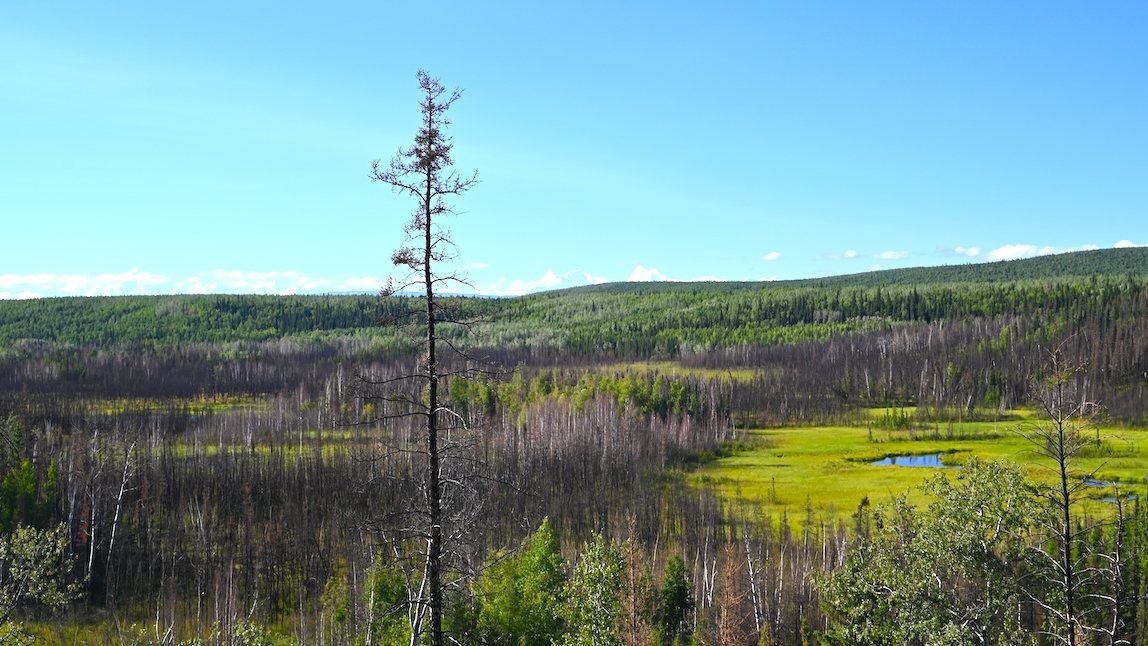
Archaeologists digging at a 13,800-year-old site in interior Alaska have unearthed thousands of artifacts and fossils, including what may be the bones of the earliest domesticated dogs in the Americas, the earliest needles and dwellings in the Western Hemisphere, and stone tools that reveal cultural connections across the Bering Land Bridge.At a site called Shégˊ Xdaltthˊíˊ (which means "They Were There" in the Alaska Native Athabascan language), about 34 miles (55 kilometers) southeast of Fairbanks, archaeologists have excavated an encampment that some of the first people to settle in North America used off and on for a millennium. Shégˊ Xdaltthˊíˊ is located in eastern Beringia, the geogra...

📅 2026-10-16 20:54:58    •    Live Science
Physicists froze a 'necklace' of atoms — and witnessed a quantum phenomenon predicted 100 years ago
Science News

Physicists froze a 'necklace' of atoms — and witnessed a quantum phenomenon predicted 100 years ago

"Necklaces" of ultracold atoms have provided new evidence to support a nearly 100-year-old quantum theory.In 1931, physicists were trying to use quantum mechanics to explain why some materials are magnetic. Then, a young physicist named Hans Bethe looked at a single row of electrons. Each electron's spin can point up or down. Bethe worked out the math for how such a row behaves and found that if a few spins in the row flip, they can stick together and travel down the row as a single unit.Decades later, physicists found that Bethe's method also works for larger particles moving along a line, such as atoms. If those particles attract each other, the math predicts they will bind into clusters c...

📅 2026-10-16 20:45:06    •    Live Science
Judging strangers' preferences may actually be easier when they're less like our own
Science News

Judging strangers' preferences may actually be easier when they're less like our own

Researchers already know that humans have a tendency to use egocentric anchoring—a cognitive bias in which people use their own preferences, beliefs and perspectives as a mental starting point (or anchor) to understand or predict what another person thinks, feels or prefers. This is not necessarily a sign of selfishness or self-importance, but a way for us to better understand others.

📅 2026-10-16 20:40:02    •    Phys.org
Climate warming can slow how tree roots feed soil microbes
Science News

Climate warming can slow how tree roots feed soil microbes

A plant's roots do much of their work out of sight, pulling in water and nutrients and holding the plant in place. That makes it hard to see how plants respond when conditions underground change, and how a warming climate affects them. New Dartmouth-led studies look at the strategies plants use below the surface to adapt and survive.

📅 2026-10-16 19:40:01    •    Phys.org
About 2% of natural gas supplied to a Midwest city leaks into the atmosphere
Science News

About 2% of natural gas supplied to a Midwest city leaks into the atmosphere

Most natural gas leakage in Indianapolis likely originates from homes and other buildings, not exterior pipelines and large-scale distribution infrastructure that deliver the fossil fuel, according to Penn State researchers who assessed nearly a decade of data.

📅 2026-10-16 19:30:02    •    Phys.org
Light and ultrasound reveal renewable routes to compounds for pharmaceutical research
Science News

Light and ultrasound reveal renewable routes to compounds for pharmaceutical research

Sustainable packaging is only the beginning. What a medicine is made from—and how its ingredients are produced—matters just as much. Yet the synthesis of compounds for pharmaceutical research can still depend on fossil feedstocks, high temperatures, strong oxidants and metals that raise costs and complicate purification. Two recently published studies from Colmenares' group at IPC PAS demonstrate that cleaner chemistry can begin at the level of a single chemical bond. The studies are published in the journal Ultrasonics Sonochemistry and Chemistry—A European Journal.

📅 2026-10-16 19:20:01    •    Phys.org
World-record intensity in attosecond hard-X-ray pulses could unlock closer study of electrons in atoms and molecules
Science News

World-record intensity in attosecond hard-X-ray pulses could unlock closer study of electrons in atoms and molecules

Researchers used the European XFEL to create X-ray flashes that were not only extremely short but also reached record intensity for this type of pulse. The researchers focused the X-rays to an area roughly 100,000 times smaller than the cross section of a typical human hair. This concentrated the X-ray light into a tiny but extremely powerful spot. The method could enable detailed studies of how electrons behave in atoms and molecules and, in the long term, could even allow researchers to control electrons during chemical reactions. The team has now published the results of the experiment, carried out in April 2026, in the journal Optica.

📅 2026-10-16 19:10:01    •    Phys.org
Automated essay assessment can grade writing more accurately across topics, study finds
Science News

Automated essay assessment can grade writing more accurately across topics, study finds

An artificial intelligence (AI) model can score English essays with improved accuracy across different writing topics, according to work published in the International Journal of Continuing Engineering Education and Life-Long Learning. The tool could help schools assess student work more efficiently while reducing inconsistencies in grading.

📅 2026-10-16 19:00:22    •    Phys.org
Spiny dogfish blood contains a hormone long thought absent in sharks
Science News

Spiny dogfish blood contains a hormone long thought absent in sharks

Cortisol is a hormone that helps humans and many other animals regulate their energy use and respond to changing conditions. For a long time, sharks and rays were believed to rely on a different steroid hormone for these functions, without producing cortisol themselves. Now, a new study of North Pacific spiny dogfish, a species of small shark, challenges this view.

📅 2026-10-16 19:00:01    •    Phys.org