Science News

Latest science news, discoveries and scientific developments.

Sheep grazing in solar fields offers farmers economic, ecological gains
Science News

Sheep grazing in solar fields offers farmers economic, ecological gains

Two new research papers shed light on the growing practice of grazing sheep in fields with solar arrays. One demonstrates that, in the right numbers, sheep grazing increases populations of beneficial insects like bees and lady beetles compared to mowing around solar panels. The other research describes a decision-making support tool to help farmers profitably grow their solar grazing herds.


📅 2026-10-14 19:40:07    •    Phys.org
Tapeworm drug could help treat endometriosis, mouse study hints
Science News

Tapeworm drug could help treat endometriosis, mouse study hints

A modified tapeworm medication could be a promising new treatment for endometriosis, an early study in mice hints. In endometriosis, tissue similar to the lining of the uterus grows outside the organ, and these patches of tissue, called "lesions," trigger painful inflammation and heavy menstrual bleeding. In the new study, scientists fitted an anti-worm drug with nanotech armor, and it directly targeted these painful lesions in laboratory mice. The treatment reduced inflammation and slowed or prevented further spread of the lesions, researchers reported in August in the journal Advanced Healthcare Materials. The team is already working on bringing the new drug to clinical trials and hopes th...

📅 2026-10-14 19:34:46    •    Live Science
Ancient Indigenous people in New Mexico lived through extreme climate change 23,000 years ago, study suggests
Science News

Ancient Indigenous people in New Mexico lived through extreme climate change 23,000 years ago, study suggests

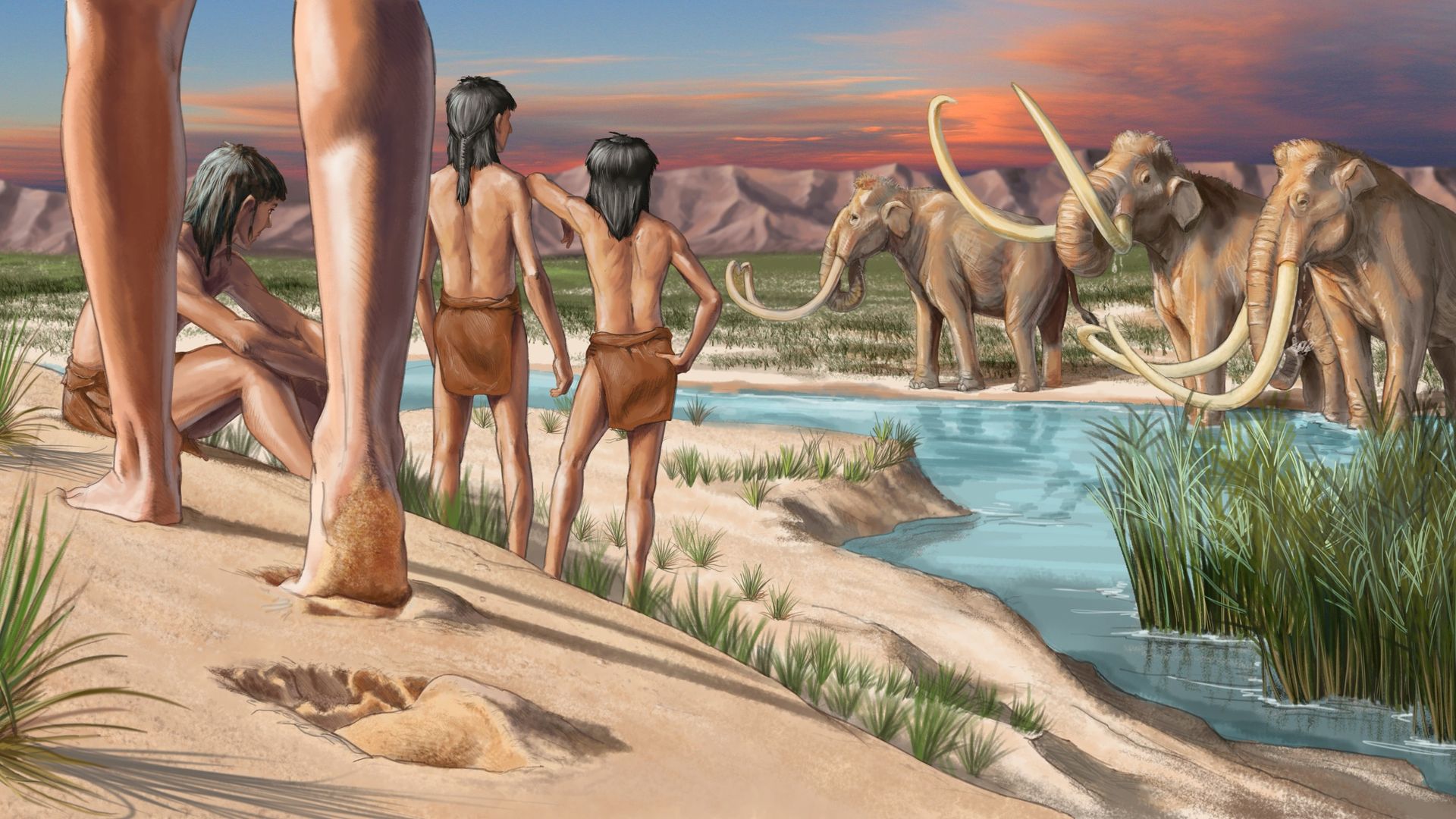
Some of the first people in North America lived through extreme climate change at the peak of the last ice age, a new study suggests. Researchers studied ancient pollen locked in rocks at White Sands National Park in New Mexico, which houses an archaeological site thought to contain the oldest human footprints in the Americas. The researchers previously dated those footprints to around 21,000 to 23,000 years ago, though their age is the subject of some scientific debate because they are significantly older than other Indigenous sites in the Americas.The new findings, published Wednesday (Oct. 14) in the journal Science Advances, suggest that humans kept using White Sands after temperatures w...

📅 2026-10-14 18:19:41    •    Live Science
Self-replicating AIs are a great digital horror story – here’s the reality
Science News

Self-replicating AIs are a great digital horror story – here’s the reality

Is self-replicating AI really just months away?janiecbros/Getty Images Much of the AI industry is built on stories, from the idea that AI could kill us all to the goal that it might one day become superintelligent. This often leads to problems, because when people have a story in their head, they don’t always look at the facts on the ground to check that they actually match the fiction. That has happened this week, with widely reported claims from Anthropic that we are mere “months away” from self-replicating AIs taking over smart devices. That’s a great headline, and it’s hard to resist clicking, but it almost certainly isn’t true. Read more AI or ‘super intelligence’? Trump isn’t the only ...

📅 2026-10-14 18:11:02    •    New Scientist
We can rescue the AMOC after its collapse – but it won’t be easy
Science News

We can rescue the AMOC after its collapse – but it won’t be easy

Icebergs near GreenlandCavan Images/Alamy A collapse in the Atlantic Meridional Overturning Circulation (AMOC) would be catastrophic, bringing “ice age” winters to Europe, raising sea levels in North America and disrupting vital monsoons in Africa and Asia. But there is a sliver of good news: a climate-driven collapse of the AMOC might not be permanent. The AMOC could weaken significantly under rising global temperatures over the coming decades, but it could recover its strength just as quickly if global cooling occurs. “There’s a very linear relationship between the global mean temperature and the AMOC response,” says Chuncheng Guo at the Danish Meteorological Institute. “When people talk a...

📅 2026-10-14 18:00:00    •    New Scientist
Can math stay human in the age of AI?
Science News

Can math stay human in the age of AI?

As AI churns out mathematical proofs, a DeepMind study raises a bigger question: What do we lose when we focus only on the answers?

📅 2026-10-14 17:00:00    •    Science News
Hidden sounds of nature brought to life in fascinating new book
Science News

Hidden sounds of nature brought to life in fascinating new book

From ice groaning to a very noisy troop of monkeys, Wilderness Songs by Justin Anderson shows some of the best nature stories are told through soundscapes as well as words – with added QR codes, finds Dhruti Shah

📅 2026-10-14 17:00:00    •    New Scientist
This prize-winning sci-fi novel about wolf rewilding made me cry
Science News

This prize-winning sci-fi novel about wolf rewilding made me cry

When There Are Wolves Again by E. J. Swift somehow delivers both a determined call for more wildernesses globally – and a great novel. Sci-fi columnist Emily H. Wilson is thrilled she gave it another chance

📅 2026-10-14 17:00:00    •    New Scientist
This week’s new questions
Science News

This week’s new questions

Why do humans enjoy black-and-white photos or videos, but have less tolerance for images that have only two other colours? If two chromosomes are better than one, why not three?

📅 2026-10-14 17:00:00    •    New Scientist
This El Niño will bring predictable disasters, so why aren’t we ready?
Science News

This El Niño will bring predictable disasters, so why aren’t we ready?

Mark Boster/Los Angeles Times via Getty Images El Niño brings weather of opposite extremes – floods, droughts, cyclones, wildfires – to opposite sides of the planet. But we often forget that most of this extreme weather is highly predictable.For example, all eight strong El Niños in the past 70 years have caused drought in Indonesia. All major models predict the current record El Niño will lead to a dry autumn and winter there. So it’s little surprise that Indonesia is struggling with worsening drought and wildfires. Similarly predictable effects will be seen worldwide over the next year. Because of this predictability, some experts argue that there are no “natural” disasters. With enough pr...

📅 2026-10-14 17:00:00    •    New Scientist
Some of our favourite New Scientist Live moments – in photographs
Science News

Some of our favourite New Scientist Live moments – in photographs

Dr Kandi Ejiofor (right) and epidemiologist Tim Spector unpack the risks in modern diets on the Mind and Body StageAlistair Veryard The hall hummed with joyous curiosity at this year’s New Scientist Live at Excel London, which ran from 10 to 12 October and attracted thousands of visitors of all ages. With topics including the search for extraterrestrial life, what AI is teaching us about consciousness and the maths behind Pokémon, there was a delightful range to explore. Highlights included physicist Jim Al-Khalili diving into the deepest mysteries of time and psychologist Kimberley Wilson on how to build lifelong brain health. Other packed talks ranged from how we evolved, from anthropologi...

📅 2026-10-14 17:00:00    •    New Scientist
Physicists claim they can predict when AI will turn dangerous
Science News

Physicists claim they can predict when AI will turn dangerous

Researchers say they've developed a simple mathematical formula that can predict when certain ChatGPT-like artificial intelligence (AI) chatbots will "go rogue," suddenly switching from helpful responses to potentially harmful ones. In a new study published Oct. 8 in the journal Patterns, physics professor Neil Johnson and doctoral student Frank Yingjie Huo, both at The George Washington University, show how the order in which a chatbot is given certain prompts can drastically reshape its answers, leading to "tipping points" that can send the chatbot down a rabbit hole of bad advice. However, Johnson and Huo say their formula can easily predict these tipping points.There have been horror sto...

📅 2026-10-14 16:34:35    •    Live Science
'They cannot compete with the prices that fish factories will pay': How demand for fish meal takes priority over feeding people
Science News

'They cannot compete with the prices that fish factories will pay': How demand for fish meal takes priority over feeding people

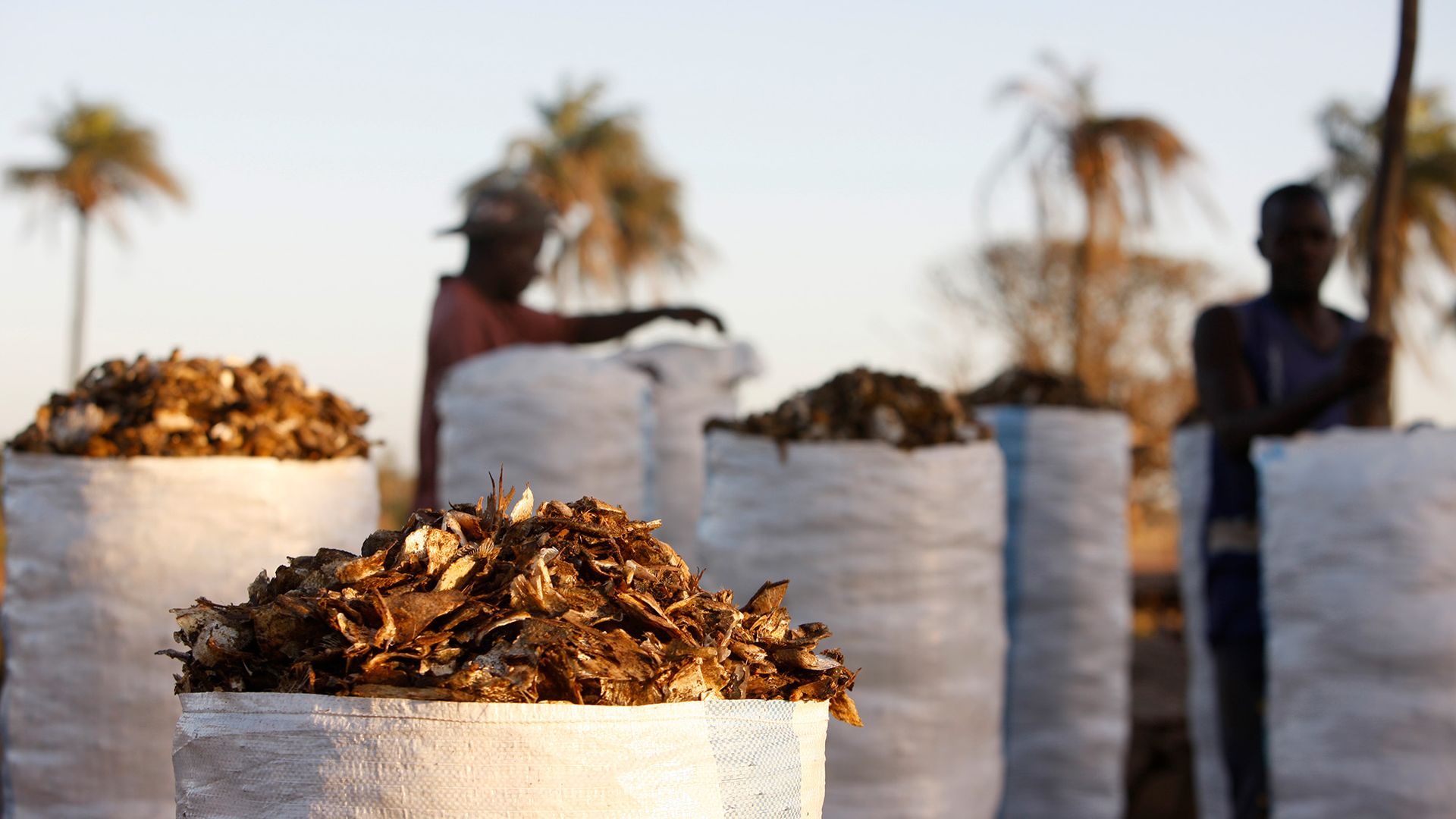
Fish meal is a commercial, protein-rich product created from raw fish and their byproducts, such as the heads and bones. It tends to be made from smaller fish species, including anchovies, sardines and herring. The fish are cooked, dried and ground into a powder, and then used to feed livestock, farmed fish and pets. But it is not a straightforward market. In this excerpt from "Every Last Fish: A Deep Dive into the World of Fishes and Fishing" (Granta Books, 2025), journalist and author Rose George looks at how vast quantities of staple fish are taken from the sea off West Africa and turned into fishmeal for farming in Europe and China, instead of ending up on the plates of people in Africa....

📅 2026-10-14 16:22:59    •    Live Science