
Science News
Pentagon pauses controversial testosterone policy guidelines
Experts say there is not enough evidence to support broadly screening men for testosterone without any symptoms
Latest science news, discoveries and scientific developments.
Experts say there is not enough evidence to support broadly screening men for testosterone without any symptoms
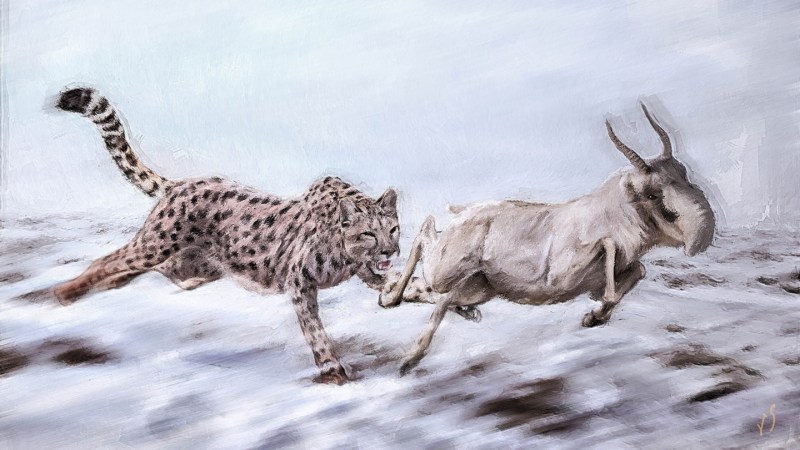
Ancient DNA confirms Miracinonyx trumani was more closely related to modern pumas than cheetahs and had a more varied diet than previously thought.

An El Niño is usually expected to herald a cold end to winter in the UK – but this year could be different

Lucid dreams, when a person is aware they're dreaming and can often control them, could be induced in people who rarely experience them
A researcher’s social media post that revealed how to break part of a popular encryption protocol has gone viral. But did he really do it with just “good old paper and pencil”?
A substance found in edible sea squirts appeared to reverse several signs of aging in older mice. Plasmalogen supplements improved memory and learning, strengthened connections between brain cells, reduced inflammation, and even helped the mice grow thicker, darker hair. Researchers believe the compounds may encourage brain regeneration and protect aging synapses.
Puerto Rico’s normally rainy season has instead brought a severe and fast-growing drought. By August 25, three-quarters of the territory was in at least moderate drought, with extreme drought covering 44 percent and some areas receiving less than 20 percent of their usual rainfall. Water shortages have forced rationing, while farmers are losing crops and ranchers are running low on hay. The situation has become serious enough to trigger both local and federal disaster declarations.
MIT researchers have created bacterial “transistors” that can be wired together into living circuits capable of performing calculations and directing chemical signals. One day, these biological computers could coat plant roots or leaves, detecting environmental threats and automatically triggering defenses.
Slow breathing with a prolonged exhale made people more willing to take risks by changing heart activity and increasing the brain’s sensitivity to rewards. The findings suggest that something as simple as controlling your breath can directly influence how you evaluate choices.

Foreign states and technology firms are scrambling for data from the Ukraine war so they can train the next-generation of AI models that might be used in defence and national security
A giant iceberg measuring more than 76 square kilometers broke from Greenland’s Petermann Glacier in August 2026, marking the Arctic’s largest glacier calving event since 2020. The berg later slammed into Joe Island but survived without breaking apart, and satellites are now tracking it as it drifts through Nares Strait.
The newfound star S301 orbits the Milky Way’s supermassive black hole so closely that its view of the heavens gets twisted
Astronomers have identified a surprisingly young population of fading radio galaxies whose supermassive black holes have already switched off their powerful jets. The confirmed remnants range from about 8 to 42 million years old, suggesting many may disappear from view much faster than previously recognized. More distant remnants also seem to fade especially quickly, helping explain why they have been so difficult to detect.
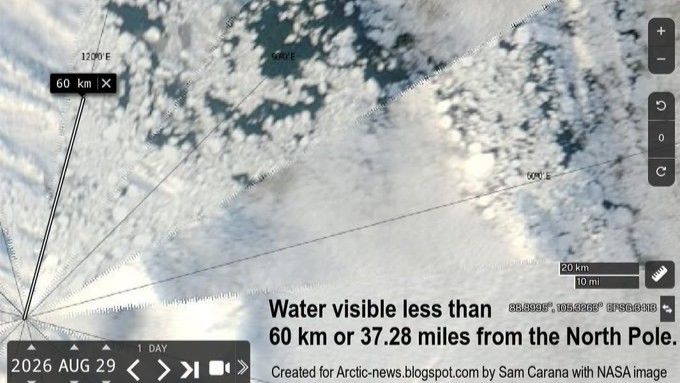
An image from NASA Worldview shows how brittle Arctic sea ice is becoming due to global warming, with large patches of open water visible near the North Pole on Aug. 29.
Author Sarah Pierce explores dating apps, loneliness and human connection through a novel about a corpse-matching algorithm
The LUX-ZEPLIN experiment has detected a rare particle interaction that looks unusually difficult to explain as ordinary background noise and appeared where dark matter might be expected. Scientists are not claiming a discovery yet, but additional data could show whether this single mysterious event is the first hint of a long-sought dark matter particle.
UCLA researchers have discovered two powerful influences that help guide how the human brain forms before birth. Radial glia, stem cells responsible for producing much of the cerebral cortex, change their behavior depending on how they process glucose and on physical contact with signals arriving from the thalamus. Those signals can alter which types of neurons are produced, including upper-layer neurons that are especially prominent in humans.
Duke researchers developed an injectable scaffold that helped stroke-damaged brains grow new blood vessels, support nerve regrowth, and recover movement in mice. The treatment appears to work partly by recruiting the body’s own immune cells, including neutrophils that may switch from damaging to helpful under the right conditions.
Scientists have discovered a strange black “devil flower” in Thailand that lives mostly underground, steals nutrients from fungi, and looks strikingly unlike a typical plant. The newly named Thismia daemona is known from fewer than 50 individuals and may already be critically endangered.
Morning glories may be getting caught in an evolutionary tug-of-war between surviving climate change and attracting increasingly scarce pollinators. Over just nine years, researchers found that the plants’ rate of adaptation plunged by 96%, even though they still had plenty of genetic diversity to evolve.