Science News

Latest science news, discoveries and scientific developments.

The extinct American 'cheetah' was not a cheetah after all
Science News

The extinct American 'cheetah' was not a cheetah after all

With their slender bodies and long front legs, Miracinonyx trumani—often nicknamed the "American cheetah"—was long thought to be a North American analog of the African big cat. But in a new study published in the journal Current Biology, researchers reveal that the extinct cat was more closely related to pumas. Some populations living near the Arctic preyed almost exclusively on fish, challenging the long-held assumption that these "cheetahs" chased fast-running prey, such as pronghorns.


📅 2026-09-06 15:00:01    •    Phys.org
Extreme pressure turns blue pigment into record-long single-atom copper chains
Science News

Extreme pressure turns blue pigment into record-long single-atom copper chains

As the electronics in our technology keep shrinking, traditional silicon-based chips are approaching their fundamental physical limits. Yet the wires connecting them might be able to shrink beyond conventional dimensions, as scientists have created one of the longest single-atom copper chains to date that could serve as molecular wires.

📅 2026-09-06 14:20:01    •    Phys.org
How algorithms are making our environments bland
Science News

How algorithms are making our environments bland

The Pantone color of the year for 2026 is white. It's called Cloud Dancer, which is described as a "lofty white." This choice reflects a growing trend away from color in our visual world.

📅 2026-09-06 13:00:02    •    Phys.org
'Quiet' pulsar suddenly reveals three glitches in 15 years of observations
Science News

'Quiet' pulsar suddenly reveals three glitches in 15 years of observations

Using more than 15 years of observations from the Parkes radio telescope, astronomers detected three rotational glitches in the pulsar PSR J1637−4642—a young neutron star that had shown no signs of glitches since its discovery. The three glitches included one that changed its rotation rate by nearly 3 parts per million. Their paper was posted to the arXiv preprint server on Aug. 20. It has been accepted for publication in the Astrophysical Journal Letters.

📅 2026-09-06 12:40:03    •    Phys.org
How small can a transistor get?
Science News

How small can a transistor get?

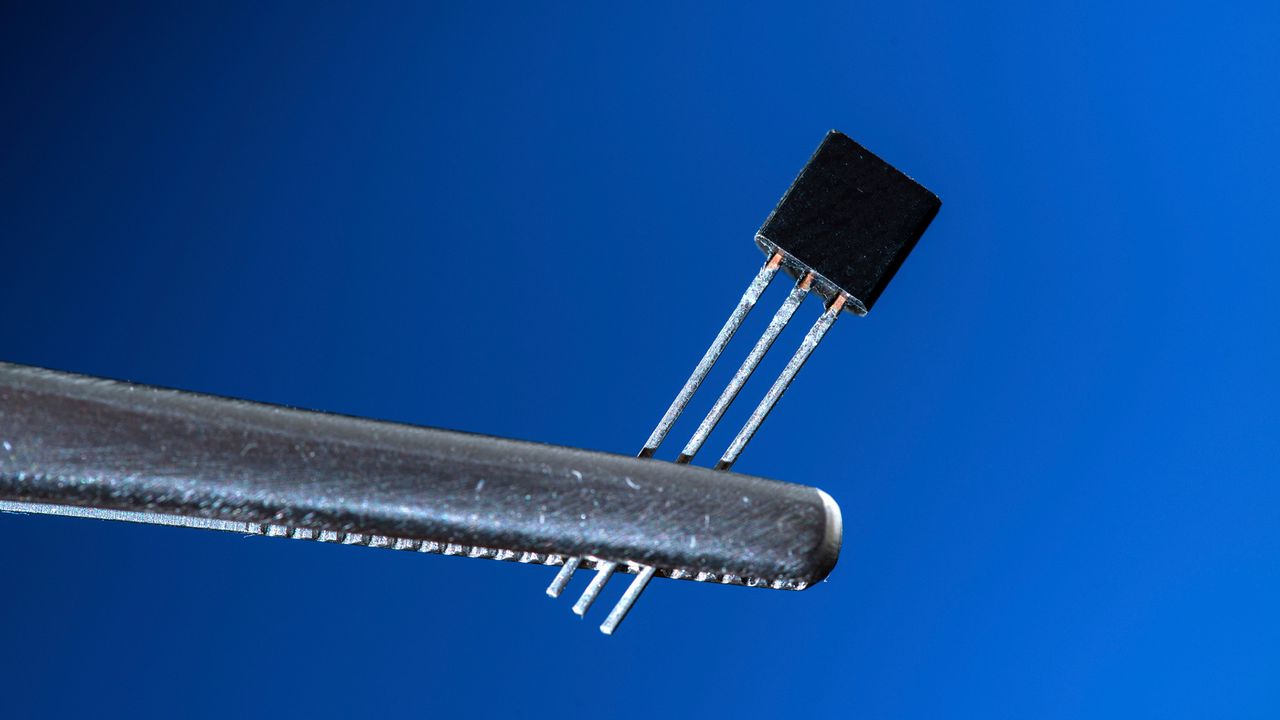
How small can a transistor actually get? And is smaller even still the goal?

📅 2026-09-06 09:00:00    •    Live Science
Indonesia’s most dangerous fires are burning underground
Science News

Indonesia’s most dangerous fires are burning underground

Indonesia’s dangerous peat fires are surging early in the 2026 fire season as a strengthening El Niño and severe drought dry out wetlands that can burn underground for months. These slow smoldering fires are especially destructive because they release far more fine particles and several pollutants than typical tropical forest fires, while thick smoke can make them difficult for satellites to detect.

📅 2026-09-06 07:57:45    •    ScienceDaily
Haze emergency grips Malaysian Borneo town
Science News

Haze emergency grips Malaysian Borneo town

Acrid smoke hung heavily over the Malaysian town of Serian, seeping into homes and cloaking roadside stalls, as residents navigated an air-quality emergency fueled by transboundary haze from Indonesia's raging fires.

📅 2026-09-06 07:31:35    •    Phys.org
AI can now control fusion plasma faster than humans can react
Science News

AI can now control fusion plasma faster than humans can react

Princeton researchers have tested an AI system that can monitor and control fusion plasma in milliseconds, reacting far faster than a human operator. In one experiment, it predicted a damaging instability about 200 milliseconds before it appeared and adjusted the plasma to stop it from forming.

📅 2026-09-06 07:28:43    •    ScienceDaily
Scientists find a weak spot in one of the deadliest brain cancers
Science News

Scientists find a weak spot in one of the deadliest brain cancers

Researchers may have found a new way to weaken glioblastoma’s defenses against treatment. Blocking a protein called SET prevented tumors from forming in preclinical models, while targeting related proteins made cancer cells more vulnerable to radiation. The strategy works by restoring activity of PP2A, an enzyme that glioblastoma cells appear to suppress. Human testing will be needed to determine whether the approach is safe and effective.

📅 2026-09-06 06:58:29    •    ScienceDaily
A mysterious signal around Earth could be dark matter
Science News

A mysterious signal around Earth could be dark matter

Scientists used Earth’s magnetic field and atmosphere as a planet-sized detector to search for some of the lightest proposed forms of dark matter. The approach dramatically improved limits on ultralight axions and uncovered several intriguing dark photon signals that still need to be explained.

📅 2026-09-06 00:58:46    •    ScienceDaily
80,000-year-old “arrowheads” rewrite human history
Science News

80,000-year-old “arrowheads” rewrite human history

Archaeologists have identified tiny 80,000-year-old projectile points in Uzbekistan that may have been used like arrowheads. Their size, design, and impact damage closely resemble weapons found much later at a Homo sapiens site in France. The discovery suggests sophisticated projectile technology may have appeared in Central Asia long before modern humans became firmly established in Europe, potentially rewriting a major chapter of human migration.

📅 2026-09-06 00:46:25    •    ScienceDaily
This “new” frog was hiding in plain sight for 100 years
Science News

This “new” frog was hiding in plain sight for 100 years

A common frog found across Ecuador and Colombia has finally been recognized as its own species after more than a century of mistaken identity. Museum specimens from the 1800s helped scientists reveal that Pristimantis milpe had been hiding in plain sight all along.

📅 2026-09-05 22:35:48    •    ScienceDaily
Some joints may be primed for rheumatoid arthritis before birth
Science News

Some joints may be primed for rheumatoid arthritis before birth

Scientists have found evidence that vulnerability to rheumatoid arthritis may begin before birth. Finger joints commonly affected by the disease develop with different tissue structures and larger populations of specialized fibroblasts than joints that are usually spared. Those cells also respond differently to inflammation, suggesting that the architecture of each joint may help determine where arthritis eventually takes hold.

📅 2026-09-05 22:19:53    •    ScienceDaily