
Science News
World's most endangered tigers born in Greece as zoos build a safety net
The world's most endangered tigers have started a family in Greece, offering hope for a predator rapidly vanishing from the wild.
Latest science news, discoveries and scientific developments.
The world's most endangered tigers have started a family in Greece, offering hope for a predator rapidly vanishing from the wild.

Prior to the announcement, rumors were circulating online among mathematicians over the proof’s origins—OpenAI has denied all allegations

University of Missouri researchers have discovered a new way to harness one of the body's natural defenses: copper. While copper is essential for life and helps power important biological processes, having too much of it can be toxic. To keep copper levels in balance, cells rely on specialized proteins that regulate where it goes and how much is present.

Active black holes are easy to detect. Their superheated accretion disks emit bright X-rays, and the jets streaming from their poles are easily seen at visible and radio wavelengths. But most stellar-mass black holes are inactive. They either drift through the galaxy alone or orbit a companion star without consuming its material. We can't observe inactive black holes directly. We can only observe their effects on nearby objects. We currently know of three such black holes thanks to the Gaia spacecraft.

For the first time, scientists used the combined power of NASA's Hubble and James Webb Space Telescopes to study some of the most far-flung bodies in our solar system, trans-Neptunian objects (TNOs). Some are the smallest and faintest ever directly seen. The researchers unexpectedly found fewer small TNOs than expected and that the colors of these bodies followed the same relationships as those of their larger family members.

The scent of fresh laundry in a store encourages people to spend more on secondhand clothes than the scent of citrus or the typical scent of secondhand clothes does. This is according to research by psychologists Matteo Perini and Jasper de Groot of Radboud University. The researchers suggest that this effect is linked to people's tendency to avoid pathogens.

UK astronomers have uncovered new clues about the origin of 3I/ATLAS—only the third known object from beyond the solar system ever spotted. In a new paper published in Monthly Notices of the Royal Astronomical Society, researchers reveal that the comet formed in extremely cold conditions, far from any star.

Bacteria can survive antibiotics in several ways, including by pumping the drugs out of their cells before they can take effect. Researchers at the University of Osaka have discovered a previously unknown mechanism that allows the bacterium responsible for many cases of pneumonia and meningitis to export the antibiotic fosfomycin.

The year is 2060. London shudders through months of Nordic winter freezes. Across northern Europe, oak and beech forests wither under severe frost and drought, while cereal yields collapse from temperatures plunging as low as 27 degrees Fahrenheit below today's averages. In U.S. coastal cities such as Miami and Charleston, South Carolina, sea levels have risen three feet (about 0.9 meters), with routine tidal flooding washing away streets. Meanwhile, in the North Atlantic, deep-sea nutrients remain trapped on the ocean floor, starving plankton blooms and triggering a cascade of die-offs from cod to migrating whales. The ocean's engine has stalled.
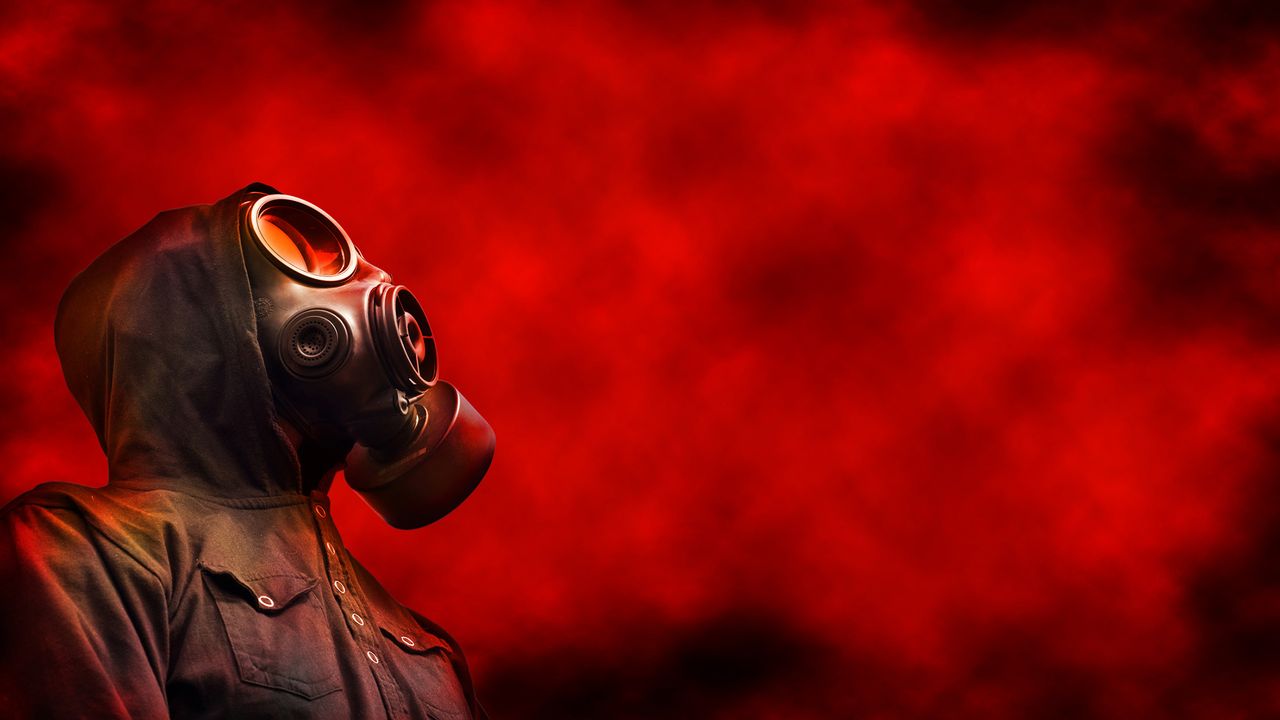
Researchers have worked out the safest, most resilient country to be in during an apocalyptic event.
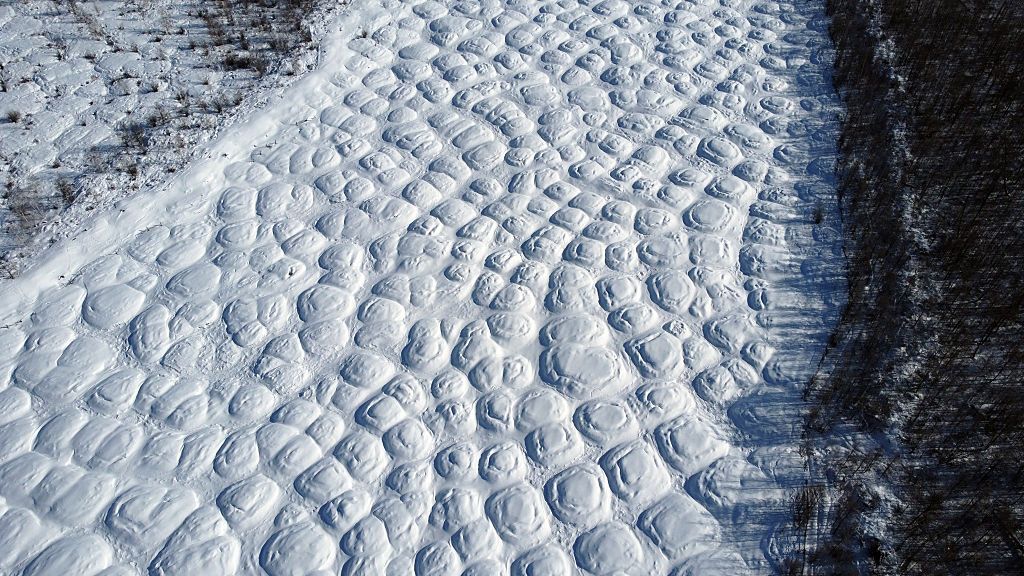
New research finds that western Siberia is becoming wetter as the world warms, while eastern Siberia seems to be getting drier. And both these conditions are fueling a rise in methane emissions, spelling trouble for the climate.
A new study finds sharp contrasts between brain changes in menopause and those during pregnancy and puberty

We know the universe is constantly expanding. We also know that gravitationally bound objects, such as solar systems and black holes, seem to be immune to that expansion. But a new paper by theoretical physicists Valerio Faraoni and Massimiliano Rinaldi challenges that assumption. They suggest that black holes can't just ignore the expanding universe around them. Instead, they have to expand along with it. Their paper is posted to the arXiv preprint server.

Using the Atacama Large Millimeter/submillimeter Array (ALMA), astronomers have captured one of the most detailed three-dimensional views yet of a massive binary star system while it is still being born. By tracking the motions of two young, massive stars over nearly eight years, the team found that the pair follows a highly stretched-out orbit and is surrounded by strongly tilted gas disks, both relative to each other and to the stars' orbit.

There are nearly 1 million pieces of debris larger than 1 centimeter (0.4 inch) in near-Earth orbit. As we continue launching spacecraft and telescopes to explore the universe, this debris poses a significant threat of high-speed impact damage. In the Journal of Applied Physics researchers from Dalian University of Technology in China explored an eggshell-inspired design as a potential spacecraft protection material.

For millions of Americans, Sept. 11, 2001, is a vivid memory. For younger generations, it's a history lesson.

For decades, physicists have worked to prove the strange predictions of quantum mechanics with real experiments. As quantum computers have grown more powerful, researchers have devised increasingly sophisticated ways to test whether these machines are truly harnessing quantum effects—but every method so far has run into limits.

The mountain section whose collapse triggered fatal floods in Nepal and China on Aug. 26 had experienced unprecedented heat for the time of year, meteorological data analyzed by a researcher show.

For more than a decade, children in Year 6—the final year of elementary school in England—have taken the grammar, punctuation and spelling test as part of their Key Stage 2 Standard Assessment Tests (SATs). This GPS test has shaped how grammar is taught in elementary schools.

New research shows that larval Antarctic krill could be carried far from their birthplace by drifting sea ice, linking distant ecosystems in ways conventional models may miss.