
Science News
Are AI chatbots making us less human?
What do we lose when machines become our closest confidants?
Latest science news, discoveries and scientific developments.
What do we lose when machines become our closest confidants?

Many people are familiar with melatonin, a hormone that helps ready the body for sleep. But there's another, lesser-known chemical in the brain, called orexin, that tips the scale in the other direction: waking the body up. In 1999, two scientists independently uncovered the function of orexin and published papers about it. Dr. Masashi Yanagisawa, a molecular biologist and physician now at the University of Tsukuba in Japan, came across orexin while studying the interaction of receptors and chemicals in the brain. Dr. Emmanuel Mignot, now the director of the Stanford Center for Narcolepsy, homed in on orexin while studying narcoleptic dogs. (His Chihuahua, named Watson, has narcolepsy, and h...

A quarter of a century after the Twin Towers fell, those who lived through the attacks are still seeking care for myriad illnesses, including cancers, post-traumatic stress disorder, and more

Indonesian authorities are working to repatriate five baby orangutans allegedly trafficked to India, where they were found motherless in a forest, Jakarta's forestry ministry told AFP on Friday.

Research shows that short practices of mindfulness are as good as, if not better than, long ones. Columnist David Robson takes a look at how we can incorporate these microhabits into our daily lives

A revolution in forecasting natural disasters is underway, say researchers in Switzerland who are training AI models using vast troves of NASA climate data to produce potentially lifesaving data at lightning speed.
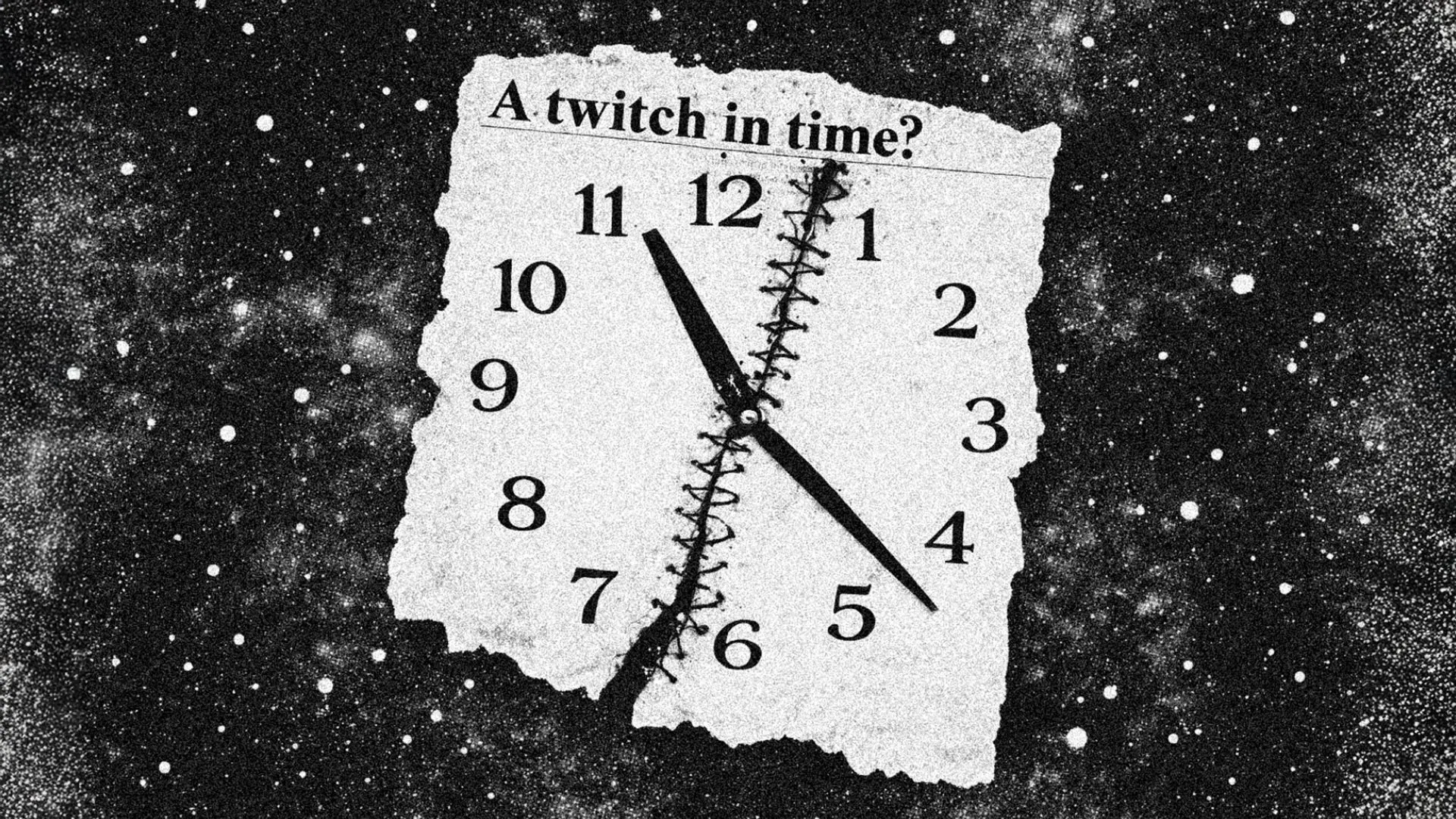
Unconventional quantum theories may imply that time itself has a tiny fundamental uncertainty, placing an ultimate limit on how precisely any clock could measure it. The effect is far beyond current detection, but it could reveal a hidden connection between quantum mechanics, gravity, and spacetime.

A remarkably detailed study of Maria Branyas, who lived past 117, reveals that extreme longevity may involve both intense aging and powerful biological protection at the same time. Researchers found signs of advanced aging, but also low inflammation, beneficial gut bacteria, protective genetic features, and a biological age younger than her chronological age. Because she avoided major disease, the study offered a rare look at aging itself rather than the illnesses that often accompany it.

The southern region of the Democratic Republic of Congo (DRC) is known as the Copperbelt because of its rich deposits of copper and other minerals.

Researchers have shown for the first time that human heart muscle cells can regrow after a heart attack. The finding overturns the idea that damaged areas of the heart are completely incapable of regeneration. Scientists now hope to identify ways to dramatically boost this natural repair process, potentially opening a new path toward treatments for heart failure.

London has one of the lowest violent crime rates of any region in England and Wales, tops a global ranking of the best cities, and pays more in taxes than it receives back in public spending—but the public overestimates how likely Londoners are to become victims of crime, underestimates the capital's international standing, and has little idea it is the key contributor to public finances, according to a new study from the Policy Institute at King's College London.

Eating only between noon and 8 p.m. improved blood sugar control in a small study of adults with Type 1 diabetes and obesity, while avoiding an increase in serious complications. The promising findings offer the first evidence that time restricted eating could become another tool for managing the condition.

Give, eat, cook and serve are everyday English words. On TikTok, they're doing something different.

Scientists have discovered that the Moon-forming collision may have depended heavily on how hot and physically strong early Earth and Theia were. New simulations found that some impacts create the familiar disk of debris that later becomes the Moon, while others can produce an intact Moon in only about five hours. The results challenge the long-standing assumption that the enormous collision could be modeled as if both worlds behaved mostly like fluids.

Money market funds (MMFs) that grow rapidly when equity markets are soaring pose a systemic risk to global financial systems, new academic research reveals.

UCLA researchers developed ready-made cancer-fighting T cells from cord blood stem cells that can attack solid tumors through two separate detection systems. In mice, a single dose controlled cancer and extended survival while avoiding a dangerous complication associated with donor-derived T-cell therapies.

The globe is full of unknown species. But is it really possible to find a completely new animal species in the middle of the largest city in the United States?

For decades, scientists have understood proteins primarily through two defining features: their amino acid sequence and their three-dimensional structure. This framework has driven major advances in biology, biotechnology and medicine, culminating in recent artificial intelligence tools capable of predicting protein structures with remarkable accuracy.

Switching to a more sustainable diet could halve food-related emissions in cities such as Amsterdam, while in cities such as Dhaka and Delhi, the focus should be more on making food production more sustainable as they widen food access. A new database by Leiden researchers shows that different cities need different approaches to achieve a more sustainable food system.

The Hammerschmiede clay pit near Pforzen in the eastern Allgäu is famous for its wealth of finds: Besides fossils of two early anthropoid apes, the remains of numerous vertebrate species have been uncovered in 11.6-million-year-old river sediments—but until now, very few birds.