Science News

Latest science news, discoveries and scientific developments.

Deep ocean, familiar trash: Plastic waste found alongside possible new species
Science News

Deep ocean, familiar trash: Plastic waste found alongside possible new species

It's no secret that plastic and other human trash are a problem for marine life, but our understanding has long focused on the ocean's surface. As described in a study published in PLOS One, a more complete picture is coming into focus, revealing that even some of our planet's greatest depths have become home to our debris.

📅 2026-09-16 18:00:11    •    Phys.org
Conserving just 35% of the nation's waterways could sustain freshwater biodiversity
Science News

Conserving just 35% of the nation's waterways could sustain freshwater biodiversity

By evaluating the health of waterways across the U.S., researchers have identified a network encompassing about one-third of rivers and streams that, if conserved and restored, could sustain the nation's freshwater biodiversity in the face of habitat degradation and climate change. Mark Anderson of The Nature Conservancy, U.S., led the new study, published Sept. 16, 2026, in the journal PLOS One.

📅 2026-09-16 18:00:07    •    Phys.org
AI reveals novel nighttime feeding behaviors in right whales
Science News

AI reveals novel nighttime feeding behaviors in right whales

Right whales forage near the water's surface at night, putting them at greater risk of potentially fatal collisions with boats, Jay Kirkham at Dalhousie University, Canada, and colleagues report Sept. 16, 2026, in the journal PLOS ONE.

📅 2026-09-16 18:00:03    •    Phys.org
We may soon be able to read long-lost ancient scrolls damaged by the eruption of Mount Vesuvius
Science News

We may soon be able to read long-lost ancient scrolls damaged by the eruption of Mount Vesuvius

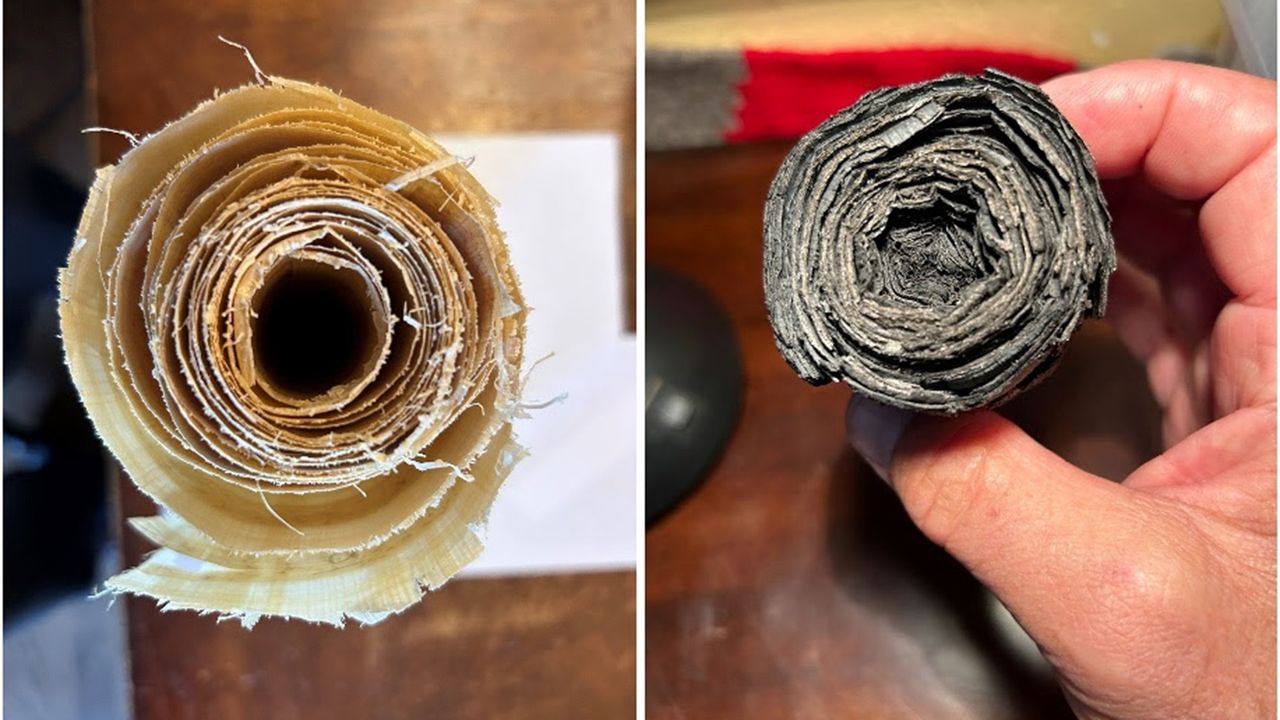
X-ray technology and artificial intelligence—along with the discovery of lead in the ink of fragments from a collection of ancient Roman scrolls—could soon help scientists read long-lost texts buried by the eruption of Mount Vesuvius in 79 CE, according to a study published Sept. 16, 2026, in the journal PLOS One by Douglas Seiler, an affiliate of the University of California, Berkeley, U.S.; Jacob Michael LaManna of the National Institute of Standards and Technology, U.S.; David Kreimer of the University of California, Berkeley, U.S.; and colleagues.

📅 2026-09-16 18:00:01    •    Phys.org
New trick could reveal text on 2,000-year-old scrolls charred by eruption of Mount Vesuvius
Science News

New trick could reveal text on 2,000-year-old scrolls charred by eruption of Mount Vesuvius

The long-lost words of ancient philosophers may finally be revealed nearly 2,000 years after the violent eruption of Mount Vesuvius scorched and buried them, thanks to a heavy metal that was used in the ink that penned them, a new study finds.The new research investigates the lead-enriched ink within some of the nearly 2,000 papyrus scrolls, which were found at a villa in the ancient town of Herculaneum in the 1750s. In a new paper, a team created modern scrolls with leaded ink, scorched them and found that they could read the text after using several techniques, including X-ray technologies and artificial intelligence (AI). "It's amazing what you can get electrons to do," Douglas Seiler, a ...

📅 2026-09-16 18:00:00    •    Live Science
Scientists finally figured out the temperature of T. rex's blood ‪— and it was as hot as ours
Science News

Scientists finally figured out the temperature of T. rex's blood ‪— and it was as hot as ours

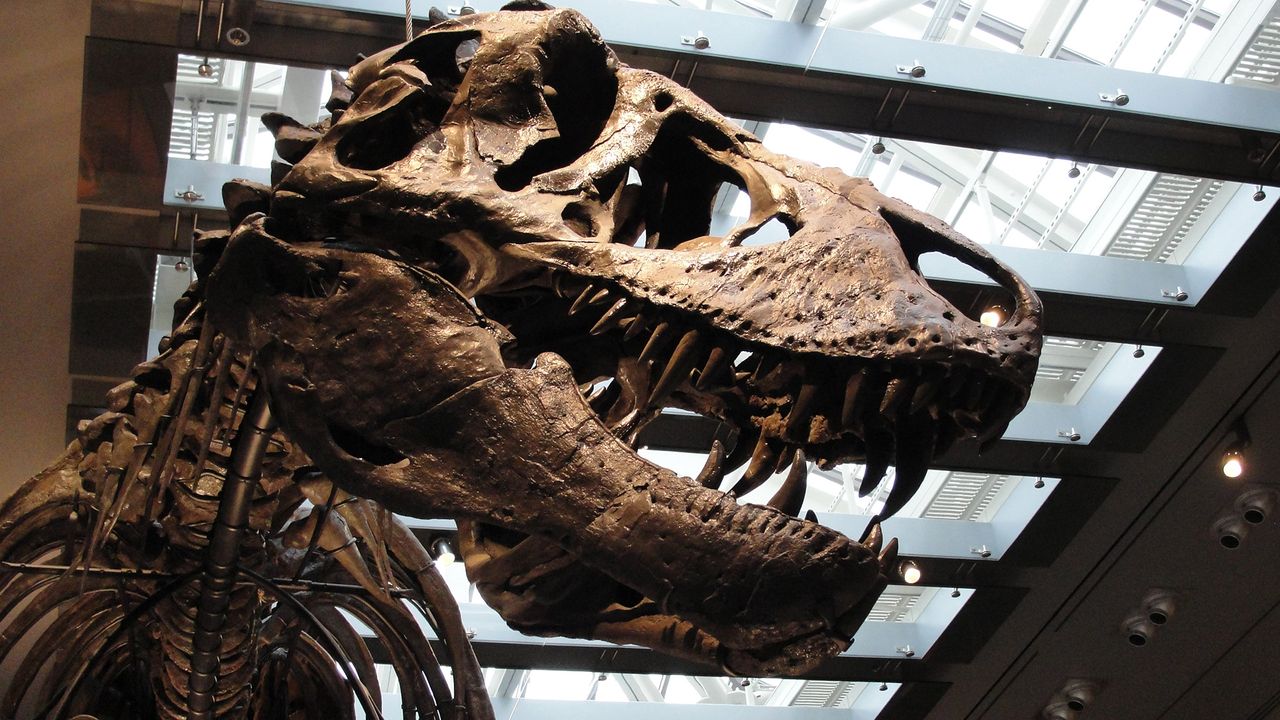
Tyrannosaurus rex was a hottie with a body temperature similar to our own, according to a new analysis of their teeth.The finding supports the idea that T. rex was a fast, energetic predator and scavenger, not an animal that basked in the sun to gain energy like most modern-day reptiles.T. rex, which lived between about 68 million and 66 million years ago, at the end of the Cretaceous period (143.1 million to 66 million years ago), was one of the largest carnivorous dinosaurs that ever lived.Previous studies have already suggested that T. rex and its relatives were warm blooded, but now scientists have estimated the dinosaur's body temperature for the first time by studying different isotope...

📅 2026-09-16 18:00:00    •    Live Science
Asteroid hit the moon and flung rocks 120 kilometres from the crater
Science News

Asteroid hit the moon and flung rocks 120 kilometres from the crater

The crater site, before and after impactNASA/Mark S. Robinson et al. 2026 A newly formed crater on the moon is teaching us about our nearest neighbour’s complex geology. The crater, formed by an asteroid impact in 2024, is the largest that we’ve ever watched form in real time. It was first spotted last year, when researchers compared sets of images taken by NASA’s Lunar Reconnaissance Orbiter in both 2024 and 2025, and was named McGetchin crater. According to models of how often impacts occur on the moon, one this big – about 222 metres across – is only expected to occur about once every 132 years. While the moon has many larger craters, watching one as it forms and evolves presents a unique...

📅 2026-09-16 18:00:00    •    New Scientist
T. rex teeth show the enormous predatory dinosaur was warm-blooded
Science News

T. rex teeth show the enormous predatory dinosaur was warm-blooded

Tyrannosaurus rex was probably a warm-blooded predatorOrla/Shutterstock The world’s most famous dinosaur, Tyrannosaurus rex, was probably warm-blooded like birds and mammals, new evidence, obtained from 66-million-year-old tooth enamel, suggests, adding weight to previous findings. Scott Persons at South Carolina State Museum, who wasn’t involved in the new study, says the research means “the opening to the last Jurassic World flick was one big pile of Hollywood bunk”. “That film premised that dinosaurs could not survive in the modern world, except near the equator,” says Persons. “Not so. The evidence indicates that a Tyrannosaurus would be comfortable in subtropical and even mild climates....

📅 2026-09-16 18:00:00    •    New Scientist
From 10 to 22 years: The Nancy Grace Roman Space Telescope's mission has just been extended
Science News

From 10 to 22 years: The Nancy Grace Roman Space Telescope's mission has just been extended

The Nancy Grace Roman Space Telescope hasn't yet reached its Sun–Earth L2 orbit, and it already has some good news. NASA has announced that the mission has enough fuel to potentially double its mission length. Though initially scheduled for five years of observations, followed by a five-year extended mission, the entire mission could now reach 22 years.

📅 2026-09-16 17:40:02    •    Phys.org
Toilet pellets may help us flush less and save water
Science News

Toilet pellets may help us flush less and save water

A pellet that dissolves in the toilet, turning the water blue and masking odor after urinating, could help us all save water, according to a first-of-its-kind study from the University of Surrey.

📅 2026-09-16 17:20:07    •    Phys.org
Prime assembly can correct multiple mutations at once, pointing toward universal gene therapies
Science News

Prime assembly can correct multiple mutations at once, pointing toward universal gene therapies

Genomic editing holds great potential yet continues to have limitations. Current methods either rely on untargeted gene delivery or short DNA edits that need to be individualized for each patient. A new paper published today in Nature describes a novel genome engineering method called prime assembly that allows long DNA fragments to be stitched into precise, programmable target positions within living cells. This approach may allow for the development of universal gene therapies that can be used for many patients.

📅 2026-09-16 17:20:04    •    Phys.org
This week’s new questions
Science News

This week’s new questions

If every ship on the planet were hauled out of the water, how much would global sea levels change, and how quickly? How different would Earth be if anaerobic life were the only life form, and could it have become sentient?

📅 2026-09-16 17:00:00    •    New Scientist
What is the most-used Beatles song in academic paper titles?
Science News

What is the most-used Beatles song in academic paper titles?

Josie Ford Feedback is our weekly column of bizarre stories, implausible advertising claims, confusing instructions and more Paper writer If you are a researcher studying a niche topic, one of the few ways to get some attention is to give your paper a witty title featuring a pop culture reference. Feedback has long been a fan of such things, but we would never have thought to do what the team led by Gabriel Budel at Delft University of Technology in the Netherlands did, which is to get systematic about it. Budel and his colleagues searched two academic databases for papers whose titles contain references to the titles of songs by the Beatles. They ended up with “2237 exact references and 963...

📅 2026-09-16 17:00:00    •    New Scientist