Science News

Latest science news, discoveries and scientific developments.

Grass and clover can provide more than animal feed
Science News

Grass and clover can provide more than animal feed

Growing leys—grass and clover—is nothing new in Swedish agriculture. But in the arable farming regions dominated by cereal production, leys are less common. One reason is that there needs to be a market for what is harvested.

📅 2026-09-18 02:40:06    •    Phys.org
Scientists just discovered why Arctic sea ice moves so strangely
Science News

Scientists just discovered why Arctic sea ice moves so strangely

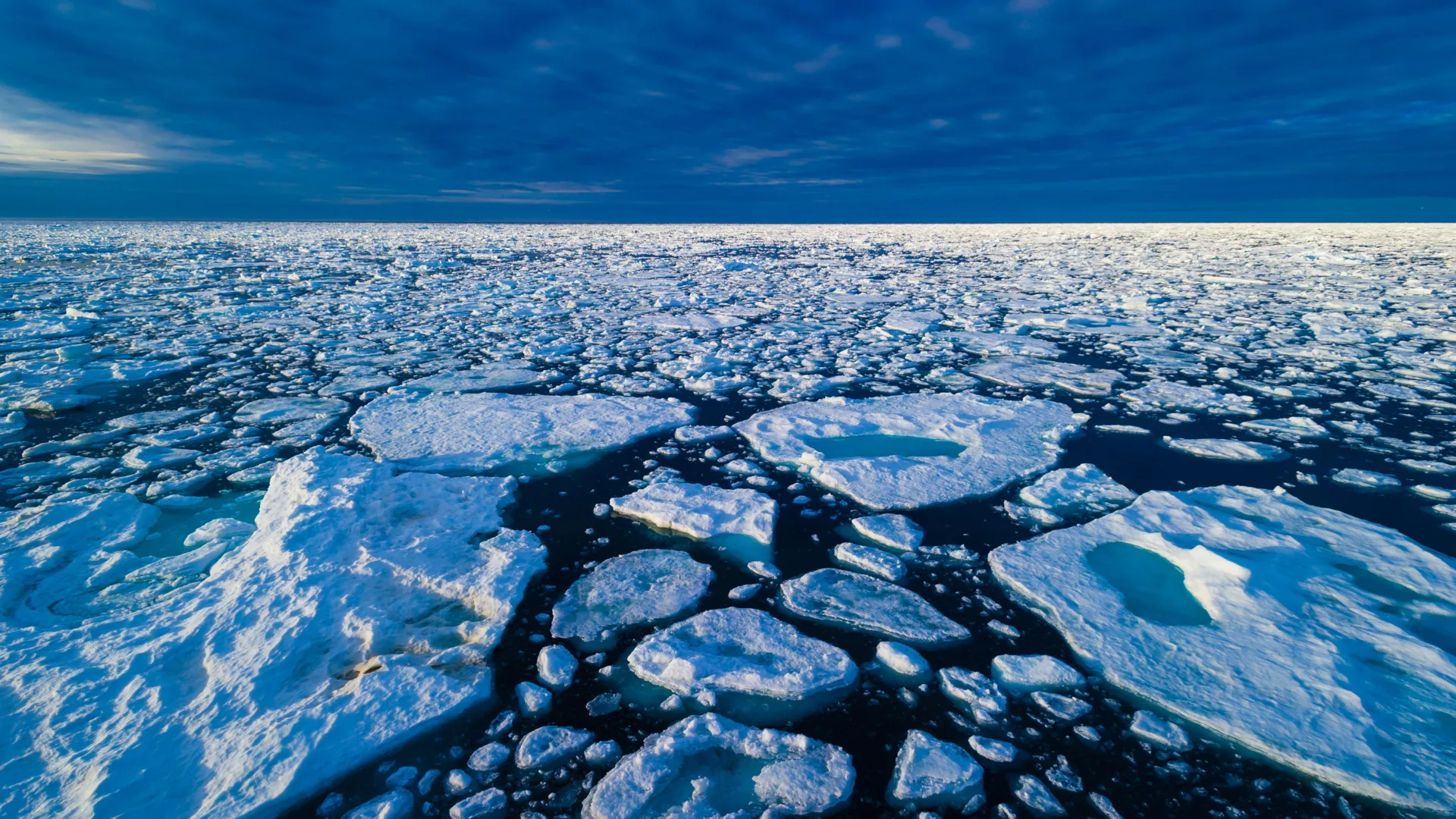
Arctic sea ice may move in unexpected ways because individual ice floes are constantly colliding and transferring energy. Researchers found that this simple process can explain several long-standing mysteries about how quickly the ice moves and spreads.

📅 2026-09-18 02:13:16    •    ScienceDaily
When prepping for disaster, don't forget to pack your teddy bear
Science News

When prepping for disaster, don't forget to pack your teddy bear

Imagine it's the dead of night. Your phone pings with a text—it's a government emergency alert: "Leave your home immediately! Only take with you enough supplies for the next three days." What would you want in your go-bag?

📅 2026-09-18 02:00:01    •    Phys.org
From toothbrushes to aerospace: Graphene research advances fibers that conduct heat efficiently
Science News

From toothbrushes to aerospace: Graphene research advances fibers that conduct heat efficiently

KAIST's discovery of graphene oxide liquid crystals in 2011 laid the foundation for 15 years of research worldwide, leading to technologies for producing graphene fibers with high strength and thermal conductivity. The fundamental materials research that helped bring antibacterial toothbrushes and functional sportswear to market is now advancing into materials for thermal management.

📅 2026-09-18 00:40:01    •    Phys.org
Europe's earliest glacier loss day in years signals a reckoning for the Alps
Science News

Europe's earliest glacier loss day in years signals a reckoning for the Alps

On June 29, 2026, the snow accumulated by Switzerland's glaciers over the course of the previous winter had melted. Known as Glacier Loss Day, this date marks the point at which further melting begins to erode the glaciers' mass until snow accumulation resumes in the fall. Matthias Huss, the network head of Glacier Monitoring in Switzerland (GLAMOS), told Agence France-Presse (AFP) that this year's Glacier Loss Day was "three months too early, compared to a healthy state."

📅 2026-09-18 00:20:02    •    Phys.org
Circular economy pilot projects show hotels can reduce waste and costs
Science News

Circular economy pilot projects show hotels can reduce waste and costs

The new EU Packaging Regulation (PPWR) has been in effect since Aug. 12, 2026. Under this regulation, beginning in January 2030, the food service industry may no longer buy food or toiletries packaged in single-use plastic—for example, ketchup packets or individually wrapped bars of soap. This is increasing pressure on hotels, restaurants and catering businesses to act.

📅 2026-09-18 00:00:02    •    Phys.org
A finely tuned mess—how disorder can make networks more stable
Science News

A finely tuned mess—how disorder can make networks more stable

Perfection is overrated—at least when it comes to complex systems like the power grid, food webs and advanced materials. For decades, scientists generally assumed that networks function most reliably when their individual components are as similar as possible. But real-world networks are rarely uniform.

📅 2026-09-17 23:40:04    •    Phys.org
Report on global water resources: Worldwide continents are drying up
Science News

Report on global water resources: Worldwide continents are drying up

The global water cycle is becoming increasingly unbalanced. Extreme droughts and floods are the result. This is shown in this year's report by the World Meteorological Organization (WMO) on the state of global water resources, "State of Global Water Resources 2025," which was published today.

📅 2026-09-17 23:20:05    •    Phys.org
Scaling up the detection of genome-edited rice lines
Science News

Scaling up the detection of genome-edited rice lines

A new open-access study introduces RiSpy, a data-driven fingerprinting framework that makes the identification of genome-edited (GE) rice lines more robust, scalable and broadly applicable. Researchers from Sciensano, together with CIRAD and DARWIN project partners, in collaboration with colleagues from Ghent University, have presented the new methodological framework for the reliable identification of genome-edited (GE) rice lines in the journal Briefings in Bioinformatics.

📅 2026-09-17 23:00:04    •    Phys.org
Chemists overturn 40-year assumption about a key class of superconductors
Science News

Chemists overturn 40-year assumption about a key class of superconductors

Scientists at Warwick have shown that a material treated for 40 years as a uniform, textbook superconductor is in fact a patchwork of different crystal structures throughout its bulk, using an advanced 3D imaging technique to see deep inside the crystal for the first time.

📅 2026-09-17 23:00:01    •    Phys.org
New krypton-88 data narrow a key gap in stellar strontium models
Science News

New krypton-88 data narrow a key gap in stellar strontium models

An international research team has reported the first experimental investigation of a nuclear physics reaction essential for understanding how the element strontium is produced in stars—specifically in stellar environments where traditional explanations for its formation fall short. The study, published June 8 in Communications Physics, reports that the team used indirect experimental techniques to extract previously inaccessible information about how an isotope of a separate element—krypton—absorbs, or captures, neutrons.

📅 2026-09-17 22:40:06    •    Phys.org
Transfer learning corrects alloy calculations to predict unexplored materials
Science News

Transfer learning corrects alloy calculations to predict unexplored materials

Metals can be transformed into alloys by adding different elements, allowing their strength, stability and other properties to be tailored. A key parameter for understanding these properties is the volume size factor (VSF), which quantifies lattice distortion caused by differences in atomic size.

📅 2026-09-17 22:40:01    •    Phys.org