
Research Institutions
Does vitriol make you feel special?
Beyond the algorithm, online negativity takes on a life of its own. Here’s why.
Latest research findings, studies and research developments.
Beyond the algorithm, online negativity takes on a life of its own. Here’s why.
Origin story of Declaration of Independence involves more than just embrace of Enlightenment ideas, scholars say
Celebrating nation’s natural wonders through art on 250th anniversary

Cambridge to lead new £20m MRC Hub to transform development of new medicines using stem cells and AI Craig Brierley Wed, 08/12/2026 - 08:00 The Hub builds on the expertise of the Cambridge Stem Cell Institute, in particular around advanced human in vitro models, including organoids and other stem cell-derived systems. It will combine this with AI-powered approaches, bioengineering and clinical research to create more accurate and predictive ways of studying human disease and testing potential treatments before they reach patients.The Hub will be led by Professor Matthias Zilbauer and Professor Bertie Göttgens from the Cambridge Stem Cell Institute (CSCI).Professor Matthias Zilbauer, Director of the UK Pre-clinical Translational Models Hub and Group Leader at the CSCI, said: "Over the past decade, we've seen the enormous potential of patient-derived organoids and other approaches that do not rely on the use of animals to transform the way we develop new medicines.“Because these miniature human tissues retain many of the unique biological characteristics of the individual patient, they allow us to understand disease more accurately and test potential treatments before they ever reach the clinic. This has the potential to bring more effective, personalised treatments to patients while reducing the time and cost of developing new medicines and our reliance on animal models."Working with hospitals, research institutes and industry partners across Cambridge and the UK, the researchers will establish a national network dedicated to developing, validating and accelerating the adoption of next-generation preclinical models. The Hub will enable researchers, clinicians and companies across the UK to access human-based platforms that better reflect human biology and improve the development of new therapies.Professor Bertie Göttgens, Co-Director of the UK Pre-clinical Translational Models Hub and Director of the CSCI, said: "By combining expertise in stem cell biology, organoid technology and artificial intelligence, the new UK Pre-clinical Translational Models Hub will accelerate the development of next-generation human disease models. Together with our academic, NHS and industry partners, we aim to deliver better treatments for patients while reinforcing the UK's global leadership in this field."Every new medicine must undergo extensive testing for safety and effectiveness before it can reach patients. However, the process relies heavily on animal models, and many treatments that appear promising in animals ultimately fail when tested in humans. This can result in years of research, significant investment and potential treatments being lost before they reach patients.Advanced human in vitro models and AI offer a new approachBy using human cells and tissues to recreate aspects of disease in the laboratory, researchers can study disease processes more accurately, identify potential treatments earlier and better predict how patients may respond to new therapies. These approaches include organoids – miniature, simplified versions of human tissues – alongside other engineered human systems and computational models.While these technologies have already transformed many areas of biomedical research, their wider use in drug development requires robust validation, standardisation and benchmarking. Researchers, clinicians, regulators and industry partners need confidence that these models are reliable, reproducible and capable of improving decision-making in the development of new medicines.The Pre-clinical Translational Models Hub will address this challenge by creating a national UK accelerator platform to develop promising human-based models into validated, scalable and industry-ready technologies. By integrating experimental models with AI and other computational approaches, the Hub will help establish a new generation of predictive tools for understanding disease and accelerating therapeutic discovery.Cambridge’s expertise in organoid researchOrganoids and other advanced human models have become a major focus of stem cell biology since the field emerged in 2009, and CSCI has played a leading role in developing this area. Researchers across the Institute have contributed to advances in organoid technology, stem cell biology and disease modelling.Professor Zilbauer, for example, has built a biobank of more than 1,000 patient-derived organoid lines over the past decade. Through his clinical research into paediatric inflammatory bowel diseases at Cambridge University Hospitals, he works with children and their families to collect patient samples, generate organoid models and use these systems to understand disease mechanisms and test potential new treatments.Professor Zilbauer said: “Patient-derived models have enormous potential to transform the way we understand disease and develop new medicines. By capturing important characteristics of individual patients, these human models allow us to study disease more accurately and test potential treatments before they reach the clinic. This could ultimately lead to more effective, personalised therapies while reducing the time and cost of drug development.”To maximise the Hub’s reach and impact, CSCI will work with Affiliate Group Leaders and Hub co-leads Dr Mathew Garnett and Dr Mo Lotfollahi from the Wellcome Sanger Institute, and Professor Madeline Lancaster at the MRC Laboratory of Molecular Biology, together with clinical partners at Cambridge University Hospitals and Royal Papworth Hospital.Based at CSCI’s facilities in the Jeffrey Cheah Biomedical Centre on the Cambridge Biomedical Campus, the Hub will benefit from close proximity to NHS partners, the MRC-LMB, AstraZeneca’s Discovery Centre, GSK’s Clinical Unit and other leading research and industry organisations. This unique environment will enable collaboration across disciplines and help accelerate the translation of scientific discoveries into real-world impact.Science Minister Chris McDonald said: "Too many medicines that work in animals go on to fail in people. The Preclinical Translational Models Hub will allow scientists to test treatments on human tissue, grown from patients' own cells, so we can tell much earlier what will genuinely work…By opening that technology up to researchers, the NHS and companies across the country (…) we are bringing the end of animal testing closer while creating the high-skilled jobs and growth that benefit people in every postcode."Adapted from a news story by the Cambridge Stem Cell Institute Over the past decade, we've seen the enormous potential of patient-derived organoids and other approaches that do not rely on the use of animals to transform the way we develop new medicines Matthias Zilbauer Thomas Dennison/ University of Cambridge Immunofluorescence spinning disc microscopy images of organoids Yes
Study comparing 11 eating patterns finds two clear paths to curbing weight gain

No bosses, no problem! Pre-Hispanic farmers built giant water system bottom-up, archaeologists reveal Tom Almeroth-W… Tue, 08/11/2026 - 10:01 The pre-Hispanic field systems of La Mojana in the Colombian Caribbean are so vast you can see them from a plane at high altitude. Their canals and raised fields – in use from the first centuries BC until the 11th century AD – cover an astonishing 500,000 hectares, roughly the same size as the Grand Canyon National Park, or three times the size of London. It has traditionally been assumed that powerful rulers must have ordered and managed such an ambitious infrastructure project because of its complexity and the amount of work thought to be involved. In a study published today in Communications Sustainability, however, a University of Cambridge-led archaeological team argues that the work was most likely locally-led, cooperative, and much faster than previously assumed.The findings are important historically but also offer hope to Colombians today who are suffering from a water management crisis linked to climate change, intensive farming and policy failure.“These field systems are so impressive that people have assumed they were achieved by hierarchical chiefdoms. Our data tells a very different story,” said the study’s lead author, Dr Jasmine Vieri, from the University of Cambridge’s McDonald Institute for Archaeological Research.“Our findings indicate that local communities were capable of building these systems in very short periods of time, and organising themselves rather than relying on a powerful external force.”The societies responsible for these hydraulic systems in La Mojana were contemporary with the Maya, and with the broader Mesoamerican and Andean state-level societies, which culminated in the huge Aztec and Inca empires a few centuries later. The pre-Hispanic populations occupied an area where, the researchers point out, there is no evidence of state-level societies. It has been assumed – encouraged by evidence of elaborate gold work and ceramics – that they were hierarchical chiefdoms on their way to state formation. By contrast, the new findings support the idea that these people chose to organize themselves far more horizontally and were able to achieve great things.Their raised field system managed huge quantities of water during heavy rains, gradually redirected it in drier months, buffering against both drought and floods. The network of canals redistributed water from permanent bodies of water around raised areas of housing. The system provided more fertile soils for cultivation in dry seasons and may have helped locals to trap fish.Using satellite imagery, the researchers mapped a 500-hectare portion (roughly 700 football pitches) of Pre-Hispanic field systems in the municipality of San Macros, Sucre. They studied the infrastructure at an unprecedented level of detail, recording the dimensions and volume of 1,600 ridges and 63 housing platforms. They worked out that when first constructed the formations were around 1.4 metres high from the top of the ridge to the lowest point of the canal.The international team – including researchers from the Colombian Institute of Anthropology and History (ICANH), and University of Santiago de Compostela in Spain – then developed a new method to quantify the labour needed to build this system and considered the social and spatial organization most likely to have underpinned this work.Dr Jasmine Vieri said: “We are confident that one of these canal-ridge systems could have been built in less than two months, around half of a dry season. That’s a far lower labour investment than has been previously assumed, and manageable through cooperation.”The researchers factored in volumes of moved earth, as well as information about local geology, indigenous working practices, population density and available technology. Starting from an estimated population of 1,600 people in the study area, they based their calculations on a workforce of 800 people which, the researchers emphasise, represents a conservative estimate, given ethnographic evidence that men, women and probably children traditionally engage in subsistence farming.Soils in the Colombian Caribbean are heavy clay which would have made the work harder and there were no metal shovels in the region in this period. The workers may have used wood tools but this remains unproven.The study springs from Cambridge’s ERC-funded REVERSEACTION project, which investigates how technologies are sustained in stateless societies, and how collective action can achieve great things without coercion.Professor Marcos Martinon-Torres, REVERSEACTION’s lead and senior author, said: “Arguments for centralised, top-down planning, unsupported by data, risk obscuring the agency of indigenous pre-Hispanic populations. Pre-Hispanic societies were inventive and cooperative, they worked with nature rather than trying to obstruct it. And we already know that recovering ancestral practices has positive societal impact today through local populations connecting with their heritage through technology.”Evidence for the use of raised field systems in this region ends before the Spanish arrived in the sixteenth century. It isn’t clear why they stopped being used but it has been suggested there was population movement from the lowlands towards mountainous areas.The researchers argue that the pre-Hispanic sustainable solution to water management can be adopted by local populations without the need for state intervention. Instead of redistributing water flow, the Colombian government has often adopted the opposite strategy of attempting to block water flow to prevent flooding and adapt the land for agricultural and livestock activities based on models designed for non-flooding environments. But dykes have proven incapable of holding water back. Since 2021, the Caregato dyke has suffered multiple breaches, causing losses for local communities and ecosystem damage. At other times, the region suffers from severe droughts.Study author Dr Fernando Montejo Gaitán, from the Colombian Institute of Anthropology and History (ICANH), said: “Policymakers have shown interest in these ancient systems, but lacked data. Our study is the first to show that these sustainable solutions can be organised locally and collectively. Local people may need resources from the state but not necessarily state intervention.”The researchers have made their code open source to enable researchers to apply the same methods to data sets relating to other regions. ReferenceJ Vieri, F Montejo Gaitán, M Carrero-Pazos, M Martinón-Torres, ‘Collective labour and sustainability of pre-Hispanic field systems in La Mojana’, Communications Sustainability (2026); DOI: 10.1038/s44458-026-00128-5 Pre-Hispanic societies were inventive and cooperative, they worked with nature Marcos Martinon-Torres The canals and raised fields of La Mojana during wet season. Photo: Nicolás Jiménez, ICANH Yes Licence type Attribution
Excerpt from evolutionary biologist’s new book ‘Fed Up’

Go behind the scenes at Cambridge with Open Cambridge 2026 Zoe Smith Mon, 08/10/2026 - 10:00 From 11–20 September, Open Cambridge returns with more than 70 free events, offering exclusive access to some of the city's most fascinating buildings, collections and hidden spaces. Whether you're interested in history, science, architecture, art or family activities, there's something for everyone. Step inside places rarely open to the public This year's programme includes guided tours of some of Cambridge's most iconic landmarks, including the University's Senate House, Cambridge University Library, and the Mullard Radio Astronomy Observatory, where visitors can explore world-famous radio telescopes and learn about ground-breaking discoveries in astronomy. Visitors can also discover the hidden world of mathematics with a tour of the Centre for Mathematical Sciences, featuring the Betty and Gordon Moore Library, the Isaac Newton Institute for Mathematical Sciences and an underground fluid dynamics laboratory researching climate change. Explore remarkable collections Libraries and museums across Cambridge will be opening their doors, giving visitors the chance to see treasures that are rarely on public display. Highlights include: The Treasures of the Old Library at St John's College, showcasing a millennium of manuscripts, rare books and photographs. The Churchill Archives Centre Open Day, featuring historic documents from more than 600 collections. The Parker Library at Corpus Christi College, home to internationally important manuscripts and early printed books. Enjoy the stunning Wren Library at Trinity College and exhibitions at Christ's, Selwyn and Wolfson Colleges, the Radzinowicz Criminology Library and explore 500 years of science in print at the Whipple Library. Family-friendly fun Families can enjoy a packed programme of free activities designed to inspire curiosity, creativity and discovery across the city. Younger visitors can step into Cambridge’s past at the Museum of Cambridge Family Day, with hands-on activities and opportunities for families to explore local stories and heritage together. Storytelling sessions will bring history and imagination to life, while interactive performances of The Lorax – Reimagined invite audiences to join a playful exploration of nature, sustainability and the world around us. Families can also get creative by designing their own quilt square as part of the Cambridge Festival Community Coding Quilt exhibition, where traditional Japanese stitching techniques meet binary code to create a unique community artwork. The exhibition offers visitors the chance to see the finished quilt and contribute to its ongoing story. The Centre for Computing History will also be will be offering free admission on 12–13 September.Celebrate Cambridge's communities, stories and shared heritageOpen Cambridge 2026 also shines a spotlight on the people and communities that have shaped the city, with a programme of events celebrating local history, creativity, wellbeing and social impact. Enjoy a free Abbey and Chesterton Community Heritage Day at the Cambridge Museum of Technology, discover the inspiring work of the Samaritans' Prison Listener scheme at HMP Littlehey, or go behind the scenes with Cambridge United Women as they prepare for the new season at Grange Road. Explore exhibitions including Everyday Histories at the Keate Family Arts Trust and CONNECTIONS, showcasing artwork created by Rowan students alongside historic objects from the Museum of Cambridge and All Saints' Church. History enthusiasts can learn about the working lives of women in East Cambridge, while the Festival Theatre and Cambridge Buddhist Centre Open Day offers theatre tours, meditation, yoga, live activities and refreshments as the venue celebrates its centenary. Visitors can also join a range of welcoming events hosted by the Cambridge Quakers, from a traditional roti-making workshop and a talk on prison reformer Elizabeth Fry to an opportunity to experience Quaker worship.Discover something unexpected Open Cambridge is also a chance to try something completely different. Take part in free yoga taster sessions at CAMYOGA's first Open Cambridge open day, explore the hidden creative studios of the Cambridge School of Visual & Performing Arts, join a guided walk around the Cambridge Biomedical Campus, or uncover the stories of American servicemen based in Cambridgeshire during the Second World War at the Cambridge American Cemetery. History enthusiasts can also hear about the latest discoveries from excavations at Wandlebury Hillfort, while garden lovers can enjoy tours at Trinity College, Churchill College, Robinson College and Wolfson College. Book early The full programme launches and bookings are now and available on the Open Cambridge website. All events free but some require advance booking. We recommend booking early as many events fill up quickly each year. We look forward to welcoming you to Open Cambridge 2026! Mullard Observatory tours at Open Cambridge 2026 Yes
Computer security expert says recent OpenAI, Anthropic breaches highlight need for regulations that balance safety, speed of development
Tayari Jones digs into themes of latest novel, ‘Kin’: ‘We all need chosen family.’
Legal historian’s new book argues older Americans control power, wealth — and lack sense of urgency to fix nation’s most pressing problems

Cambridge to lead new £50 million centre to study mitochondrial DNA diseases Craig Brierley Wed, 08/05/2026 - 09:00 The MRC Centre of Research Excellence (MRC CoRE) will be led by Professor Michal Minczuk of the University of Cambridge. It brings together leading experts from across disciplines to define how mutations in mitochondrial DNA (mtDNA) cause disease and translate that knowledge into therapies.The new Centre builds on the University's existing expertise in mitochondrial research at the MRC Mitochondrial Biology Unit.No cure currently exists for mitochondrial diseases, a group of genetic disorders that affect around 1 in 5000 people, leaving patients and their families facing significant unmet medical needs.Mitochondria are tiny ‘organelles’ that sit within our cells, where they act like batteries, providing energy in the form of the molecule ATP to power the cells. Each mitochondrion has its own DNA, distinct from the rest of the human genome, which is comprised of nuclear DNA. Beyond inherited conditions, mtDNA mutations are increasingly linked to neurodegeneration, metabolic disease, cardiovascular failure and age-related deterioration. In affected individuals, mitochondrial dysfunction can contribute to severe disability, progressive decline and premature death.Professor Minczuk from the MRC Mitochondrial Biology Unit and Department of Clinical Neurosciences said: “Mitochondrial DNA diseases are devastating conditions that can have a huge impact on an individual’s life and on their families, and in many cases prove fatal. Our new Centre will provide pioneering approaches to understanding and treating these diseases.“We will be building a long-term UK research platform with the scale, expertise and infrastructure needed to position the UK as a global leader in mitochondrial genome therapeutics.“Our goal is to create the scientific foundations that will enable entirely new ways of treating these diseases and offer renewed hope to affected patients and families."The MRC CoRE will harness emerging technologies to engineer the mitochondrial genome, delivering advanced models for study common disease-causing mtDNA mutations.Led by the University of Cambridge, it will partner with the University of Birmingham, University of Manchester, Heidelberg University and the University of Queensland, as well as the Imagine Institute in Paris, charities including the Lily Foundation, and industrial partners worldwide. Dr Ceri Williams, Executive Director of Challenge Led Themes at the MRC, said: “The UK has been at the helm of mitochondrial science, having led on the development of mitochondrial replacement therapy which prevents the inheritance of mtDNA mutations.“We are delighted to announce this new MRC CoRE, which builds on these foundations to bring together expertise from around the world and across sectors to make real progress towards understanding the root causes of mtDNA mutations.“Taking an interdisciplinary approach to tackle these challenges has the potential to radically transform health research in this field, improving prevention, detection and treatment, boosting outcomes for patients and protecting families affected by the disease.” Liz Curtis, CEO and founder the Lily Foundation, said: “We’re proud to be a named partner in this initiative, an ambitious and collaborative project that has the potential to transform our understanding of mitochondrial disease. “By bringing together world-leading expertise and embedding patient perspectives from the outset, this programme reflects exactly the kind of strategic, forward-looking research we want to support. “Our role as a patient charity partner is to help ensure that the priorities of families shape the research, while also investing directly into the next generation of scientists who will drive progress towards future treatments.”Adapted from a press release from the Medical Research Council Our goal is to create the scientific foundations that will enable entirely new ways of treating these diseases and offer renewed hope to affected patients and families Michal Minczuk Jian Fan Cross-section view of Mitochondria, 3d rendering Yes
Danielle Allen’s new book unearths role of Charles Lennox in supporting ‘radical’ writers, thinkers including Thomas Paine, Benjamin Franklin
From a bicycle seat, Harvard postdoc sees roadblocks facing rural medicine

NICE referral criteria miss up to 95% of women under 50 who go on to develop breast cancer within 10 years Craig Brierley Tue, 08/04/2026 - 02:00 Using BOADICEA – a comprehensive risk assessment tool developed at the University of Cambridge with funding from Cancer Research UK – researchers at Cambridge and The Institute of Cancer Research, London, identified eight times as many women in this age group who developed breast cancer as the NICE criteria. Breast cancer is the most common cancer worldwide, with steady increases in incidence over the last decades. It accounts for around one in four cases of cancers and 15% of cancer deaths in women, and is one of the leading causes of death in women under 50. Identifying women at higher risk can allow for additional screening or preventive treatment.In England, most women at higher risk of breast cancer are identified after being referred by their GP for further assessment and specialist care. The assessment with their GP is based on family history, following criteria set out by NICE. However, in research published today in the British Journal of Cancer, a team of researchers showed that the NICE criteria fail to identify as many as 95% of women under 50 who are at higher-than-average risk of breast cancer and 95% of women who go on to develop breast cancer within 10 years. The team analysed data from 1,258 women aged under 50 years recruited to the Breast Cancer Now Generations Study between 2004 and 2011.They compared how good the NICE criteria and several risk assessment approaches using the BOADICEA risk model were at identifying those women who would go on to develop breast cancer. BOADICEA combines factors such as family history, lifestyle, reproductive history and genetic information. It is available via the CanRisk platform.Previous studies have shown that multifactorial risk models can identify more women at increased risk of breast cancer than family history alone. This is the first study to directly evaluate this approach in a UK population-based cohort of women under 50.Completing a risk assessment with the full BOADICEA model for all women aged under 50 would result in 26.5% of women being categorised as at above-population level risk and referred for further assessment. This would include 34.8% of women under 50 who develop breast cancer within 10 years. By comparison, the current NICE criteria would result in 1.4% of women under 50 being referred for further assessment, which would include just 4.4% of those women who develop breast cancer.A main reason for the disparity, say the researchers, is because three-quarters of women (73%) under 50 years who develop breast cancer within 10 years have no family history of breast cancer, the key criterion in the NICE guidelines.Dr Juliet Usher-Smith from the Department of Public Health and Primary Care, University of Cambridge, the study’s senior author, said: “We need to get better at identifying women at highest risk of breast cancer so that we can intervene early, when there are more options for treating, or even preventing, their disease.“The current NICE criteria used in general practice are missing up to 95% of women under 50 who will go on to develop breast cancer. It’s time to look again at these criteria in the light of our findings.”The researchers recognise that changing the criteria – offering the full BOADICEA risk assessment to all women under 50, for example – would be far more resource intensive and lead to more referrals, many of whom will not develop breast cancer.Professor Montserrat Garcia-Closas from The Institute of Cancer Research, London, said: “There will be a balance to strike: the NICE criteria are much easier to implement, but miss a large proportion of women at elevated risk. But a full risk assessment including genetic testing will place a heavy burden on resources. “Ultimately, it will be a trade-off between the practical, resource, and cost implications of data collection and risk assessment, and the potential benefits and harms associated with accurate and inaccurate classification of women.”A second study from the team, also published in the British Journal of Cancer, found strong support among the public for proactive approaches to breast cancer risk assessment for women aged 30–49, rather than waiting for women to come forward with concerns about their family history. Women preferred proactive invitations, rather than having to ask their GP, and supported the use of approaches that identify more women at higher risk, even if this requires more assessments, including genetic testing. The most popular options were those that invited all women for assessment and used more comprehensive risk tools, such as BOADICEA.The next step is to test how multifactorial risk assessment could be implemented safely, equitably, and cost-effectively in routine care. This is being evaluated by multiple groups, including UK-based research led by Dr Usher-Smith and colleagues in Cambridge on breast cancer risk assessment in general practice. The research was supported by Cancer Research UK and Breast Cancer Now.Dr Simon Vincent, chief scientific officer at Breast Cancer Now, said: “Finding new ways to identify women at increased risk could help to prevent some breast cancers or detect them earlier, when treatment is more likely to be successful. “These findings highlight the limitations of NICE’s current referral criteria, and so this research must now be carefully considered as part of the current review of its Family History guidelines. However, it’s equally important that any changes come with the needed investment in family history services, so they can be implemented effectively and fairly across the NHS. “Overall, this study highlights the value of long-term research like the Breast Cancer Now Generations Study, which is helping us better understand who is most at risk of developing breast cancer and why.” Dr Sowmiya Moorthie, senior strategic evidence manager at Cancer Research UK, said: “Exploring different ways to identify women with a higher risk of breast cancer could help people receive more personalised care. “The current UK approach, which relies on women under 50 self-presenting, misses many women with a higher risk of breast cancer who could benefit from targeted support and guidance on how to manage their risk. Further research is needed, however, to understand the impact of adopting a different approach, including on staffing and equipment. Any changes must be accessible and equitable, taking into consideration the anxiety that extra referrals might cause for women. “Everyone can take steps to reduce their cancer risk, such as maintaining a healthy weight and cutting back on alcohol. Anyone who notices a change that is unusual for them should speak to their GP, as early diagnosis can improve outcomes.”ReferenceFrost, R, et al. Comparison of NICE criteria with the BOADICEA multifactorial risk model to guide breast cancer risk assessment and referral amongst women under age 50 within primary care. BJC; 4 Aug 2026; DOI: 10.1038/s41416-026-03547-2Dennison, RA, et al. Priorities for breast cancer risk assessment in UK women under age 50: A survey and discrete choice experiment. BJC; 4 Aug 2026; DOI: 10.1038/s41416-026-03546-3 We need to get better at identifying women at highest risk of breast cancer so that we can intervene early... It’s time to look again at these criteria in the light of our findings Juliet Usher-Smith Halfpoint images Female patient undergoing a mammogram screening Yes
Survey researcher says popularity may help fill gap between rising national problem, shortage of clinicians — provided counsel is sound
School of Ed report says they have concerns over low pay for caring professions, emotionally draining nature of work
Economic historian rebuts various beliefs about cause, concerns around downturns, explains why expansions are more important anyway
Participants in intellectual diversity initiative navigated deep disagreements on path to consensus
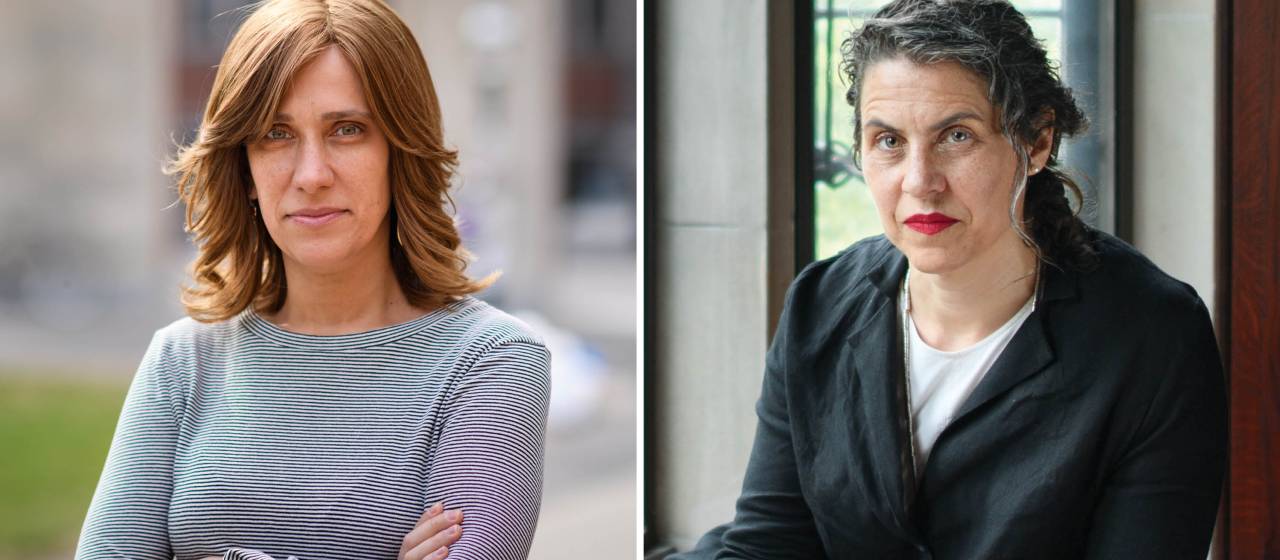
The grants were part of a round of awards made to 81 humanities projects nationwide. The two Princeton grants are for projects connected with the University's Geniza Lab.