Latest Scientific Discoveries

All News →
Single 2D crystal transforms into transistor with built-in insulation and electrical contacts
Science News

Single 2D crystal transforms into transistor with built-in insulation and electrical contacts

A transistor normally requires several fundamentally different materials—a semiconductor to carry current, an insulating dielectric to control it and metallic contacts through which current enters and leaves. Integrating all of these components becomes increasingly difficult as semiconductor devices approach the atomic scale.

📅 2026-10-15 20:40:06    •    Phys.org
AI turns scrap impurities into useful ingredients for stronger recycled iron
Science News

AI turns scrap impurities into useful ingredients for stronger recycled iron

About 2 billion metric tons of metal are produced worldwide every year to meet the demands of industry, infrastructure and the energy sector. Much of this production still relies on primary raw materials, contributing to an estimated 40% of industrial greenhouse gas emissions and 10% of global energy consumption. Increasing the use of recycled metals could significantly reduce the environmental impact of metal production while also lowering dependence on imports of scarce and strategically critical raw materials.

📅 2026-10-15 20:20:18    •    Phys.org
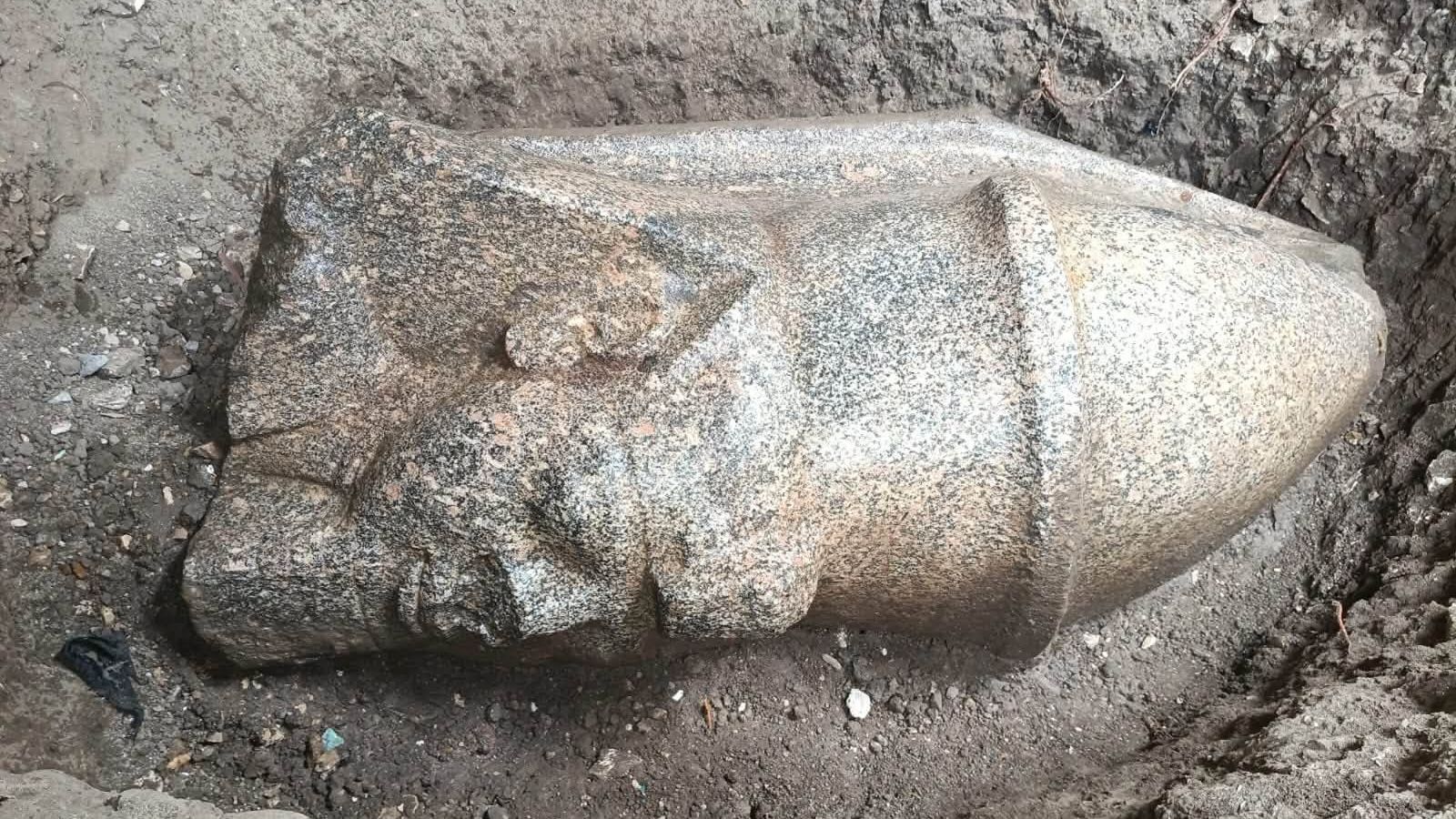
2 giant Ramesses II statues, one wearing a double crown, discovered by man in Egypt
Science News

2 giant Ramesses II statues, one wearing a double crown, discovered by man in Egypt

While working on his land in a village in northern Egypt, a man made an astonishing discovery: the remains of two massive statues of Ramesses II.The man, Khaled el-Shahat, immediately notified the Egyptian Ministry of Tourism and Antiquities, which sent a team to the village of Behbeit El Hagar to excavate and study the statues, the ministry said in a translated statement.Ramesses II had one of the longest reigns in Egypt's history, ruling from around 1279 to 1213 B.C. During his 66 years in power, Egypt controlled an empire that stretched as far northeast as modern-day Syria. He initiated many building projects throughout the empire, and numerous Ramesses II statues have been found througho...

📅 2026-10-15 20:01:18    •    Live Science
North Sea heat wave fueled underwater plankton bloom largely missed by satellites
Science News

North Sea heat wave fueled underwater plankton bloom largely missed by satellites

When a marine heat wave strikes, scientists often turn to satellites to see how the ocean is responding. From space, changes in ocean color can reveal shifts in phytoplankton, microscopic organisms that form the foundation of marine food webs and play a crucial role in the global carbon cycle. But satellites have a fundamental limitation: they can only see the ocean's surface.

📅 2026-10-15 20:00:07    •    Phys.org
Six lessons to improve leadership opportunities for women with disability
Science News

Six lessons to improve leadership opportunities for women with disability

Employers must do more to remove the barriers preventing women with disability from progressing into leadership, according to a new report from People with Disability Australia (PWDA), the national disability rights and advocacy organization. Researchers identify six lessons to help drive change.

📅 2026-10-15 20:00:01    •    Phys.org
Two brain circuits coordinate fruit flies' wing and leg movements to threaten rivals
Science News

Two brain circuits coordinate fruit flies' wing and leg movements to threaten rivals

Limbs evolved as a means of locomotion. From the primitive rotating flagella of bacteria to the wings of flies and even our own legs, animals use these appendages to travel to find food or mates or escape predators. But in countless species across the animal kingdom, limbs are repurposed to create elaborate social displays: Birds of paradise fan out their wings and hop around in courtship dances, while crabs wave their claws to communicate to potential mating partners. As humans, we use our limbs to dance, gesture while talking, wield tools and conduct a remarkable diversity of behaviors. How does the brain control and coordinate its body parts for such distinct purposes?

📅 2026-10-15 19:40:18    •    Phys.org
Researchers find that some weeds get supercharged by an indirect hit of herbicide
Science News

Researchers find that some weeds get supercharged by an indirect hit of herbicide

A brush with low doses of the herbicide dicamba spurs oxalis, a weed commonly known as wood sorrel, to produce more flowers, University of Michigan researchers have discovered. The finding suggests that farmers and homeowners are inadvertently making weeds growing around the perimeter of their fields or lawns stronger, the researchers say. The study results are published in the journal New Phytologist.

📅 2026-10-15 19:20:11    •    Phys.org
Better together? Coral fusion could throw bleached reefs a lifeline
Science News

Better together? Coral fusion could throw bleached reefs a lifeline

When corals are stressed by pollution, high water temperatures or other environmental changes, they can lose the microscopic algae living inside them and on which they depend for food. As a result, they turn white, a phenomenon known as coral bleaching. They will not die straight away, but it will be game over if the stress continues long enough for them to starve.

📅 2026-10-15 19:20:02    •    Phys.org