
Science News
This star has the strangest sky in the galaxy
The newfound star S301 orbits the Milky Way’s supermassive black hole so closely that its view of the heavens gets twisted
📅
2026-09-04 10:45:00
•
Scientific American
Explore the latest scientific discoveries, science news, breakthroughs and developments from around the world.
The newfound star S301 orbits the Milky Way’s supermassive black hole so closely that its view of the heavens gets twisted
Astronomers have identified a surprisingly young population of fading radio galaxies whose supermassive black holes have already switched off their powerful jets. The confirmed remnants range from about 8 to 42 million years old, suggesting many may disappear from view much faster than previously recognized. More distant remnants also seem to fade especially quickly, helping explain why they have been so difficult to detect.

An image from NASA Worldview shows how brittle Arctic sea ice is becoming due to global warming, with large patches of open water visible near the North Pole on Aug. 29.
Author Sarah Pierce explores dating apps, loneliness and human connection through a novel about a corpse-matching algorithm
The LUX-ZEPLIN experiment has detected a rare particle interaction that looks unusually difficult to explain as ordinary background noise and appeared where dark matter might be expected. Scientists are not claiming a discovery yet, but additional data could show whether this single mysterious event is the first hint of a long-sought dark matter particle.
UCLA researchers have discovered two powerful influences that help guide how the human brain forms before birth. Radial glia, stem cells responsible for producing much of the cerebral cortex, change their behavior depending on how they process glucose and on physical contact with signals arriving from the thalamus. Those signals can alter which types of neurons are produced, including upper-layer neurons that are especially prominent in humans.
Duke researchers developed an injectable scaffold that helped stroke-damaged brains grow new blood vessels, support nerve regrowth, and recover movement in mice. The treatment appears to work partly by recruiting the body’s own immune cells, including neutrophils that may switch from damaging to helpful under the right conditions.
Scientists have discovered a strange black “devil flower” in Thailand that lives mostly underground, steals nutrients from fungi, and looks strikingly unlike a typical plant. The newly named Thismia daemona is known from fewer than 50 individuals and may already be critically endangered.
Morning glories may be getting caught in an evolutionary tug-of-war between surviving climate change and attracting increasingly scarce pollinators. Over just nine years, researchers found that the plants’ rate of adaptation plunged by 96%, even though they still had plenty of genetic diversity to evolve.
Deep beneath Mars, scientists have found evidence of enormous magmatic systems once thought to require Earth-like plate tectonics. Seismic measurements suggest molten rock repeatedly evolved and recycled itself through the Martian crust, potentially across hundreds or thousands of kilometers. The discovery challenges long-held ideas about how complex planetary crusts form.

A pig kidney transplant worked for a record nine months. This enabled the recipient to stay off dialysis for longer while waiting for a suitable human donor's kidney to become available
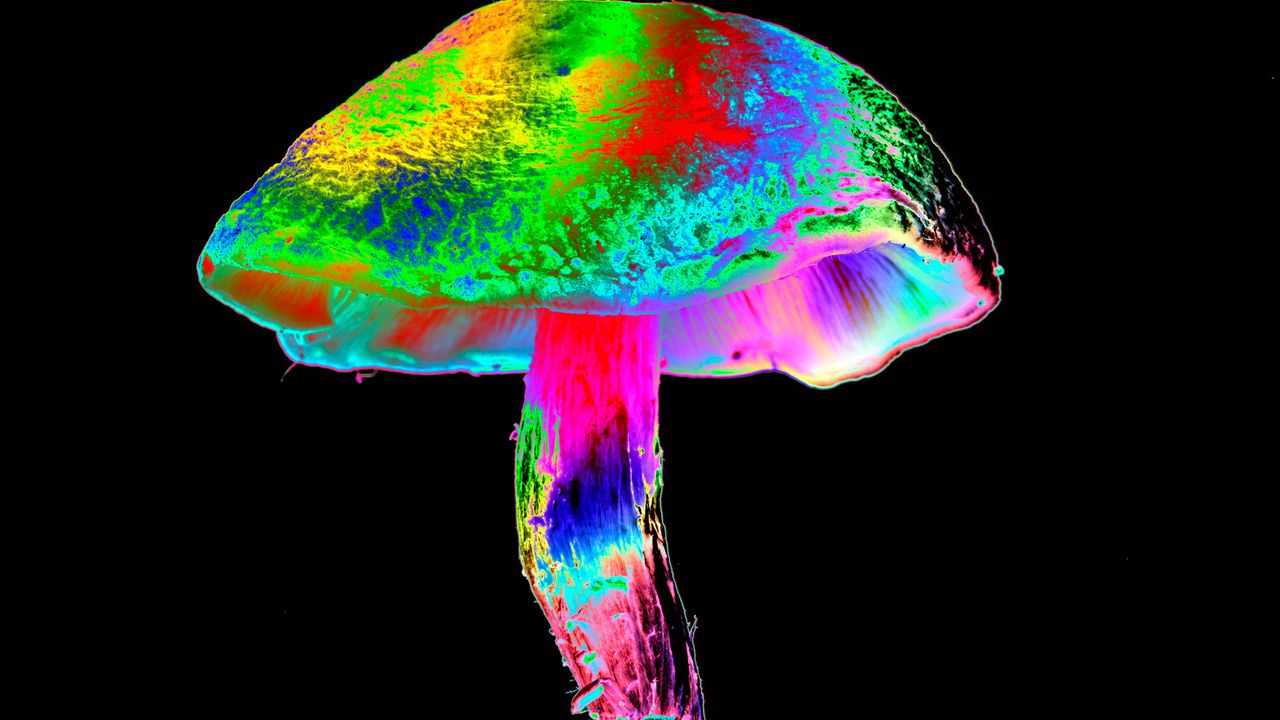
A psychedelic best known for its effects on the brain may also protect peripheral nerves from chemotherapy damage, early research suggests.