How algorithms are making our environments bland
The Pantone color of the year for 2026 is white. It's called Cloud Dancer, which is described as a "lofty white." This choice reflects a growing trend away from color in our visual world.
Explore the latest scientific discoveries, science news, breakthroughs and developments from around the world.
The Pantone color of the year for 2026 is white. It's called Cloud Dancer, which is described as a "lofty white." This choice reflects a growing trend away from color in our visual world.
Using more than 15 years of observations from the Parkes radio telescope, astronomers detected three rotational glitches in the pulsar PSR J1637−4642—a young neutron star that had shown no signs of glitches since its discovery. The three glitches included one that changed its rotation rate by nearly 3 parts per million. Their paper was posted to the arXiv preprint server on Aug. 20. It has been accepted for publication in the Astrophysical Journal Letters.
Autocracy wasn’t inevitable in early civilizations. But when riches were there to monopolize, strongmen and inequalities emerged
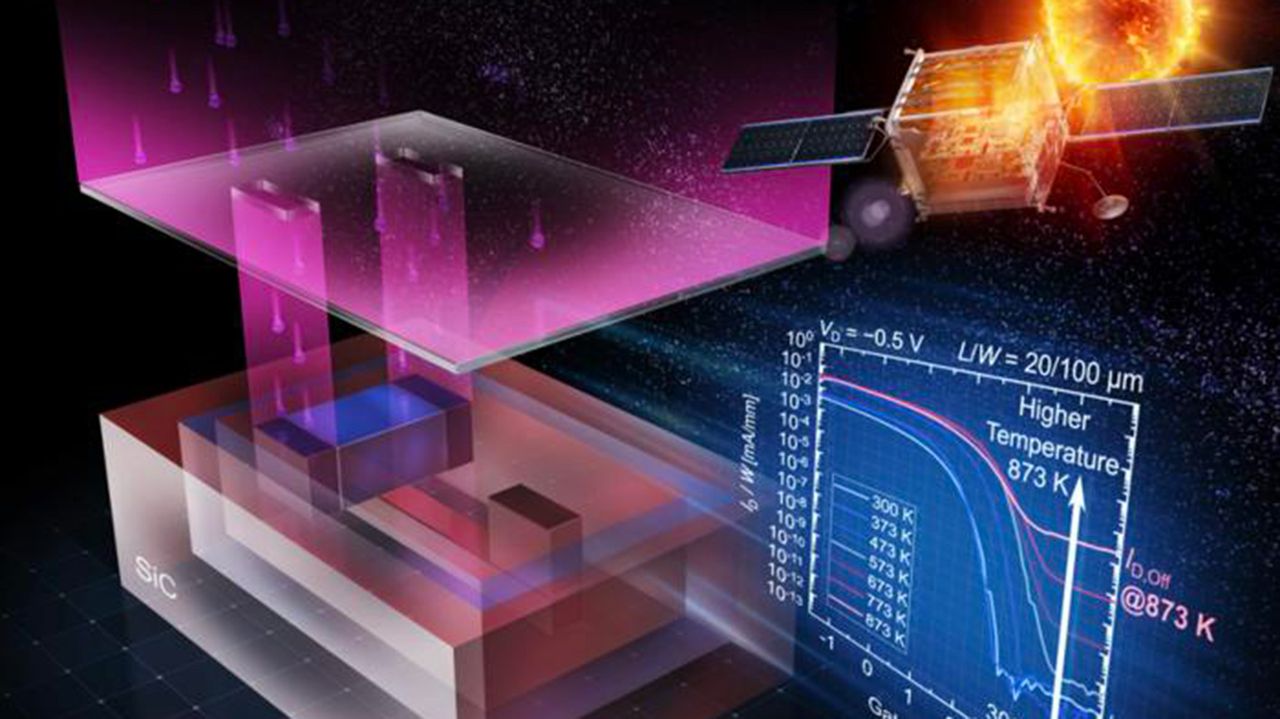
The silicon carbide transistor is designed to avoid low controllability and current leakage, which typically become problems at high temperatures.
Collectively intelligent bricks figure out if they’re in a boat, chair or guitar
A dazzling new James Webb Space Telescope image reveals about 70 newborn stars buried inside a strangely shaped cloud in the Carina Nebula.
How small can a transistor actually get? And is smaller even still the goal?
Germany's Isar Aerospace launched a rocket into orbit from Norway on Saturday as Europe races to boost its ability to economically send satellites into space independently of the United States.
Indonesia’s dangerous peat fires are surging early in the 2026 fire season as a strengthening El Niño and severe drought dry out wetlands that can burn underground for months. These slow smoldering fires are especially destructive because they release far more fine particles and several pollutants than typical tropical forest fires, while thick smoke can make them difficult for satellites to detect.
Acrid smoke hung heavily over the Malaysian town of Serian, seeping into homes and cloaking roadside stalls, as residents navigated an air-quality emergency fueled by transboundary haze from Indonesia's raging fires.
Princeton researchers have tested an AI system that can monitor and control fusion plasma in milliseconds, reacting far faster than a human operator. In one experiment, it predicted a damaging instability about 200 milliseconds before it appeared and adjusted the plasma to stop it from forming.
Researchers may have found a new way to weaken glioblastoma’s defenses against treatment. Blocking a protein called SET prevented tumors from forming in preclinical models, while targeting related proteins made cancer cells more vulnerable to radiation. The strategy works by restoring activity of PP2A, an enzyme that glioblastoma cells appear to suppress. Human testing will be needed to determine whether the approach is safe and effective.