Latest Scientific Discoveries

All News →
Political violence: How justifications influence voter approval
Science News

Political violence: How justifications influence voter approval

What happens when political violence is presented as a justified response to threat or injustice coming from an out-group? A study by Ursula Daxecker, director at the Max Planck Institute for Politics and Social Science in Göttingen, and Neeraj Prasad of the University of Amsterdam, published in The Journal of Politics, finds that legitimizing violence can increase public approval of both violence and the parties involved in it. Among BJP supporters, the effect went even further: when violence was portrayed as justified, they were less approving of a peaceful response by their own party.

📅 2026-10-17 01:00:02    •    Phys.org
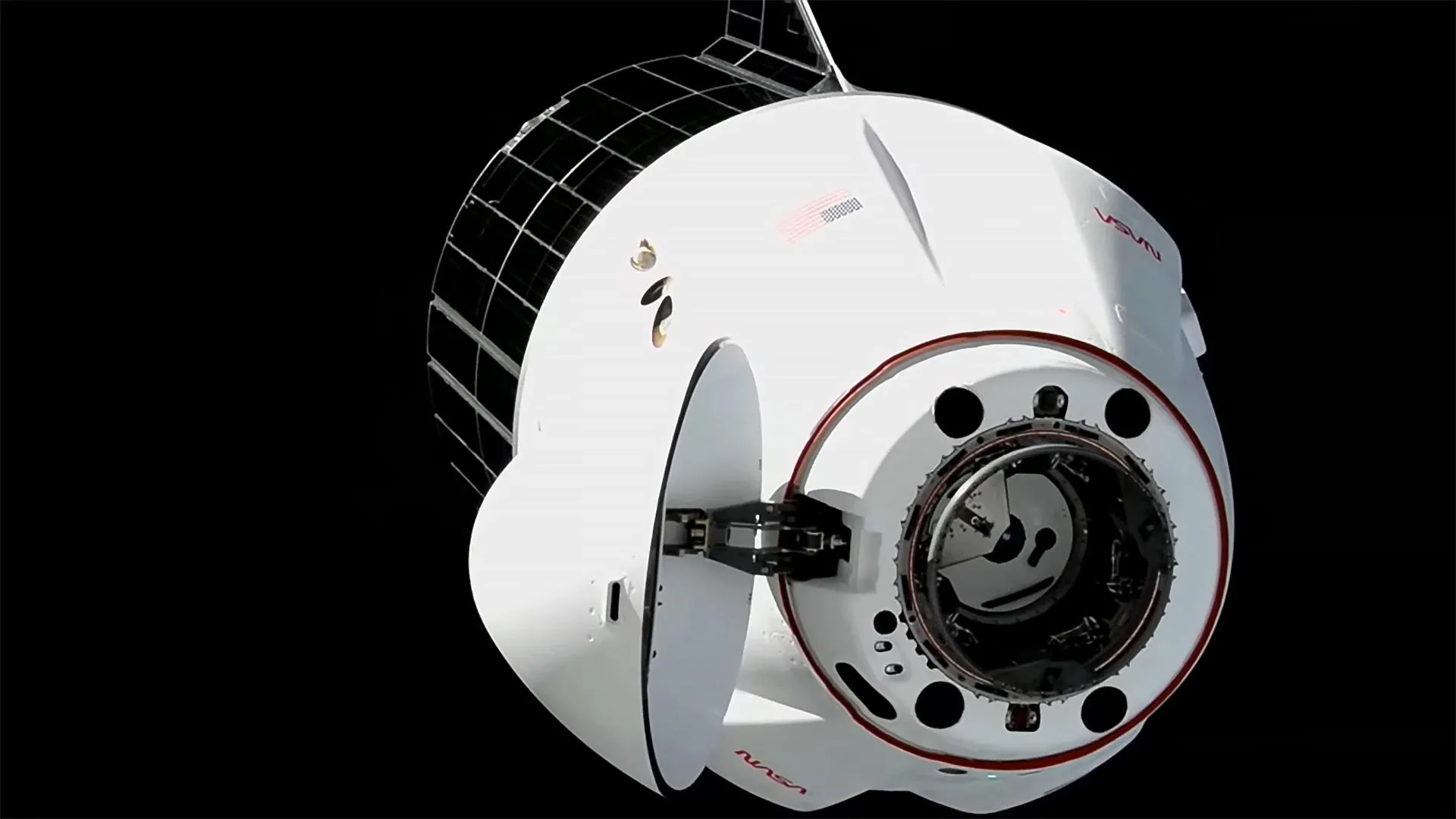
SpaceX just delivered some very strange cargo to the International Space Station
Science News

SpaceX just delivered some very strange cargo to the International Space Station

SpaceX just delivered some surprisingly strange cargo to the International Space Station, including tiny brain models, 3D heart tissue, and technology for making artificial retinas in space. Scientists hope these experiments could unlock new ways to treat devastating brain diseases, restore eyesight, and test future medicines. The shipment also includes materials for creating unusual glass in near weightlessness and the station’s final upgraded solar arrays.

📅 2026-10-16 23:51:58    •    ScienceDaily
Scientists uncover mystery of how snail shells coil to the right or to the left
Science News

Scientists uncover mystery of how snail shells coil to the right or to the left

Scientists have discovered a gene that determines whether Japanese snails develop shells that are left- or right-coiling—with implications for understanding the underlying handedness of our own bodies. The researchers from the University of Nottingham and Tohoku University studied wild Euhadra snails in Japan to understand what makes one snail a mirror image of another.

📅 2026-10-16 23:40:10    •    Phys.org
James Webb reveals a strange bulge in an alien planet's atmosphere
Science News

James Webb reveals a strange bulge in an alien planet's atmosphere

Astronomers using the James Webb Space Telescope have discovered that a distant alien planet's atmosphere is surprisingly lopsided. Located 1,300 light-years away, the scorching gas giant WASP-17b experiences powerful winds that redistribute heat, causing one side of its atmosphere to bulge outward. A groundbreaking new mapping technique revealed these hidden distortions, confirming predictions about how extreme temperatures and winds shape alien worlds.

📅 2026-10-16 23:27:29    •    ScienceDaily
Plants shift gene activity within minutes of entering spaceflight, experiment reveals
Science News

Plants shift gene activity within minutes of entering spaceflight, experiment reveals

Plants begin responding to spaceflight almost immediately after leaving Earth, according to a new University of Florida study that captured the earliest stages of biological adaptation during a commercial suborbital mission. Published in the journal npj Microgravity, the study reports the results of an experiment conducted by a UF astronaut during Blue Origin's New Shepard NS-26 flight on Aug. 29, 2024.

📅 2026-10-16 23:00:01    •    Phys.org
New 3D model reveals how shadows reshape chemistry in stellar nurseries
Science News

New 3D model reveals how shadows reshape chemistry in stellar nurseries

How do young stars reshape the clouds from which they are born? A new high-resolution 3D model developed by an international team led by Dr Brandt Gaches from the University of Duisburg-Essen shows how the uneven structure of stellar nurseries creates shadows that alter their chemistry and influence the infrared emission observed by the James Webb Space Telescope. The model has now been published in Astronomy & Astrophysics.

📅 2026-10-16 22:40:04    •    Phys.org
New high-frequency method boosts 2D material readout for next-gen quantum computers
Science News

New high-frequency method boosts 2D material readout for next-gen quantum computers

Quantum computers represent a next step in the fast-paced evolution of technology. Using quantum bits (qubits), they have the potential to run certain calculations exponentially faster than conventional computers. However, developing and fine-tuning quantum computers requires an enormous number of repetitive tests. To accelerate quantum technology development, we need a method that can read quantum states at ultrafast speeds.

📅 2026-10-16 22:00:01    •    Phys.org
Sunlight gives biodiesel byproduct a second life as hydrogen and valuable chemicals
Science News

Sunlight gives biodiesel byproduct a second life as hydrogen and valuable chemicals

Australian researchers and international collaborators have demonstrated a solar-driven approach to convert glycerol, a low-value byproduct of biodiesel production, into hydrogen and higher-value chemicals. Using advanced techniques at the Australian Synchrotron, they revealed how the catalyst changed while it was working.

📅 2026-10-16 21:40:01    •    Phys.org