X-ray method predicts anion behavior, opening path to longer-lasting batteries and AI-assisted chemistry
A new way of measuring how materials interact at the atomic level could help scientists develop better-performing, longer-lasting batteries.
Explore the latest scientific discoveries, science news, breakthroughs and developments from around the world.
A new way of measuring how materials interact at the atomic level could help scientists develop better-performing, longer-lasting batteries.
Just as a leaf drifts along with a stream, objects in other moving fluids normally drift along with the flow. That is, unless they exert energy to move against it. Although it may be less intuitive, light waves or photons work similarly. To move against a stream of light, an object or particle, like a photon, must either have an external force acting on it or actively use energy to move upstream.
Science fiction suggests that life on other planets, if it exists, is likely far more advanced than life on Earth. A recent study suggests otherwise.
To better assess the spatial extent of mining facilities and their environmental impact, a research team at the Helmholtz-Zentrum Dresden-Rossendorf (HZDR) has developed a satellite-based remote sensing tool.
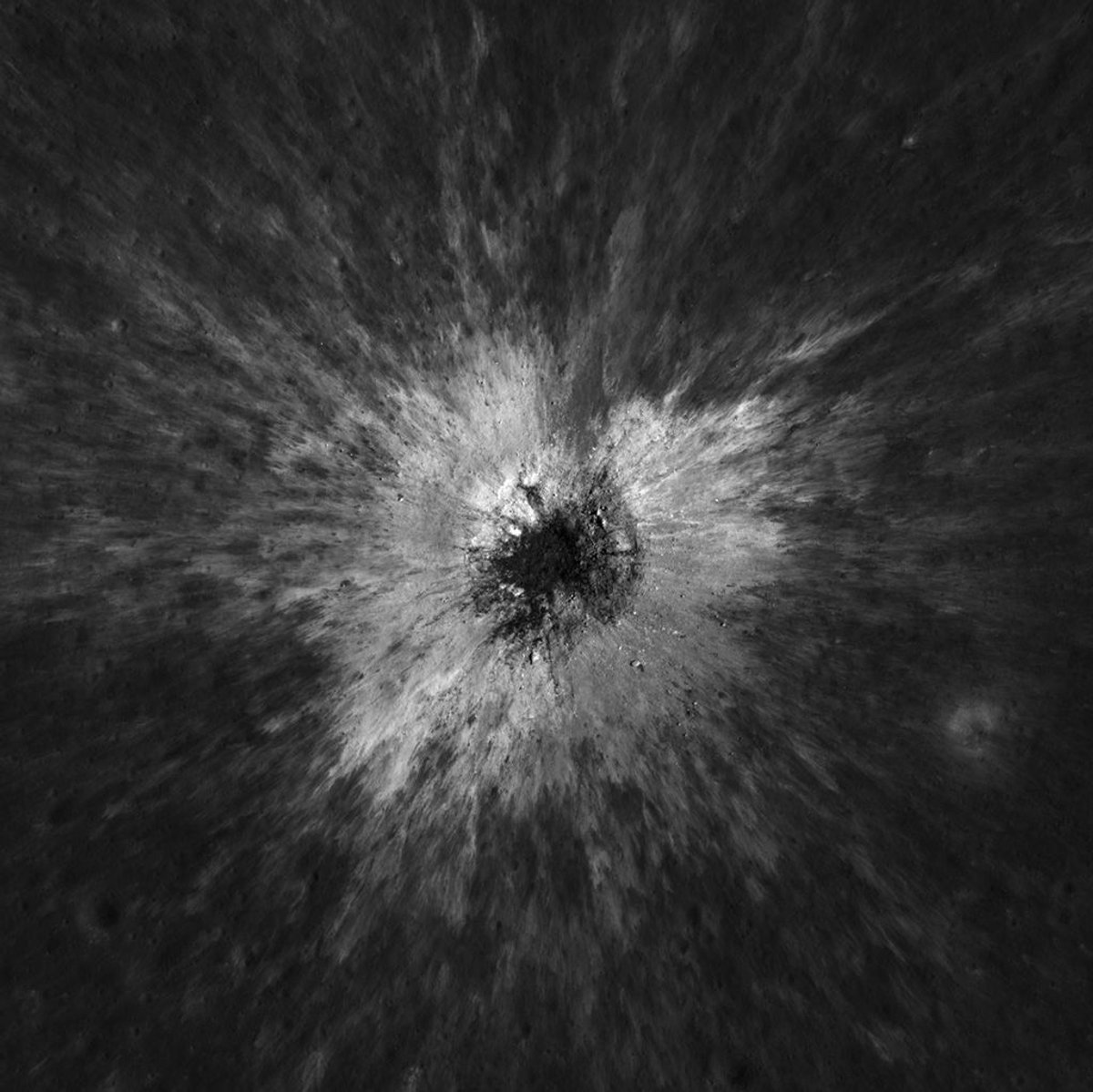
The crater, named after geologist and lunar surface expert Tom McGetchin, spans more than two football fields wide
Archaeologists have discovered a 3,400-year-old fragment of the world's oldest known peace treaty, the Turkish Ministry of Culture and Tourism has announced. The agreement, known as the Treaty of Kadesh, was signed around 1269 B.C. by Egyptian pharaoh Ramesses II and Hittite king Hattusili III. Other parts of the treaty have already been found, but the new fragment was unearthed during an excavation at Hattusha, in north-central Turkey. "We have found traces of peace, thousands of years old, in the soil of Anatolia," Mehmet Nuri Ersoy, Turkey's minister of culture and tourism, said in a Sept. 21 translated statement. The newly discovered cuneiform tablet fragment contains text from a section...
Researchers found the record-breaking Incendiamoeba cascadensis amoeba in Lassen Volcanic National Park, California. (Image credit: Felix Mikus)A newly-discovered amoeba has set the record for the hottest temperature at which complex life can thrive.The amoeba, found in Lassen Volcanic National Park in California, grows and divides at temperatures up to 145 degrees Fahrenheit (63 degrees Celsius) and can survive brief stints in up to 158 F (70 C) environments, a new study finds. Prior to the discovery, no complex cells were known to replicate at temperatures above 140 F (60 C)."I was very surprised," study first author Beryl Rappaport, a microbiologist at Syracuse University in New York, tol...
Engineers at the University of Wisconsin–Madison have designed a new type of quantum nanostructure that could enable optical neural networks. This emerging technology has the potential to make artificial intelligence systems, like large language models and image generation, faster and significantly more energy efficient.
When nearby lightning forces officials to delay a big college football game, the backlash from fans can be fierce, especially if the sky over the stadium is still mostly blue.
Scents govern most key events in the lives of mosquitoes, and there is extensive research on their sense of smell. A new study reveals how a young female mosquito shifts from focusing entirely on nectar to seeking only blood. An odor receptor that reacts to camphor was found to play a key role.
For parents whose children have just entered kindergarten or first grade, new fall routines can bring excitement—and some anxiety.
The Van Allen radiation belts are huge, doughnut-shaped regions of highly energetic charged particles trapped by Earth's magnetosphere. These charged particles play a major role in space weather, so studying them is important for predicting and managing risks to satellites, astronauts, power grids and other infrastructure.