Latest Scientific Discoveries

All News →
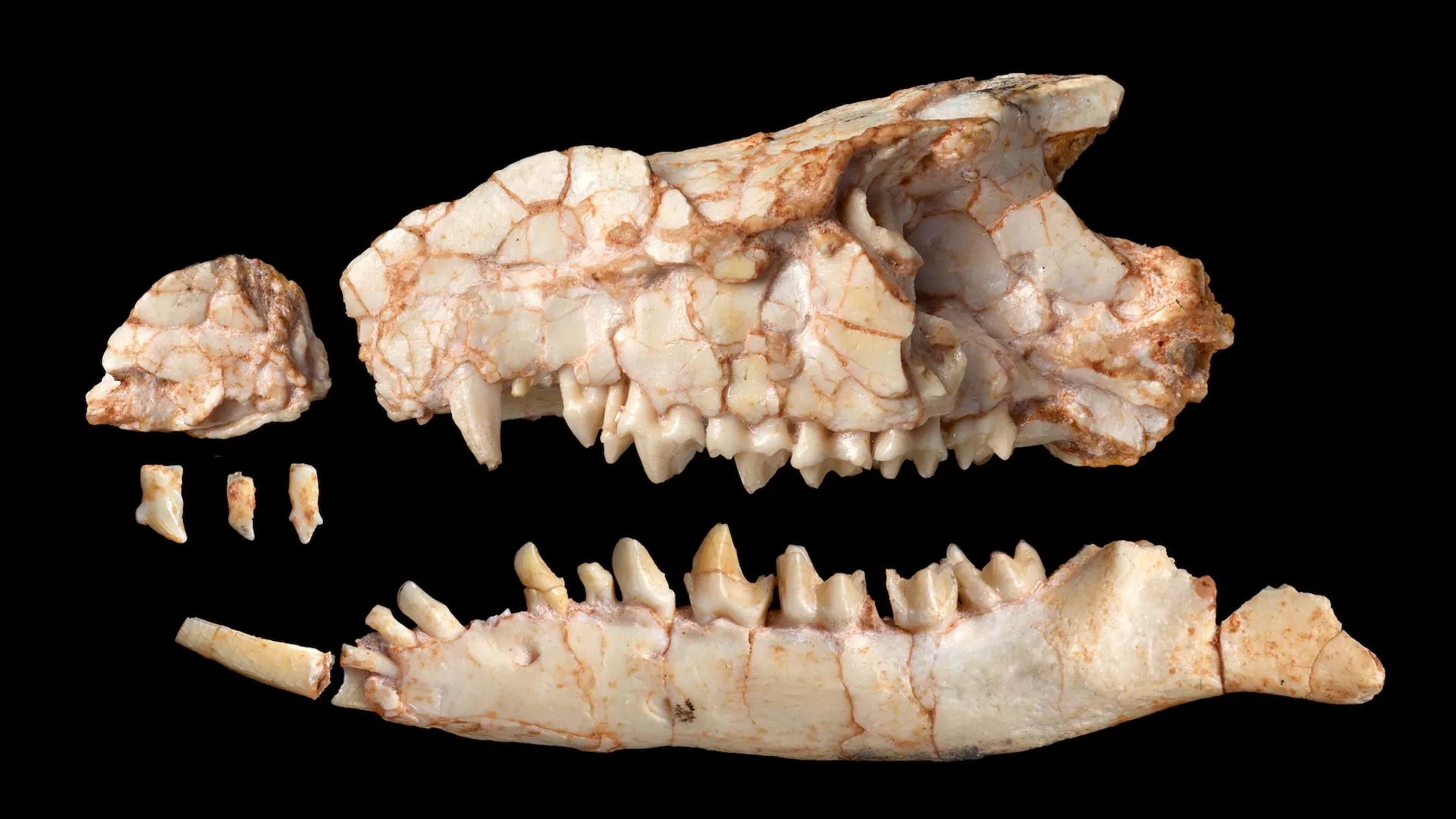
Scientists were wrong about this strange mammal for nearly 40 years
Science News

Scientists were wrong about this strange mammal for nearly 40 years

A beautifully preserved fossil from Mongolia’s Gobi Desert has solved a mystery that puzzled paleontologists for nearly 40 years. Tamirkhan balcarceli shows that zhelestids were not early relatives of modern placental mammals, despite having teeth that seemed to suggest they were. Instead, the rabbit-like animal belonged to a separate lineage of small Cretaceous mammals.

📅 2026-09-28 12:25:21    •    ScienceDaily
James Webb reveals why planet formation is a race against time
Science News

James Webb reveals why planet formation is a race against time

JWST has revealed that young planetary systems lose their planet-building gas through a changing mix of powerful jets, molecular winds, and radiation-driven outflows. As the disks age and their gas disappears, giant planets face a shrinking window to build massive atmospheres.

📅 2026-09-28 12:02:24    •    ScienceDaily
'The right diagnosis is unbelievably powerful': It can take years to diagnose rare diseases, and scientists are trying to fix that
Science News

'The right diagnosis is unbelievably powerful': It can take years to diagnose rare diseases, and scientists are trying to fix that

Millions of Americans are diagnosed with common conditions like cancer and diabetes — but some 10% of the population live with rare diseases that doctors often struggle to diagnose. On average, those with rare diseases will spend five to seven years searching for answers and see 12 specialists before they arrive at a diagnosis.In the process, they may be subject to incorrect, ineffective or even harmful treatments."Any medicine that you prescribe has a one-third chance of working, a one-third chance of doing nothing, and a one-third chance of hurting you," said Dr. Ada Hamosh, a geneticist and the center director for the Johns Hopkins Medicine-Kennedy Krieger Institute National Organization ...

📅 2026-09-28 12:00:00    •    Live Science
13,000-year-old butchered bones of long-tusked beast found in Chile give more evidence of early first Americans
Science News

13,000-year-old butchered bones of long-tusked beast found in Chile give more evidence of early first Americans

Bones from extinct elephant-like creatures discovered along the shore of Lake Tagua Tagua in central Chile bear human-made cut marks and were found alongside stone tools, revealing that some of the first humans to live there were killing and eating these animals 13,000 years ago, new research shows. Archaeological excavations carried out over the past two years in the basin of the ancient lake revealed a large concentration of megafauna remains and stone tools, according to a Sept. 24 statement from the Catalan Institute for Human Palaeoecology and Social Evolution (IPHES-CERCA). Several bones from gomphotheres, an extinct group of tusked mammals related to modern elephants, displayed clear ...

📅 2026-09-28 11:00:00    •    Live Science
Pomegranate compound improves heart function by up to 80% in study
Science News

Pomegranate compound improves heart function by up to 80% in study

A compound the body can make after eating pomegranates, walnuts, and some berries improved measures of heart function by up to 80% in animal models of a difficult-to-treat form of heart failure. Urolithin A helped stiff heart tissue relax and reduced scarring and abnormal enlargement. It also improved relaxation in engineered human heart tissue.

📅 2026-09-28 10:49:22    •    ScienceDaily
Battersea Shield: A 2,000-year-old Celtic shield that may have been 'sacrificed' in a ritual in the River Thames
Science News

Battersea Shield: A 2,000-year-old Celtic shield that may have been 'sacrificed' in a ritual in the River Thames

The Battersea Shield was pulled out of the River Thames in 1857. (Image credit: Universal History Archive/Universal Images Group via Getty Images)QUICK FACTSName: Battersea ShieldWhat it is: Bronze facing of a shieldWhere it is from: River Thames, LondonWhen it was made: Between 350 and 50 B.C.This masterpiece of ancient Celtic weaponry was discovered by a laborer who was working on a bridge over the River Thames in 1857. Named the Battersea Shield after the London neighborhood near where it was found, the bronze artifact shows no signs of use, leaving archaeologists wondering how it ended up at the bottom of the river.According to the British Museum, which acquired the shield directly from ...

📅 2026-09-28 10:00:00    •    Live Science
Donor hearts may take on the age of their new bodies
Science News

Donor hearts may take on the age of their new bodies

After transplant, young hearts in both mice and humans showed signs of accelerated aging in older bodies, while older hearts in younger bodies seemed rejuvenated

📅 2026-09-28 10:00:00    •    Scientific American
160-million-year-old proteins show surprising power against superbugs
Science News

160-million-year-old proteins show surprising power against superbugs

Scientists resurrected antimicrobial peptides from mammals that lived millions of years ago and found that some were more potent against drug-resistant bacteria than modern human versions. These evolutionary relics could provide new clues for designing treatments as antibiotic resistance becomes an increasingly serious threat.

📅 2026-09-28 09:59:57    •    ScienceDaily
The herring fishery that took 400 years to rebound—and what it teaches us today
Science News

The herring fishery that took 400 years to rebound—and what it teaches us today

From the 13th to the 16th century, herring from the Sound—the strait in the Baltic Sea between Denmark and Sweden—was one of northern Europe's most important trade goods. Salted herring from the so-called Skanör-Falsterbo fishery fed large parts of Europe. Around 1570, however, the fishery collapsed rapidly, with far-reaching consequences for trade, politics and society. It took almost 400 years, until the 1950s, for catches to reach comparable levels again.

📅 2026-09-28 09:00:08    •    Phys.org
Waves find order in the chaos of an oddly shaped cavity
Science News

Waves find order in the chaos of an oddly shaped cavity

When light or sound bounces around inside an oddly shaped room, its reflections can quickly become difficult to predict. But new research led by scientists at the Advanced Science Research Center at the CUNY Graduate Center (CUNY ASRC) shows that waves can behave very differently when they travel through a special class of materials.

📅 2026-09-28 09:00:03    •    Phys.org