Latest Research

All News →
Tiny satellite will use the dark side of the Moon to eavesdrop on whispers from the early universe
Research Institutions

Tiny satellite will use the dark side of the Moon to eavesdrop on whispers from the early universe

Tiny satellite will use the dark side of the Moon to eavesdrop on whispers from the early universe Sarah Collins Fri, 08/14/2026 - 16:00 An international team of scientists, led by the University of Cambridge, will use the dark side of the Moon as a ‘shield’ so that the satellite – called CosmoCube – can block out all the noise from Earth and listen for a faint whisper from the very early universe. This whisper, known as the 21-centimetre line, is a signal emitted by hydrogen atoms in the period between the afterglow of the Big Bang and Cosmic Dawn, when nuclear fusion lit up the first stars. No one has directly observed this era before. Detecting this signal from more than 13.5 billion years ago is extremely difficult with Earth-based telescopes, since the Earth’s ionosphere blocks the right frequencies, and interference from FM radio, satellites and telecommunications drowns it out.However, the Moon provides a natural shield. As CosmoCube orbits the far side of the Moon, it will be shielded from all the noise of Earth for roughly 40 minutes of each two-hour orbit. Over an expected two-year mission, it will build up 1000 hours of data on one of the last unexplored periods of the universe, helping us understand how the universe transitioned from dark and nearly empty to the complexity we see today. The mission has received funding from the UK Space Agency, and the researchers hope CosmoCube can be launched within the next five years. Details are published in the journal Nature Astronomy.In addition to exploring the universe in the period before the first stars, CosmoCube will also explore the role of dark matter – the mysterious force that holds galaxies together. “This emission from hydrogen after the Big Bang, but before the first stars, will hopefully allow us to understand the role of dark matter in the early universe, how it worked to pull together hydrogen into the first stars and galaxies,” said lead author Professor Eloy de Lera Acedo from Cambridge’s Cavendish Laboratory.To study this period, CosmoCube will operate at extremely low frequencies – between 10 and 50 MHz – far outside the range of ground-based telescopes, which is why the Moon will be used as CosmoCube’s ‘fortress of solitude’. “There’s no other place where you can get the sort of shielding you need to detect such a faint signal, while at the same time looking at the whole of space,” said de Lera Acedo, who is also affiliated with the Kavli Institute for Cosmology. “The far side of the Moon is really the only option: it solves multiple problems at once, opening a clear window to the very early universe.”Once in orbit around the Moon, CosmoCube will unfold a long and lightweight radio antenna, sensitive enough to detect the 21-centimetre signal from hydrogen atoms in the early universe when the satellite is on the Moon’s far side. While in lunar orbit, CosmoCube will constantly check and correct its own electronics using a ‘Dicke-switched’ calibrator, which will flip between the sky and several built‑in reference sources. This will help cancel out tiny drifts and noise inside the satellite that could otherwise masquerade as cosmic signals.Once CosmoCube’s data is back on Earth, the team will use advanced Bayesian statistical methods to remove foreground noise — mainly radio emissions from our own galaxy. They will also reconstruct how the antenna responds to different parts of the sky using computer simulations and in-flight measurements, allowing them to subtract any remaining distortions. “Aside from the science, what makes our mission unique is its size: we’re probing the earliest, deepest parts of the dark ages that others don’t reach, but with a compact, relatively low-cost platform,” said de Lera Acedo. However, the far side of the Moon may not stay quiet for long: other missions are being planned by the US, India and other countries to take advantage of the Moon’s silence. CosmoCube features a state-of-the-art fully integrated miniature radiometer, using the latest on analogue and digital technology, the so-called RF-Systems-on-Chip (RFSoCs). The CosmoCube space platform (‘SSTL-21’) is being developed in the UK by Surrey Space Technology Limited (SSTL), which specialises in the manufacturing of small satellites. Instrument development is well underway, with functioning lab prototypes and environmental testing taking place and key collaboration with industry partners. In the UK, academic partners include Portsmouth University and STFC RAL Space, and participation from EU countries such as Malta. The CosmoCube team recently participated in the ESA mini-Fast missions Call for Ideas, targeting a mission cost under 50 million Euros.“CosmoCube is aiming to do some ambitious science from a very small satellite in a challenging environment, and to do that requires some clever design techniques,” said co-author Dr Will Grainger from STFC RAL Space. “We’ve worked with the project partners to develop representative models of the satellite and its payload. These have been tested in our facilities to ensure the thermal performance allows the payload to operate and perform the required sensitive measurements under the different temperature conditions it will experience whilst in orbit around the Moon. In the future, we hope to further develop the full payload in preparation for a full mission.”“This could be a real UK success story: the hardware, the software, the implementation and the technology is all being developed here, and it could help us answer one of the most profound questions in the universe,” said de Lera Acedo. The work was supported in part by the UK Space Agency, the Kavli Foundation, and the Science and Technology Facilities Council (STFC), part of UK Research and Innovation (UKRI). Eloy de Lera Acedo is a Fellow of Selwyn College, Cambridge. Reference:Eloy de lera Acedo et al. ‘The CosmoCube Lunar Mission for Probing the Dark Ages and Cosmic Dawn via 21-cm Cosmology.’ Nature Astronomy (2026). DOI: 10.1038/s41550-026-02946-y Surrey Space Technology Lts Artist's impression of Cosmo Cube Yes

📅 2026-08-14 15:00:00    •    Cambridge News
Does vitriol make you feel special?
Research Institutions

Does vitriol make you feel special?

Beyond the algorithm, online negativity takes on a life of its own. Here’s why.

📅 2026-08-12 19:00:26    •    Harvard Gazette
What the framers were really thinking
Research Institutions

What the framers were really thinking

Origin story of Declaration of Independence involves more than just embrace of Enlightenment ideas, scholars say

📅 2026-08-12 18:24:15    •    Harvard Gazette
America the beautiful
Research Institutions

America the beautiful

Celebrating nation’s natural wonders through art on 250th anniversary

📅 2026-08-12 16:49:38    •    Harvard Gazette
Cambridge to lead new £20m MRC Hub to transform development of new medicines using stem cells and AI
Research Institutions

Cambridge to lead new £20m MRC Hub to transform development of new medicines using stem cells and AI

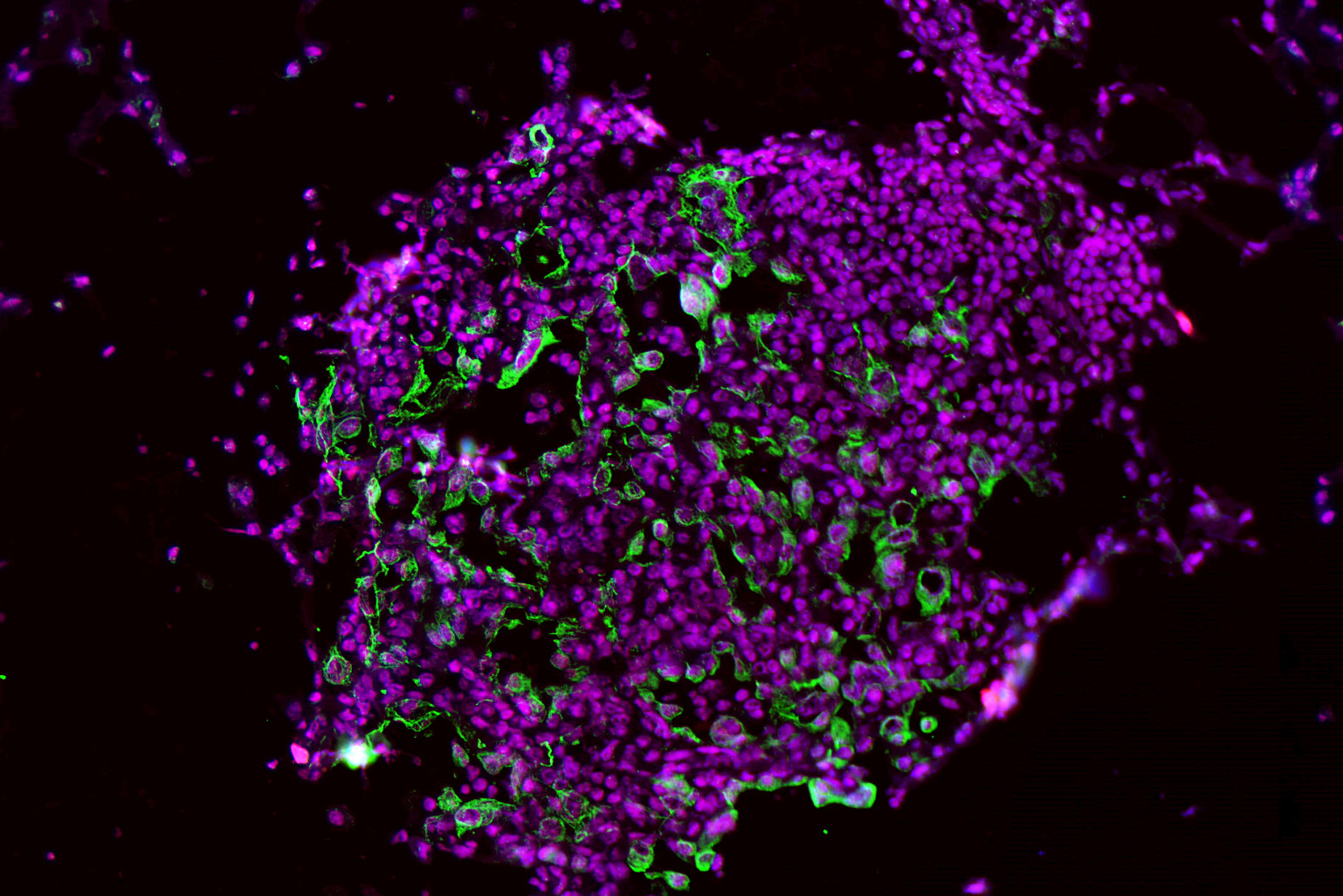
Cambridge to lead new £20m MRC Hub to transform development of new medicines using stem cells and AI Craig Brierley Wed, 08/12/2026 - 08:00 The Hub builds on the expertise of the Cambridge Stem Cell Institute, in particular around advanced human in vitro models, including organoids and other stem cell-derived systems. It will combine this with AI-powered approaches, bioengineering and clinical research to create more accurate and predictive ways of studying human disease and testing potential treatments before they reach patients.The Hub will be led by Professor Matthias Zilbauer and Professor Bertie Göttgens from the Cambridge Stem Cell Institute (CSCI).Professor Matthias Zilbauer, Director of the UK Pre-clinical Translational Models Hub and Group Leader at the CSCI, said: "Over the past decade, we've seen the enormous potential of patient-derived organoids and other approaches that do not rely on the use of animals to transform the way we develop new medicines.“Because these miniature human tissues retain many of the unique biological characteristics of the individual patient, they allow us to understand disease more accurately and test potential treatments before they ever reach the clinic. This has the potential to bring more effective, personalised treatments to patients while reducing the time and cost of developing new medicines and our reliance on animal models."Working with hospitals, research institutes and industry partners across Cambridge and the UK, the researchers will establish a national network dedicated to developing, validating and accelerating the adoption of next-generation preclinical models. The Hub will enable researchers, clinicians and companies across the UK to access human-based platforms that better reflect human biology and improve the development of new therapies.Professor Bertie Göttgens, Co-Director of the UK Pre-clinical Translational Models Hub and Director of the CSCI, said: "By combining expertise in stem cell biology, organoid technology and artificial intelligence, the new UK Pre-clinical Translational Models Hub will accelerate the development of next-generation human disease models. Together with our academic, NHS and industry partners, we aim to deliver better treatments for patients while reinforcing the UK's global leadership in this field."Every new medicine must undergo extensive testing for safety and effectiveness before it can reach patients. However, the process relies heavily on animal models, and many treatments that appear promising in animals ultimately fail when tested in humans. This can result in years of research, significant investment and potential treatments being lost before they reach patients.Advanced human in vitro models and AI offer a new approachBy using human cells and tissues to recreate aspects of disease in the laboratory, researchers can study disease processes more accurately, identify potential treatments earlier and better predict how patients may respond to new therapies. These approaches include organoids – miniature, simplified versions of human tissues – alongside other engineered human systems and computational models.While these technologies have already transformed many areas of biomedical research, their wider use in drug development requires robust validation, standardisation and benchmarking. Researchers, clinicians, regulators and industry partners need confidence that these models are reliable, reproducible and capable of improving decision-making in the development of new medicines.The Pre-clinical Translational Models Hub will address this challenge by creating a national UK accelerator platform to develop promising human-based models into validated, scalable and industry-ready technologies. By integrating experimental models with AI and other computational approaches, the Hub will help establish a new generation of predictive tools for understanding disease and accelerating therapeutic discovery.Cambridge’s expertise in organoid researchOrganoids and other advanced human models have become a major focus of stem cell biology since the field emerged in 2009, and CSCI has played a leading role in developing this area. Researchers across the Institute have contributed to advances in organoid technology, stem cell biology and disease modelling.Professor Zilbauer, for example, has built a biobank of more than 1,000 patient-derived organoid lines over the past decade. Through his clinical research into paediatric inflammatory bowel diseases at Cambridge University Hospitals, he works with children and their families to collect patient samples, generate organoid models and use these systems to understand disease mechanisms and test potential new treatments.Professor Zilbauer said: “Patient-derived models have enormous potential to transform the way we understand disease and develop new medicines. By capturing important characteristics of individual patients, these human models allow us to study disease more accurately and test potential treatments before they reach the clinic. This could ultimately lead to more effective, personalised therapies while reducing the time and cost of drug development.”To maximise the Hub’s reach and impact, CSCI will work with Affiliate Group Leaders and Hub co-leads Dr Mathew Garnett and Dr Mo Lotfollahi from the Wellcome Sanger Institute, and Professor Madeline Lancaster at the MRC Laboratory of Molecular Biology, together with clinical partners at Cambridge University Hospitals and Royal Papworth Hospital.Based at CSCI’s facilities in the Jeffrey Cheah Biomedical Centre on the Cambridge Biomedical Campus, the Hub will benefit from close proximity to NHS partners, the MRC-LMB, AstraZeneca’s Discovery Centre, GSK’s Clinical Unit and other leading research and industry organisations. This unique environment will enable collaboration across disciplines and help accelerate the translation of scientific discoveries into real-world impact.Science Minister Chris McDonald said: "Too many medicines that work in animals go on to fail in people. The Preclinical Translational Models Hub will allow scientists to test treatments on human tissue, grown from patients' own cells, so we can tell much earlier what will genuinely work…By opening that technology up to researchers, the NHS and companies across the country (…) we are bringing the end of animal testing closer while creating the high-skilled jobs and growth that benefit people in every postcode."Adapted from a news story by the Cambridge Stem Cell Institute Over the past decade, we've seen the enormous potential of patient-derived organoids and other approaches that do not rely on the use of animals to transform the way we develop new medicines Matthias Zilbauer Thomas Dennison/ University of Cambridge Immunofluorescence spinning disc microscopy images of organoids Yes

📅 2026-08-12 07:00:00    •    Cambridge News