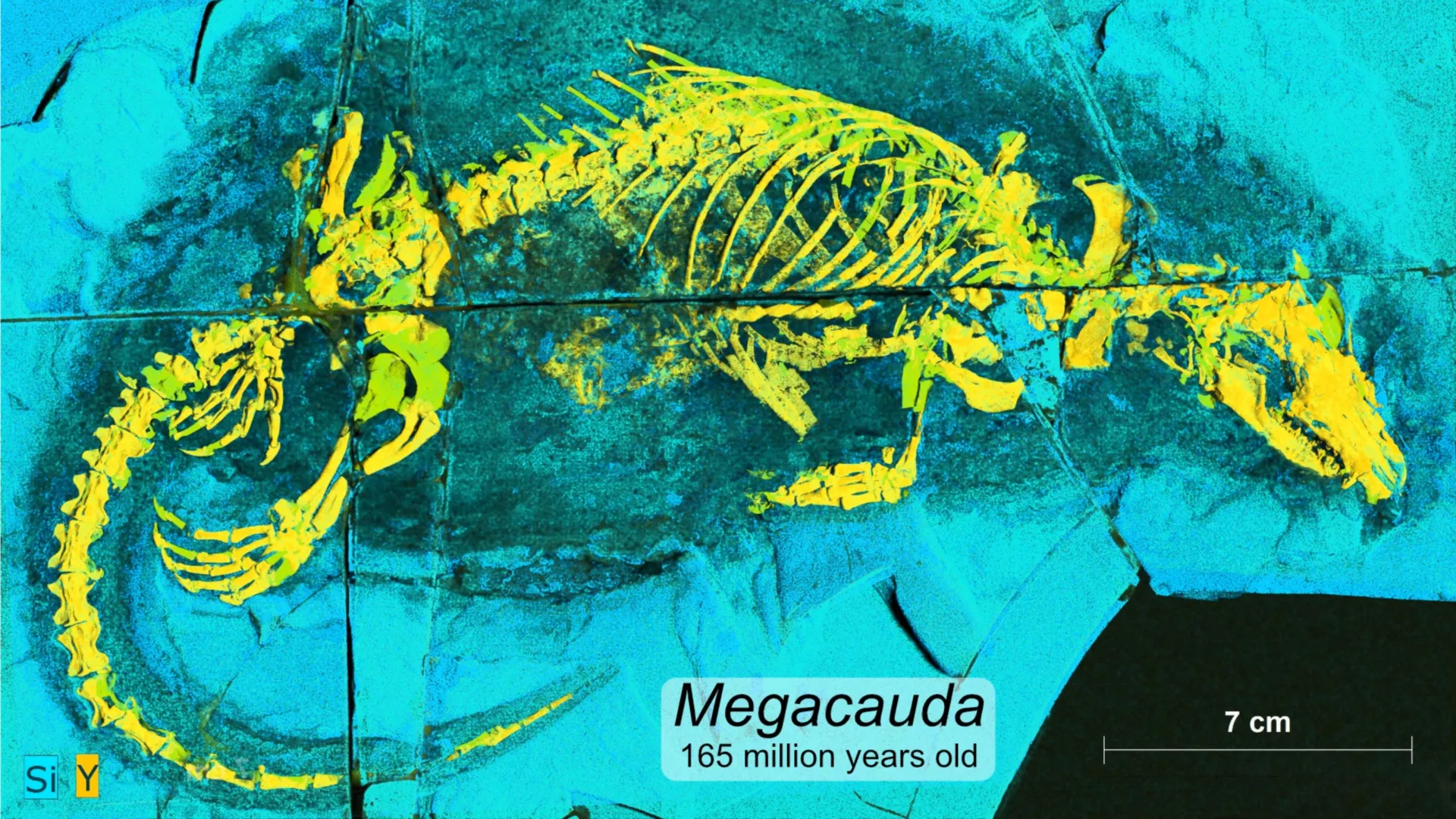
A 165-million-year-old fossil has revealed an extraordinary Jurassic predator that may help explain how mammals developed one of their most important evolutionary advantages. Although only 20 inches long, Megacauda sungei was a heavyweight among early mammal relatives, swimming through ancient waterways and hunting prey with specialized teeth. Its advanced swallowing anatomy reveals an early step toward the ability to safely nurse on milk, a key development in mammalian evolution.
This tiny jurassic predator helped pave the way for the human brain
Original Source
This article was collected from: ScienceDaily
Gabeshana News automatically collects article information
from external RSS/Atom sources. The original article remains
available at the source website. Please visit the original
source for the complete article and the latest information.