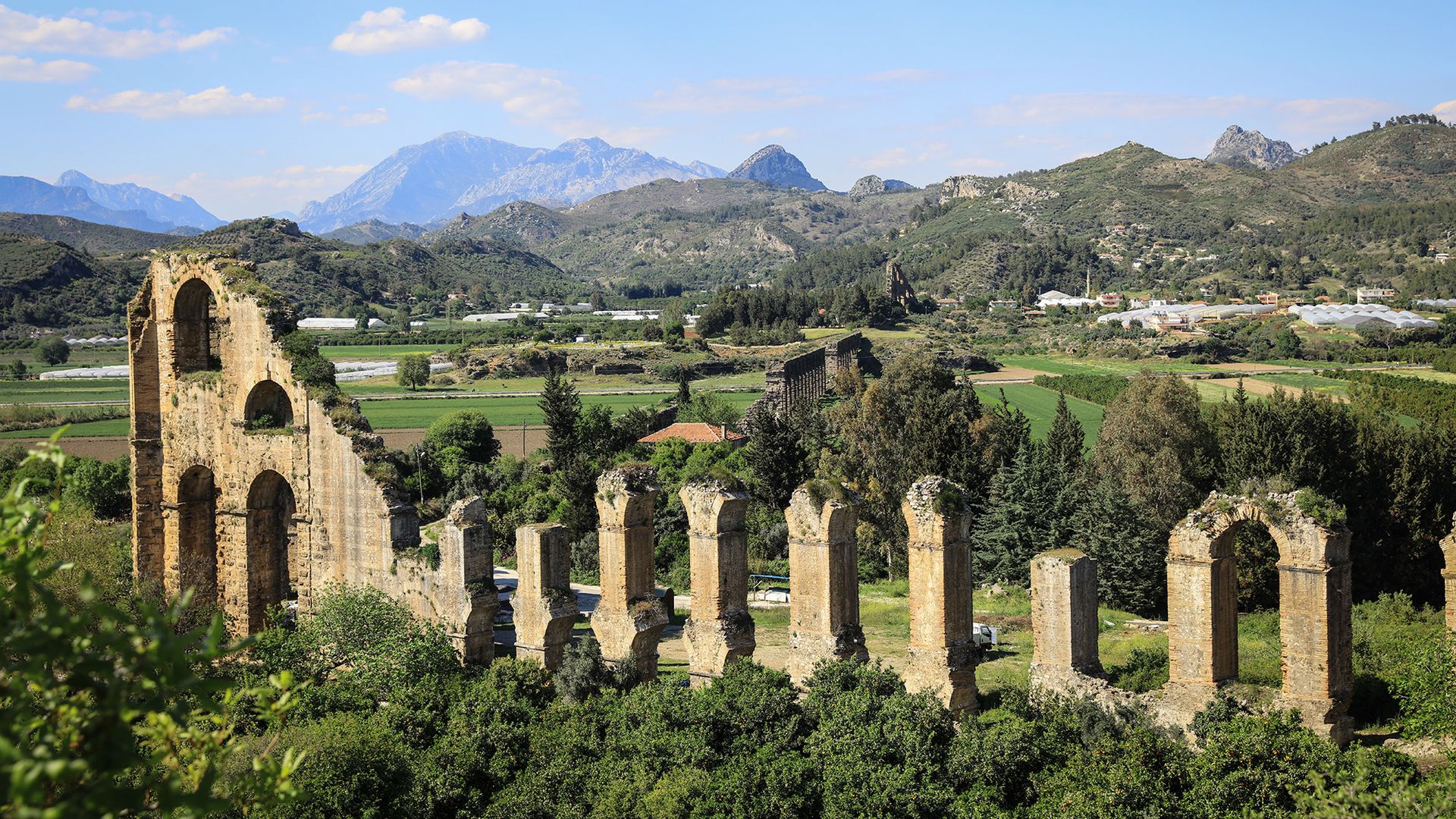
Aqueducts are some of the ancient Romans' most prominent surviving archaeological remains. These aqueducts relied on gravity to bring down the water to cities gradually. But some, such as the aqueduct at Aspendos in Turkey, had sections where they had to go uphill. So how did the Romans get water to flow upward?The Romans used a few methods, including siphons and various water-lifting devices, experts told Live Science. Inverted siphonsOne strategy was a system called an inverted siphon (sometimes simply called a siphon).At Aspendos, in southern Turkey, there is a second-century-A.D. Roman aqueduct with inverted siphons that scholars have reconstructed with a virtual modeling simulation. To ...
How did Roman aqueducts get water to go uphill?
Original Source
This article was collected from: Live Science
Gabeshana News automatically collects article information
from external RSS/Atom sources. The original article remains
available at the source website. Please visit the original
source for the complete article and the latest information.