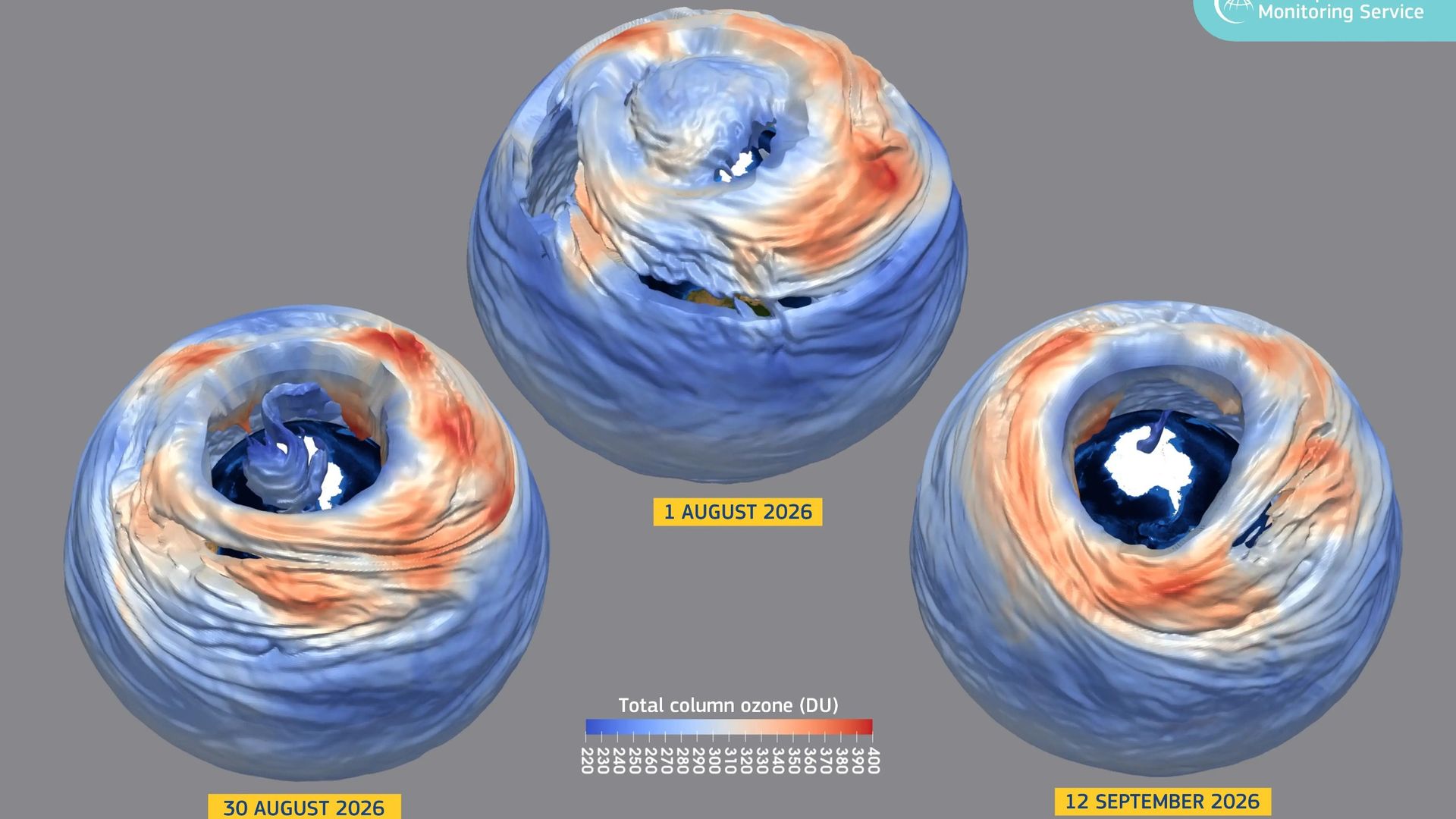
On Sept. 20, the Antarctic ozone hole peaked at 10.6 million square miles (27.4 million square kilometers), the second-largest size ever observed for this time of the year.The last time the ozone hole was this big was in October 2015, when it reached a whopping 10.8 million square miles (27.9 million square km), records from the Copernicus Atmosphere Monitoring Service show. So why is the hole in the ozone layer — the shield that protects life on Earth from harmful ultraviolet solar radiation — so big this year, despite other clues telling scientists that it is recovering as expected from the damage human-made chemicals did in the 20th century?The ozone hole's extent is due to extremely low ...
The ozone layer was supposed to be healing. So why is this year's Antarctic ozone hole so big?
Original Source
This article was collected from: Live Science
Gabeshana News automatically collects article information
from external RSS/Atom sources. The original article remains
available at the source website. Please visit the original
source for the complete article and the latest information.